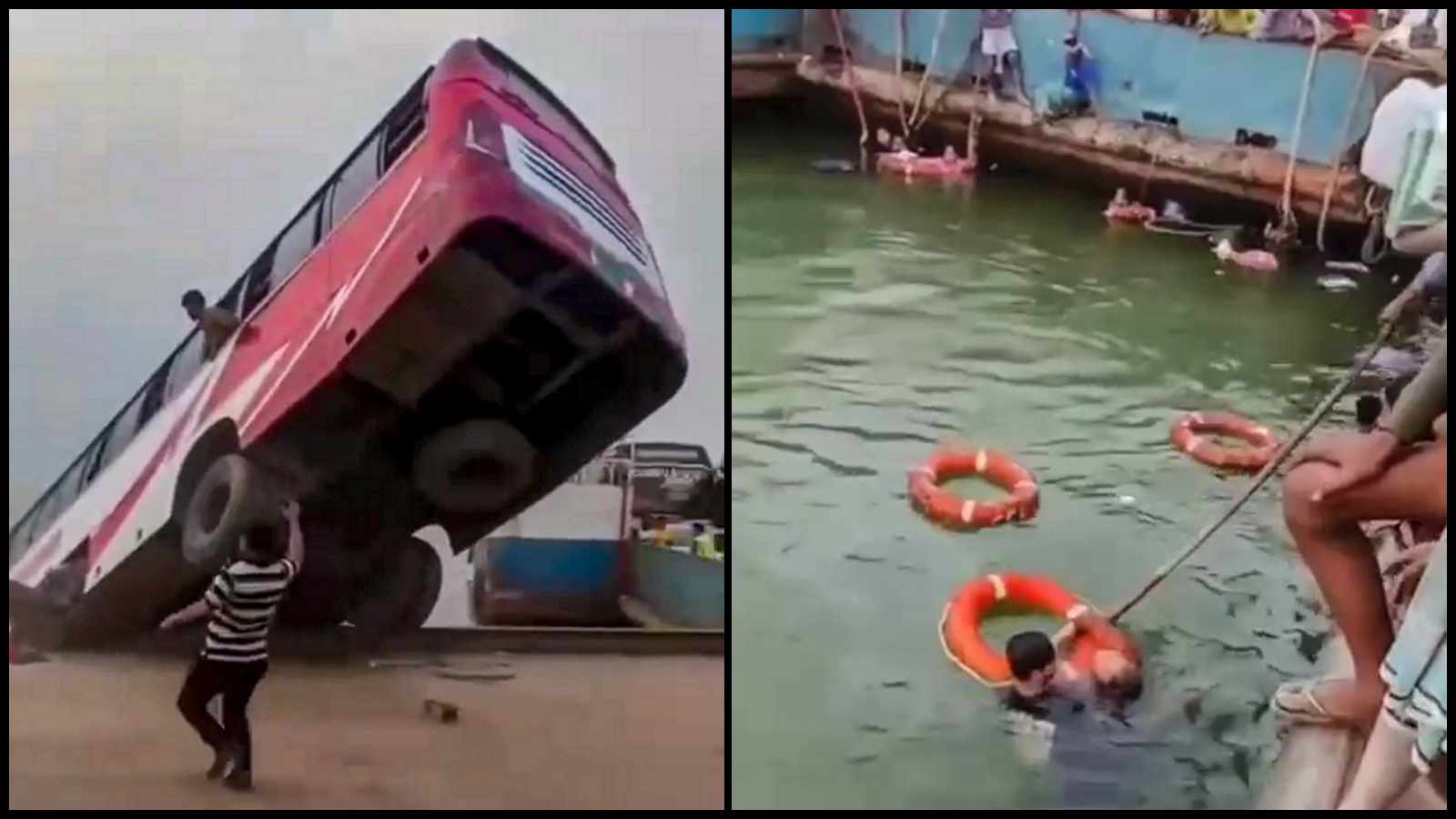
The death toll stands at 23, but the numbers are secondary to the systemic negligence that sent a crowded bus screaming through a guardrail and into the abyss near the Padma Bridge. On paper, the Madaripur highway disaster is a traffic accident. In reality, it is a structural failure of governance. The bus, operated by Emad Enterprise, was reportedly traveling at speeds that turned a passenger vehicle into a kinetic missile. When the tires blew, there was no safety net, only a steep plunge and the cold certainty of a crushed hull.
This tragedy is not an isolated incident. It is the predictable outcome of a transport sector where speed is prioritized over inspections and where the prestige of new infrastructure masks the rot of a lawless driving culture. While the nation celebrates the engineering marvel of the Padma Bridge, the approach roads have become high-speed graveyards. We are building world-class roads for third-class regulation.
The Illusion of Modernity
The Padma Bridge was supposed to change everything. It did. It slashed travel times and connected the marginalized southwest to the economic heartbeat of Dhaka. But this efficiency has a dark side. The new expressways are smooth, wide, and deceptive. Drivers accustomed to the potholed, congested arteries of the past now treat these stretches like private drag strips.
The Emad Enterprise bus was not just speeding; it was operating within a vacuum of enforcement. Initial investigations suggest the driver lost control after a tire burst, a common occurrence when over-aged, retreaded tires meet the high friction of sustained high-speed travel on modern asphalt. In Bangladesh, a "new" road often means old vehicles are pushed beyond their mechanical limits. The bridge is twenty-first century. The fleet is often decades behind.
The Mechanics of a Fatal Plunge
When a heavy vehicle travels at 90 or 100 kilometers per hour, the physics of a blowout are unforgiving. The center of gravity shifts violently. On the Madaripur stretch, the guardrails served as little more than a suggestion. They were never designed to catch a multi-ton bus at full tilt. This reveals a massive gap in how we define "safe" infrastructure. A road is not safe just because it is flat. It is safe when it accounts for human and mechanical error.
The guardrails failed. The driver, likely fatigued by back-to-back shifts common in the industry’s "trip-based" payment model, had no margin for recovery. This is the lethal geometry of the Bangladesh transport sector: high speed, low maintenance, and exhausted labor.
The Blood on the Logbooks
If you want to find the real cause of the 23 deaths, look at the fitness certificates. Or the lack thereof. The Bangladesh Road Transport Authority (BRTA) is a department defined by its inability to keep up with the sheer volume of rogue operators.
Thousands of buses on the road today are "zombie vehicles." They exist on paper but would never pass a rigorous mechanical audit. Owners often bypass inspections through middle-men or "agents" who ensure the paperwork stays green while the engines stay gray. When a bus like the one in Madaripur goes over the edge, the focus stays on the driver. The driver is an easy scapegoat. He is often dead or missing. But the owner who sent that bus out with thinning tires and a faulty braking system remains in the shadows, shielded by powerful transport associations.
The Monopoly of Power
The transport sector in Bangladesh is not a free market; it is a cartel. These associations hold the country’s mobility hostage. Every time the government attempts to enforce stricter safety laws—such as the Road Transport Act 2018—the associations threaten strikes. They shut down the country, paralyzing the economy until the regulations are softened or "deferred."
This political leverage means that safety is always a secondary concern. Profits are squeezed out of every seat, every standing passenger, and every extra kilometer per hour. The faster the bus returns, the faster it can start the next trip. This churn is what killed those 23 people. It was a business decision.
Why the Current Solutions Fail
The standard response to a tragedy like this is a three-member probe committee. We have seen hundreds of them. They meet, they deliberate, and they produce a report that blames "reckless driving" and "mechanical failure." Then, the report is filed away in a dusty cabinet in Dhaka, and nothing changes.
- Speed Governors: Many buses have them, but they are easily tampered with. A mechanic can bypass a speed limiter in ten minutes for the price of a lunch.
- Highway Patrol: The presence is thin. On a long stretch of expressway, the chances of being pulled over for a mechanical violation are statistically insignificant.
- Driver Training: Most long-haul drivers learn via an informal apprenticeship. They start as "helpers," moving the bus in the terminal, and eventually take the wheel on the open road without ever attending a formal safety course.
We are trying to solve a systemic crisis with cosmetic fixes. You cannot fix a culture of speed with a few more traffic signs. You fix it by holding the people at the top—the fleet owners—criminally liable for the mechanical state of their vehicles.
The Cost of the Southwest Connection
The irony is bitter. The Padma Bridge was built to bring life and prosperity to the southern districts. Instead, for the families of those 23 victims, it provided a faster route to a funeral. We must stop treating these events as "accidents." An accident is an unavoidable act of God. This was a failure of the state to protect its citizens from known predators on the highway.
The road to Madaripur is a warning. As Bangladesh continues its infrastructure boom, with tunnels and elevated expressways springing up across the map, the death toll will only climb unless the "human factor" is addressed. We are importing technology but exporting responsibility.
The Missing Data
Reliable data on road deaths in Bangladesh is notoriously hard to find. Government figures often vary wildly from those provided by independent watchdogs like the Passenger Welfare Association of Bangladesh. This discrepancy is dangerous. When you undercount the dead, you undervalue the solution.
By downplaying the scale of the carnage, the authorities maintain a false sense of progress. They can point to the bridge and say "Look how far we've come," while ignoring the wreckage at the bottom of the embankment. The reality is that the Madaripur crash is a symptom of a nation moving at two different speeds: a fast-moving economy and a stagnant regulatory framework.
A Blueprint for Accountability
If the government is serious about stopping the bleeding, it needs to break the back of the transport cartels. This isn't a matter of road signs; it's a matter of political will.
First, the BRTA must be digitized to the point where human interference in fitness certification is impossible. Automated testing centers, not bribe-hungry inspectors, should determine if a bus is roadworthy. Second, the "trip-based" pay system must be abolished. When a driver’s salary depends on how many trips he can cram into a 24-hour period, he will always choose speed over safety. He is being paid to be reckless.
Finally, there must be a permanent, independent body for accident investigation—one that has the power to prosecute owners, not just drivers. Until a billionaire bus tycoon spends time in a cell for a "mechanical failure" that kills twenty people, the tires will continue to burst, and the buses will continue to fall.
The guardrails on the Madaripur highway are being repaired now. They will look new, shiny, and safe. But until the rot inside the transport ministry and the transport unions is cleared out, those rails are just ribbons of metal waiting to be snapped again. We are building the future on a foundation of neglect, and the bill is being paid in blood.
Demand a digital logbook for every commercial vehicle that is accessible to the public, allowing passengers to see the safety record and fitness status of a bus before they ever step on board.