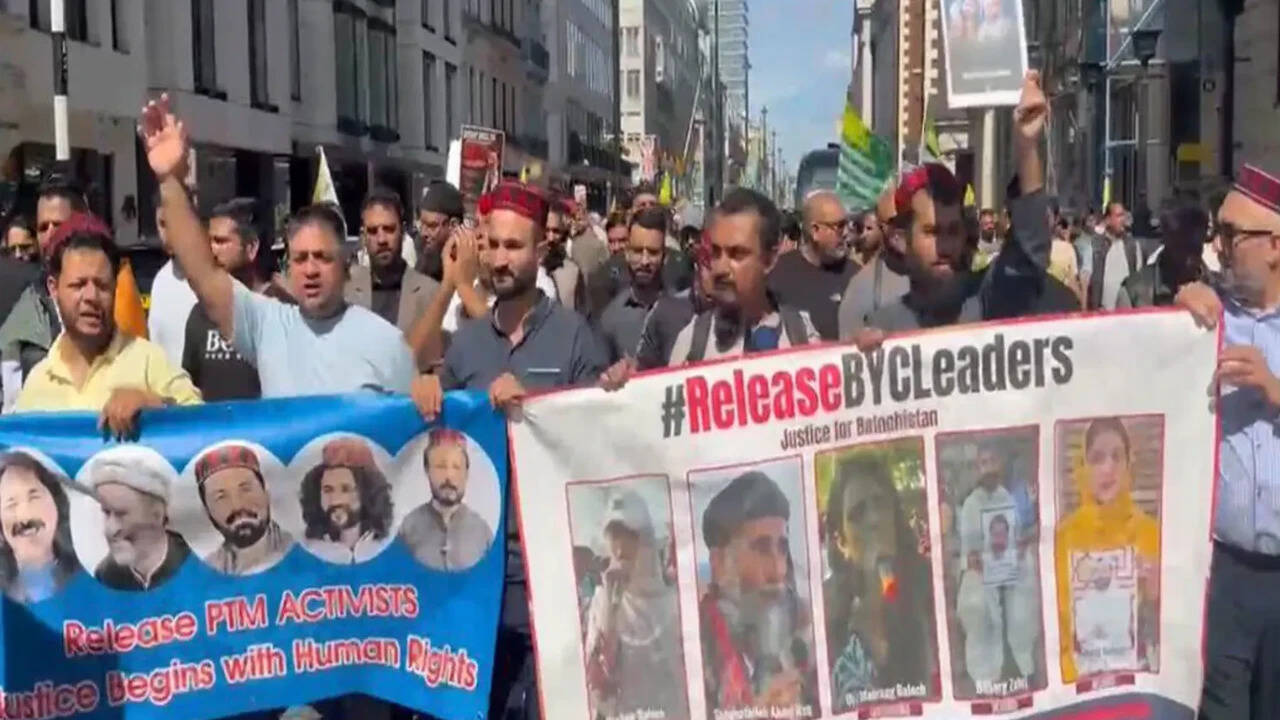
You probably haven't heard about what happened in Bremen, Germany, this week. A group of desperate activists gathered on the cobblestone streets, holding signs reading "Stop the Baloch Genocide." They weren't protesting a European policy or a local economic issue. They were trying to get the West to look at a strip of land thousands of miles away that has become a black hole for human rights.
Balochistan is Pakistan's largest yet least populated province. It's rich in gas, minerals, and gold, but its people are among the poorest in the region. For decades, a quiet, brutal conflict has raged between Baloch separatists and the Pakistani military. Now, that conflict is spilling onto European streets because the people living through it feel they have no other options left.
When the Baloch National Movement organized the demonstration in Bremen, they weren't just venting. They brought specific, terrifying claims about what's happening right now on the ground, especially along the coastal district of Gwadar. They talked about military raids, whole villages facing collective punishment, and an entire generation of young men vanishing into thin air. Pakistan regularly denies these accusations, blaming the unrest on foreign-backed terrorists. But the sheer volume of testimonies coming out of the diaspora suggests something much more systematic is going on.
The Grim Reality of Enforced Disappearances
The core issue driving people to scream on the streets of Germany is the practice of enforced disappearances. It's a clinical term for a horrific reality. Security forces pick someone up. No arrest warrant. No phone call to their family. No court date. They just vanish.
According to testimonies from the Bremen rally, the psychological torture this inflicts on families is agonizing. Imagine your son or brother walks out the door and never comes back. You can't mourn because you don't know if he's dead. You can't move on because he might be sitting in a secret detention cell. The uncertainty paralyzes entire communities. Daily life stops making sense.
Activists at the protest stated that this isn't accidental. It's a deliberate strategy to crush dissent. If you speak out about local resources, your cousin might disappear. If you join a peaceful sit-in, your father might be next. The pressure ripples through entire family trees, forcing people into silence or driving them to flee the country entirely.
Lately, the situation has gotten worse. Protesters pointed out a terrifying trend where families who refuse to stay silent don't just lose their relatives to secret prisons—they receive their bodies back. Custodial killings, where detainees are executed and their bodies are dumped in remote areas, have reportedly ticked up.
What Happened in Panwan Village
To understand why the diaspora is making so much noise right now, you have to look at the specific events that triggered the latest outcry. The Baloch National Movement highlighted recent military operations in Panwan, a village nestled in the Gwadar district.
Reports from the ground indicate that the Pakistan Army conducted intense, multi-day raids in and around the village. They didn't just search houses; they allegedly demolished homes and rounded up more than 60 people in a single sweep. Think about that for a second. An entire village stripped of its young men in 48 hours.
Even more alarming are the claims that at least five of those detained during the Panwan raids were killed while in custody, their bodies left behind as a warning to others. The village has been targeted before, but the scale of this recent operation indicates an escalation in the state's approach to securing the coastal belt.
The Wealth of Gwadar and the Smuggling Pretext
Why is Gwadar the epicenter of this brutality? It comes down to geography and money. Gwadar is home to a deep-water port that forms the crown jewel of the China-Pakistan Economic Corridor, a multi-billion-dollar infrastructure project.
The Pakistani state frames its heavy military presence in Gwadar as a necessary security measure to protect international investments and fight armed insurgencies. The area is home to militant groups like the Balochistan Liberation Army, which have carried out lethal attacks against Pakistani forces and Chinese nationals.
The activists in Germany offer a completely different explanation for the military's tight grip on the coast. They argue that the security narrative is a convenient cover. The real driver, they claim, is control over highly lucrative illicit smuggling routes that run through the Arabian Sea.
By emptying out coastal villages under the guise of counter-insurgency, the military allegedly secures unchecked control over these trade routes. Whether it's fuel smuggling from Iran or other contraband, the financial incentives to keep the local population terrified and compliant are massive.
The Total Information Blackout
If things are really this bad, why isn't it leading the nightly news? The answer is simple. Balochistan is a media black hole.
The Pakistani state maintains an iron grip on information flowing out of the province. Local journalists who try to report on enforced disappearances or military abuses face immense danger. Many have been threatened, arrested, or killed. International journalists are effectively barred from entering the region without heavy state supervision, making independent verification almost impossible.
This digital and physical isolation allows human rights violations to occur with absolute impunity. When internet access is cut during military operations and local phone lines go dead, a village can be completely upended without the outside world knowing a thing. That's why the diaspora in Germany is so vital to this struggle. They act as the megaphone for a population that has been completely muted by state censorship.
A History of Broken Promises and Violence
This conflict didn't start yesterday. It has been brewing since 1948, when Balochistan was integrated into Pakistan. Since then, the region has seen five distinct insurgencies.
Every time the people of Balochistan try to demand a fair share of their own resources, the response from Islamabad follows a predictable pattern. First come promises of development and wealth-sharing. Then comes the military infrastructure to protect those developments. Finally, the local people are pushed out to make room for external interests.
We saw this happen along the routes of the China-Pakistan Economic Corridor. Dozens of villages were displaced, homes were burned, and activists were jailed just to clear the path for roads and pipelines. The state promises that these projects will bring prosperity, but the locals see none of it. They just see more checkpoints, more soldiers, and less freedom.
Even peaceful, civilian-led movements face massive retaliation. Take the Baloch Yakjehti Committee, a group led largely by young Baloch women like Dr. Mahrang Baloch. In late 2023, they organized a massive, 1,600-kilometer march from Balochistan all the way to the capital city of Islamabad to protest against extrajudicial killings. They were met with police brutality, water cannons, and mass arrests.
By early 2025, the state's patience with peaceful protests wore out completely. Dr. Mahrang Baloch was arrested in Quetta during a raid on a peaceful sit-in and slapped with absurd terrorism and sedition charges. When the state treats peaceful human rights defenders as terrorists, it leaves the population with zero faith in the legal system. It pushes the entire region to a point of no return.
What Needs to Happen Next
Screaming on the streets of Europe can only do so much. To actually stop the cycle of violence, concrete international action is required.
The United Nations and the European Union cannot keep treating the situation in Balochistan as an internal Pakistani matter. Germany, given its deep economic ties with Pakistan and its vocal stance on global human rights, has a unique responsibility to act.
Independent fact-finding missions must be deployed to the region immediately. International bodies need to demand that Pakistan lift the information blockade and allow global media and human rights observers into Gwadar and the surrounding districts.
Sanctions should be placed on specific military officials directly tied to documented cases of enforced disappearances and extrajudicial killings. International aid and trade agreements, including the EU's preferential trade status for Pakistan, must be tied directly to measurable improvements in human rights.
If you want to support the movement from afar, stop letting this story get buried. Follow independent Baloch media outlets that risk everything to smuggle information out of the province. Pressure your local representatives to raise the issue of Balochistan in parliament. The Pakistani state relies on the world's indifference to keep this system running. Breaking that indifference is the first step toward stopping the violence.