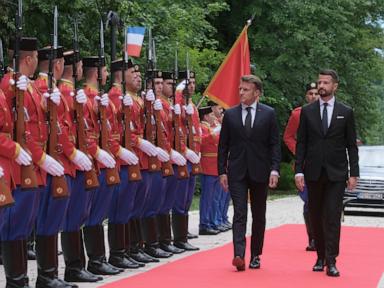
The recent summit in Montenegro played out like a finely tuned piece of political theater. European Union officials and Western Balkan leaders gathered, smiled for the cameras, and repeated the same tired script: EU enlargement has found "new urgency," progress is being made, and integration is just around the corner.
It is a comfortable narrative. It is also entirely wrong.
The mainstream media loves to frame these summits as turning points. They look at geopolitical tensions, look at the map of southeastern Europe, and conclude that Brussels must absorb the Western Balkans to secure its borders. But this lazy consensus ignores the structural, economic, and political realities that make meaningful EU expansion into the region a functional impossibility for the foreseeable future.
We need to stop pretending this is a waiting game that ends in a happy marriage. The current strategy is broken, and everyone in the room knows it.
The Urgency Illusion
The core argument coming out of the Montenegro summit is that geopolitical instability makes Balkan accession urgent. The logic seems straightforward: create a faster track to membership to prevent outside powers from gaining a foothold in Europe’s backyard.
This argument confuses desire with capability.
The EU is not a charity; it is a complex regulatory and economic machinery. You cannot simply bypass the Copenhagen criteria—the essential conditions all candidate countries must meet—without breaking the system itself. These criteria require stable institutions guaranteeing democracy, the rule of law, and a functioning market economy.
Let’s look at the actual data, not the diplomatic press releases. According to the EU’s own progress reports, the track record on judicial independence, corruption, and press freedom across the Western Balkans has largely stagnated or regressed over the past decade. Buying into the "urgency" narrative means believing that geopolitical fear will magically fix deeply entrenched institutional corruption. It won't.
Imagine a scenario where a major global corporation decides to acquire a struggling, heavily indebted competitor with compliance issues, purely out of fear that a rival might buy it first. The acquisition does not save the target company; it drags down the parent corporation's stock price and destabilizes its board. That is what rushing Balkan integration looks like for Brussels.
The Internal Veto Bottleneck
Even if every Western Balkan nation miraculously cleaned up its governance overnight, the institutional architecture of the EU stands as an immovable barrier.
Under current rules, accession requires the unanimous consent of all existing member states. This veto power has turned enlargement into a tool for domestic political grandstanding. We have seen this play out repeatedly: Greece blocked North Macedonia for years over a name dispute; Bulgaria then blocked it over historical and linguistic disagreements; Croatia has dropped hints about blocking Serbia over wartime legacies.
The mainstream consensus suggests that the EU will eventually reform its voting mechanisms, shifting from unanimity to qualified majority voting for enlargement steps. This is wishful thinking.
To change the voting rules, you need... unanimity. The very countries that use their veto as leverage are the ones that must vote to strip themselves of that leverage. I have spent years analyzing European trade and regulatory policy, and if there is one constant, it is that member states do not voluntarily cede veto power unless they are facing an existential crisis that threatens their immediate survival. Balkan expansion does not qualify.
The Economic Reality No One Wants to Calculate
Let’s talk about the money. The EU budget operates on a system of net contributors and net beneficiaries. The Cohesion Fund and the Common Agricultural Policy (CAP) are designed to transfer wealth from richer member states to poorer ones to level the playing field.
If countries like Albania, Bosnia and Herzegovina, North Macedonia, Montenegro, Kosovo, and Serbia join, they will instantly become massive net beneficiaries.
- The CAP Strain: The agricultural sectors in these regions are largely unmechanized and fragmented. Integrating them under current CAP rules would require a massive reallocation of subsidies.
- The Cohesion Cash Drain: Funds currently flowing to regional development in Poland, Spain, or Greece would have to be diverted eastward to build basic infrastructure in the Balkans.
- The Taxpayer Backlash: Voters in France, Germany, and the Netherlands are already fatigued by inflation and domestic economic pressures. Telling them their tax Euros are heading to Podgorica or Sarajevo is a political non-starter.
When you break down the fiscal mechanics, the math simply does not work without a complete overhaul of the EU budget—an overhaul that net contributors will fight tooth and nail.
Dismantling the Premise: Are We Asking the Wrong Question?
When analysts look at this issue, they usually ask: When will the Western Balkans join the EU?
This is the wrong question. It assumes that full membership is the only viable path to economic stability and security in the region. The brutal truth is that chasing full membership has created a state of permanent waiting, allowing regional politicians to blame Brussels for their own domestic failures while raking in pre-accession funds.
Instead, we should ask: Why are we prioritizing an all-or-nothing membership model that clearly does not work?
The focus on full integration blocks more practical, achievable alternatives. The region does not need a seat at the European Parliament or a veto in the European Council to thrive. It needs access to the single market, infrastructure investment, and regulatory alignment.
A Brutal Answer to the Regional Brain Drain
People often ask if EU integration will solve the massive brain drain plaguing the Balkans.
The honest answer is no. In fact, it will likely accelerate it.
Look at what happened to Croatia after it joined in 2013. The combination of EU citizenship and freedom of movement led to a massive exodus of young, educated professionals toward Germany, Austria, and Ireland. The country lost a significant percentage of its workforce in a matter of years.
If the remaining Western Balkan nations open their borders fully today, their healthcare systems, IT sectors, and education systems will empty out within thirty months. The illusion that membership creates local prosperity ignores the gravity well of Western Europe's labor markets.
The Alternative Strategy: Staged Integration
Instead of dangling a carrot that is permanently out of reach, Brussels needs to shift to a model of staged, economic-first integration.
This means granting access to the EU Single Market and specific policy areas in exchange for verified, benchmarked reforms, without the promise of political voting rights in Brussels.
- Phase One: The Common Regional Market. Force the Western Balkan nations to fully integrate their own economies first. If they cannot remove tariff barriers and recognize each other's professional qualifications domestically, they have no business entering the European Single Market.
- Phase Two: Sectoral Access. Allow participation in the EU Energy Union, transport networks, and digital single market. Let the region experience the regulatory rigor of the EU without the political baggage.
- Phase Three: Financial Rewards Without Vetoes. Link increased cohesion funding directly to rule-of-law metrics, monitored by independent external auditors, skipping the political theater of the European Council.
This approach has downsides. It creates a "two-tier" Europe, which critics claim turns the Balkans into permanent second-class citizens. But a two-tier Europe that actually functions is infinitely better than a one-tier fantasy that keeps a whole region stuck in geopolitical limbo for decades.
The Montenegro summit was not a sign of progress. It was a sign of stagnation wrapped in diplomatic optimism. Stop buying the hype about a sudden breakthrough. The future of the region lies not in a boardroom in Brussels, but in radical, painful domestic restructuring that doesn't wait for permission from a union that isn't ready to let them in anyway.



:max_bytes(150000):strip_icc()/how-many-types-of-dwarfism-are-there-2860725-v1-8dae2c531b4b47d9ae36ae404d3308a0.png)