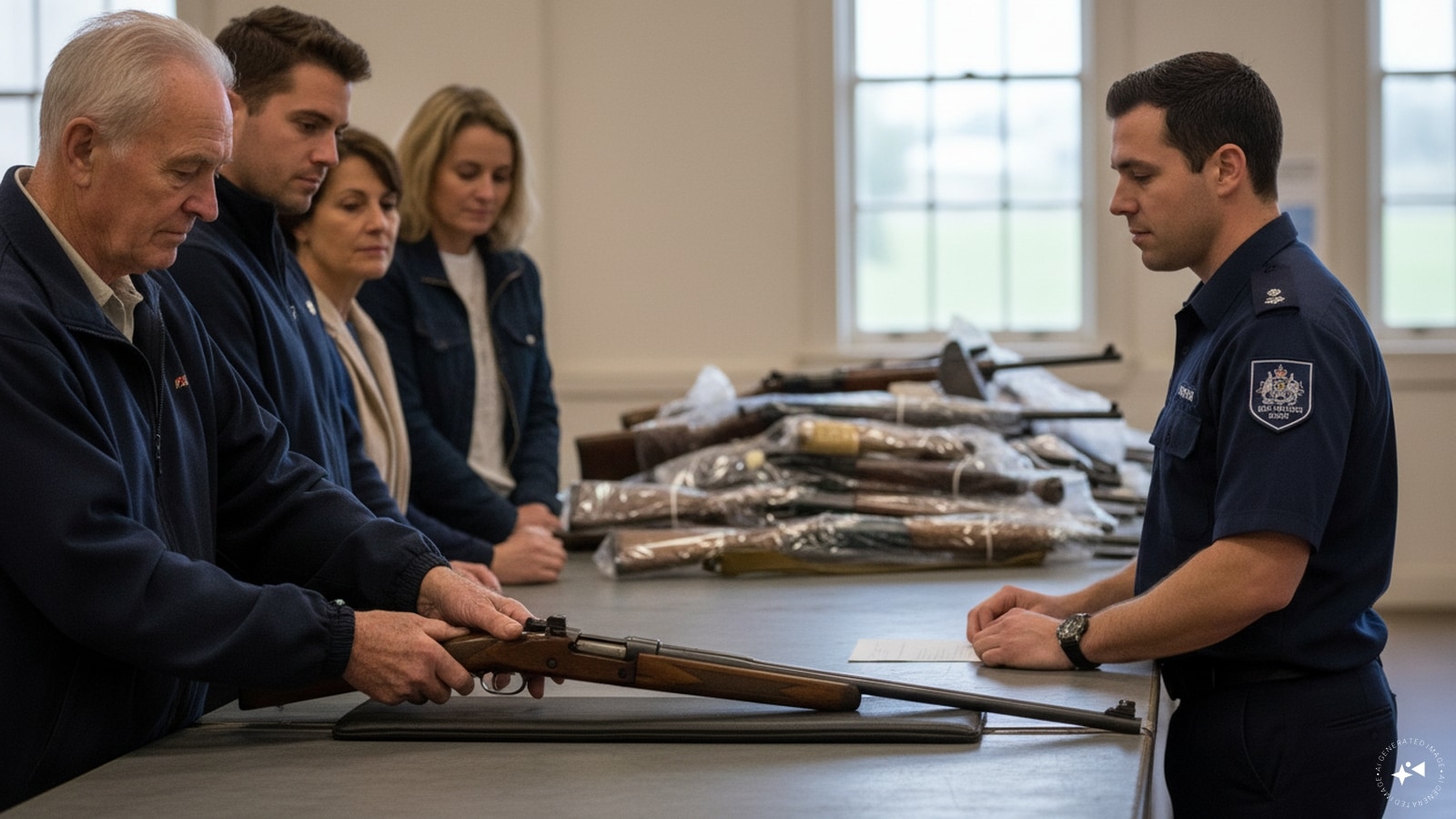
Australia is about to launch its largest firearm surrender campaign in three decades. Prime Minister Anthony Albanese and New South Wales Premier Chris Minns confirmed that the state-level rollout will kick off on November 2. This major push comes directly in the wake of the devastating Bondi Beach terror attack, which left 15 people dead and forced a harsh national reckoning over firearm ownership limits.
If you own firearms in New South Wales or follow shifting legislative landscapes, you need to know how this scheme works, what it pays, and why other states are pushing back.
The Real Trigger Behind the November Launch
The push for a renewed firearms crackdown didn't happen in a vacuum. On December 14, 2025, a father and son opened fire during a Hanukkah celebration at Sydney’s Bondi Beach. The attackers killed 15 people and injured dozens more. Public outrage was immediate. Investigators later revealed that the older gunman held a legal firearms license and owned multiple high-powered weapons.
Within days, Prime Minister Albanese pledged to rewrite the rulebook on national gun safety. New South Wales responded by capping personal ownership at four guns for most individuals, with strict caps and limited exemptions for professional shooters and farmers.
Because thousands of registered weapons suddenly exceeded legal possession limits or fell into newly banned classifications, a massive disposal mechanism became mandatory. November 2 marks the start of that operational phase.
How the Compensation Tiers Work
The government isn't just asking people to hand over weapons for free. The joint federal and state funding model includes clear cash compensation tiers designed to incentivize compliance.
Under the first phase starting in November, payouts vary based on weapon type and condition:
- Revolvers command up to $1,000.
- Semi-automatic handguns are slated for $850.
- Double-barrel shotguns fetch $850, while single-barrel alternatives drop to $650.
- Standard rifles range between $650 and $1,000.
- Air rifles carry a flat compensation rate of $450.
A second phase is scheduled for early 2027. That stage will handle higher-value specialty firearms valued above $3,000, featuring a cap of $10,000 per weapon. Officials are also rolling out industry support packages, offering local dealers grants up to $25,000 alongside temporary license fee relief.
Why Other States Are Dragging Their Feet
A nationwide rollout sounded simple on paper back in December 2025. Reality proved far messier.
While New South Wales pushed forward with a co-funded deal, other regions balked. Queensland and Victoria raised major objections to the structure and financial split. The Northern Territory flat-out refused to contribute regional funds toward the initiative. South Australia offered vague "in principle" backing early on, but concrete execution plans stalled.
This patchwork approach means New South Wales is acting as the primary testing ground. If the November launch successfully reduces local stockpiles without massive civil friction, federal pressure on holdout states will intensify.
What Gun Owners Must Do Now
If you hold a firearms license in New South Wales, preparation is critical. Police will administer the collection process, meaning compliance checks will tighten concurrently.
Audit your current inventory immediately. If your collection exceeds the four-gun limit, or includes newly reclassified items, register for the buyback before the November deadline to secure your payout tier. Surrender points will operate under heavy supervision, and failing to clear surplus stock once grace periods expire will land you in severe legal trouble. Check official state police portals for drop-off location bookings and documentation requirements.