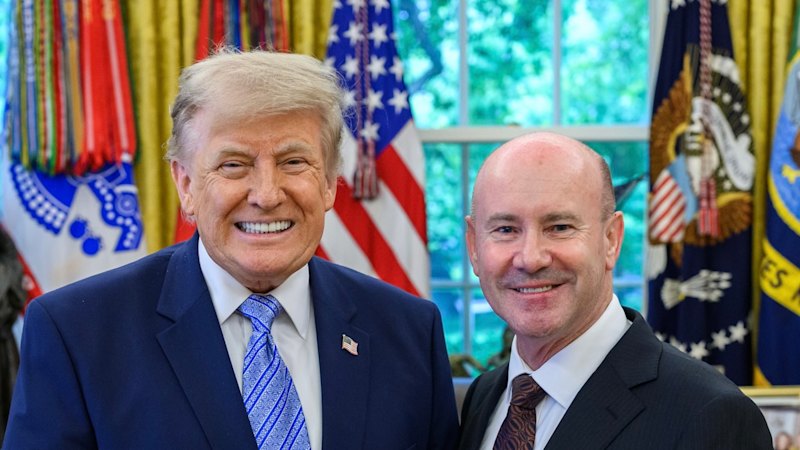
Diplomacy is brutal. One day you are a former Prime Minister running a high-profile embassy, and the next you are packing your bags early because the leader of the free world thinks you are "not the brightest bulb."
That is exactly what happened to Kevin Rudd. He had to pack up and exit Washington ahead of schedule. Prime Minister Anthony Albanese had to find a quick fix. He needed someone who could talk to Donald Trump without triggering an immediate Twitter tirade.
Enter Greg Moriarty.
He is not a career politician. He does not write academic books on Chinese statecraft. He is a quiet, hardened bureaucrat who knows a lot about submarines, Middle Eastern hotspots, and intelligence networks. It is a massive shift in how Australia handles its most important ally.
Moving Past the Personality Clashes
Let's be completely honest about why Rudd is out. Before he became ambassador, Rudd said some incredibly harsh things about Trump. He called him "destructive" and "a traitor to the West." You can try to delete old social media posts, but Washington never forgets. When Trump won his second term, Rudd became a glaring liability. During an Oval Office meeting, Trump openly mocked him, telling reporters he found Rudd "a little bit nasty."
You cannot run an embassy when the president openly dislikes you. Albanese tried to smooth things over, but the friction was a threat to Australia's national interests. The relationship needed immediate repair.
Moriarty brings a totally different vibe. He has spent his life working in the shadows of the civil service and defense intelligence. He served as the Secretary of the Department of Defence. He has run embassies in tough places like Jakarta and Tehran. He does not do public flame wars. He is what politicians call a "safe pair of hands." Washington insiders like Congressman Joe Courtney have praised the move, noting Moriarty has a zero learning curve when it comes to navigating the Pentagon and Capitol Hill.
Securing the Vulnerable Submarine Deal
Moriarty’s biggest headache is keeping the AUKUS nuclear-powered submarine deal alive. Under this agreement, Australia is supposed to buy Virginia-class submarines from the US before building its own fleet with British help. It is the most expensive defense project in Australian history.
But Trump is highly transactional. He views foreign policy through a strict lens of financial cost and benefit. He hates deals where he thinks America is getting ripped off. US shipyards are already struggling to build enough submarines for the US Navy.
Australia needs an insider who can walk into the Pentagon and explain why sending nuclear subs to Adelaide makes strategic sense for America. Moriarty oversaw the AUKUS implementation from the Australian side for years. He knows the production bottlenecks, the naval intelligence, and the exact dollar amounts involved.
We recently got a glimpse of how the new administration sees this. Secretary of War Pete Hegseth noted in Singapore that the US remains committed to the submarine timeline, but he emphasized that it has to be mutually beneficial. He explicitly tied those submarines to "combined defense" during any future military crisis. In short, America expects Australia to show up if things go south in the Pacific. Moriarty knows this language inside out.
Navigating a Messy Middle East
The timing of this diplomatic reset matters because Washington is totally consumed by ongoing instability, including the high-stakes friction surrounding the Iran war. This is where Moriarty’s resume gets incredibly interesting. He was Australia’s ambassador to Iran.
While the world focuses heavily on China and the South China Sea, Washington’s immediate attention is frequently pulled back to the Middle East. Trump has been looking for diplomatic off-ramps after a period of intense military exchanges and strikes on regional infrastructure. He wants a deal that stops Iranian nuclear development without pulling America into another endless conflict.
Australia has traditionally tried to keep its distance from Middle Eastern wars, preferring to focus its military assets closer to home. But when you are asking the US for top-tier nuclear technology, you do not get to choose which global issues you engage with.
Moriarty understand the regime in Tehran better than almost anyone else in Canberra. In the 1990s, he worked in defense intelligence with US Central Command during the Gulf War. He understands how the Pentagon plans for conflict in that part of the world. If the Trump administration wants to talk about regional security, deterrence, or maritime choke points, Moriarty speaks their dialect. He can offer genuine intelligence value to American officials, rather than just asking for favors.
What Needs to Happen Next
Moriarty has officially presented his credentials to Trump in the Oval Office. The polite handshakes are over. Now the real work begins. If Australia wants to protect its alliance during this unpredictable political cycle, the diplomatic strategy must shift immediately.
First, stop trying to play the celebrity diplomat game. The era of the loud, opinionated political ambassador in Washington is dead. Moriarty needs to leverage his reputation as a quiet professional to build deep ties with the key players in the National Security Council and the Pentagon.
Second, Australia has to prove its worth on the factory floor. Moriarty must ensure that Australian financial investments into the US defense industrial base actually help fix American shipyard delays. Trump needs to see that Australia is helping to solve America's industrial supply issues, not just taking ships out of the US fleet.
Finally, Canberra needs to accept that foreign policy under Trump is a two-way street. If Australia expects American protection and technology, it must be ready to offer tangible intelligence, regional access, and military cooperation where it counts. Moriarty’s background means he is uniquely equipped to manage those tough conversations behind closed doors. The cozy days of the alliance are gone, and a much more transactional era has arrived.


