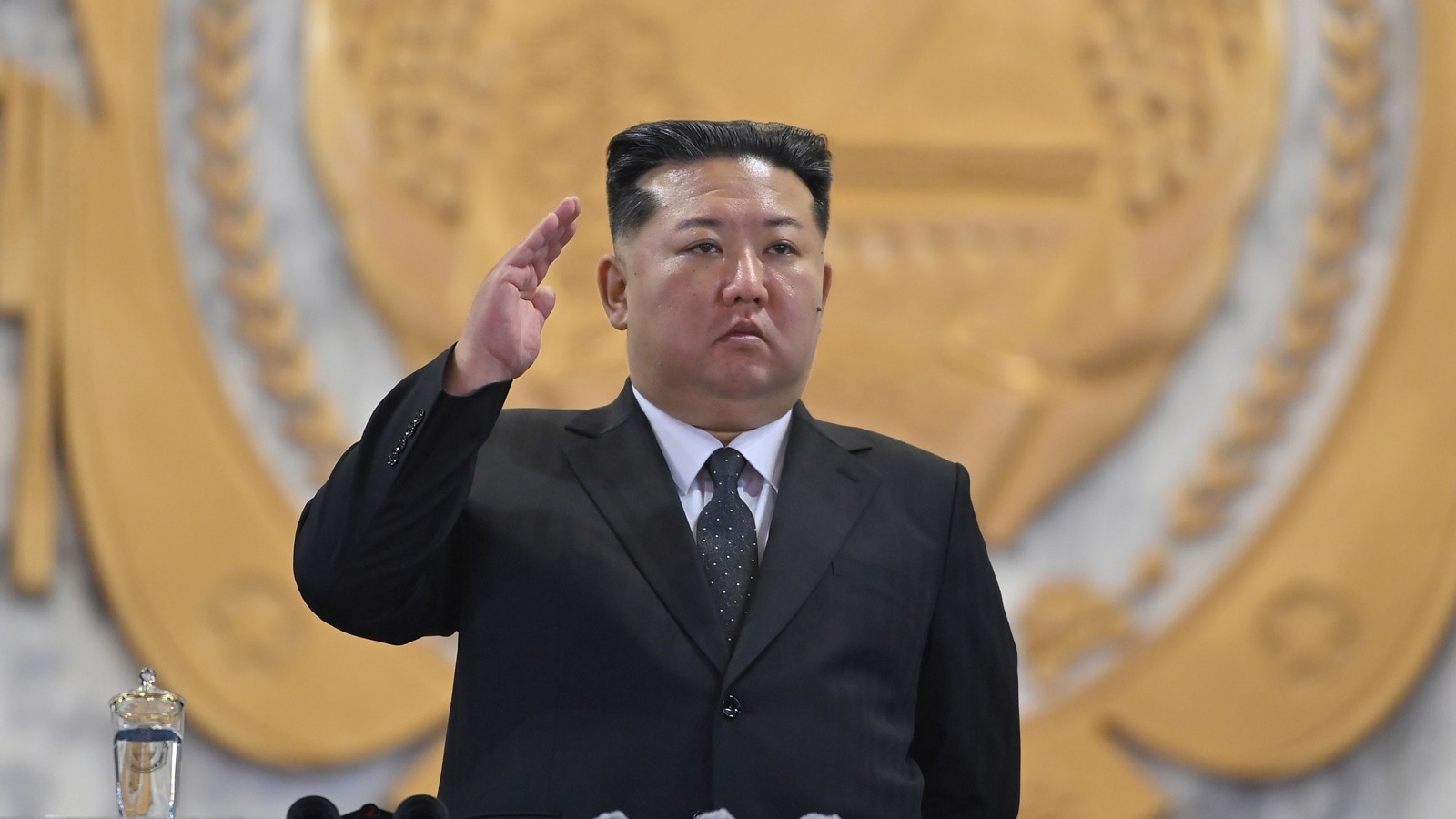
The deployment of North Korean Special Operations Forces (SOF) into the Ukrainian theater introduces a distinct ideological and tactical variable: the institutionalization of self-detonation as a protocol for avoiding capture. While Western military doctrines emphasize the preservation of human capital and the "duty to escape" for Prisoners of War (POWs), the North Korean framework prioritizes the absolute neutralization of intelligence and the symbolic preservation of the state's "invincibility." This strategic divergence is not merely a matter of fanaticism; it is a calculated utility function designed to maintain the integrity of the Kim Jong-un regime's internal control mechanisms while providing the Russian Federation with a high-commitment, low-cost infantry resource.
The Structural Mechanics of Institutionalized Martyrdom
The tactical implementation of self-detonation rests on three psychological and operational pillars. First, the Intelligence Deniability Matrix ensures that no individual soldier can become a source of signal intelligence (SIGINT) or human intelligence (HUMINT). In a conflict defined by rapid drone-assisted capture and social media interrogation videos, the elimination of the POW variable prevents the opposition from gaining psychological leverage.
Second, the Family Liability Loop functions as a fail-safe. North Korean personnel are aware that their performance abroad is directly tethered to the safety and social standing of their kin in the domestic songbun system. A soldier who surrenders or is captured alive represents a catastrophic failure of ideological purity, triggering punitive measures against their family. Self-detonation, therefore, is an act of preservation for the soldier’s domestic legacy and family survival.
Third, the Asymmetric Cost of Replacement in the DPRK (Democratic People's Republic of Korea) is significantly lower than in Western or even contemporary Russian professional units. The North Korean state views these troops as a renewable export commodity. By praising "self-detonation," the leadership reinforces a culture where the asset's value is realized at the moment of its destruction rather than its longevity.
Analyzing the Kinetic Impact of Ideological Zeal
The presence of troops willing to commit "tactical suicide" alters the physics of the front line. Ukrainian defenders, accustomed to the surrender cycles of Russian conscripts or penal units, must recalibrate their engagement rules. This creates a Cognitive Friction Gap.
- Increased Stand-off Distances: The threat of an explosive-rigged combatant forces capturing units to maintain greater distance during clearing operations. This slows the tempo of offensive maneuvers and increases reliance on heavy munitions over infantry precision.
- Resource Diversion: Managing a battlefield where "capture" is replaced by "detonation" requires different medical and explosive ordnance disposal (EOD) resources. The psychological toll on opposing forces—confronting an enemy that views death as a primary objective—cannot be discounted, though its effect often diminishes as the novelty of the tactic wears off and becomes a standard hazard profile.
- The Signal of Commitment: Kim Jong-un’s public praise for these actions serves as a diplomatic signal to Moscow. It demonstrates that North Korea is not just providing "manpower" but "ideological ammunition" that will not defect, surrender, or complain about conditions—a critical requirement for the high-attrition warfare currently defining the Donbas and Kursk sectors.
Economic and Logistic Dependencies of the DPRK-Russia Axis
The logic of sending troops to self-detonate is inextricably linked to the Macro-Economic Exchange Rate of the war. Russia requires mass; North Korea requires hard currency, satellite technology, and modern food security. The "self-detonation" protocol ensures that the North Korean state maintains a monopoly on the narrative of its soldiers' involvement. If soldiers do not return and cannot be interviewed by international media, the North Korean government retains total control over the domestic perception of the war.
The logistics of this deployment involve a "blind" integration model. North Korean units are often integrated into Russian structures under the guise of "Special Buryats" or other ethnic minorities to maintain a degree of plausible deniability. However, the unique behavior of self-sacrifice serves as a biological signature that negates this disguise. From a data-driven perspective, the survival rate of these units is secondary to their Disruption Quotient. If 1,000 North Korean soldiers can occupy 3,000 Ukrainian troops due to the increased caution required to engage them, the mission is deemed a success by the Kremlin, regardless of the casualty count.
Theoretical Limitations of the Total Sacrifice Model
The efficacy of this model faces a sharp bottleneck: Operational Degradation. While initial waves of ideologically primed SOF may execute self-detonation protocols with high fidelity, the protocol’s effectiveness scales poorly.
- Information Leakage: Despite the regime's best efforts, the reality of the front line eventually filters back through the officer corps. The discrepancy between "glorious sacrifice" and the reality of drone-directed artillery strikes can erode the ideological foundation of the unit.
- Diminishing Returns on Terror: In modern warfare, once a threat is categorized (e.g., "the enemy will detonate upon capture"), it is mitigated through technology. FPV (First Person View) drones and thermal optics allow for the neutralization of such threats before they reach the proximity required to cause meaningful damage to the captors.
- The Loyalty vs. Competence Trade-off: Extreme ideological rigidity often comes at the expense of tactical flexibility. A soldier focused on the mechanics of their own death may miss opportunities for survival that could lead to future tactical wins.
Forecasting the Strategic Pivot
The praise for self-detonation signals a transition from "experimental participation" to "standardized attrition." We should expect an increase in the technical sophistication of North Korean equipment, specifically the integration of "dead-man switches" or simplified explosive vests into standard-issue SOF gear. This turns the individual infantryman into a loitering munition with human judgment.
The Russian command will likely continue to use North Korean units as Ablative Armor for their more valuable professional paratroopers and specialized drone pilots. By placing the "total sacrifice" units in the highest-risk zones (such as the initial breach of fortified urban areas), Russia preserves its own domestic political capital.
For the international community, the focus must shift from the novelty of the North Korean presence to the structural support allowing it. The North Korean decision-making process is a closed loop; it does not respond to traditional casualties. It only responds to the interruption of the Technological-Financial Pipeline from Moscow. Counter-strategies should focus on the digital and physical infrastructure of this transfer, rather than the infantrymen on the ground who have been programmed for self-destruction long before reaching the Ukrainian border. The ultimate neutralization of this tactic lies in the systematic demonstration of its futility through autonomous, long-range engagement that denies the soldier the proximity required for their final act to hold any military value.


