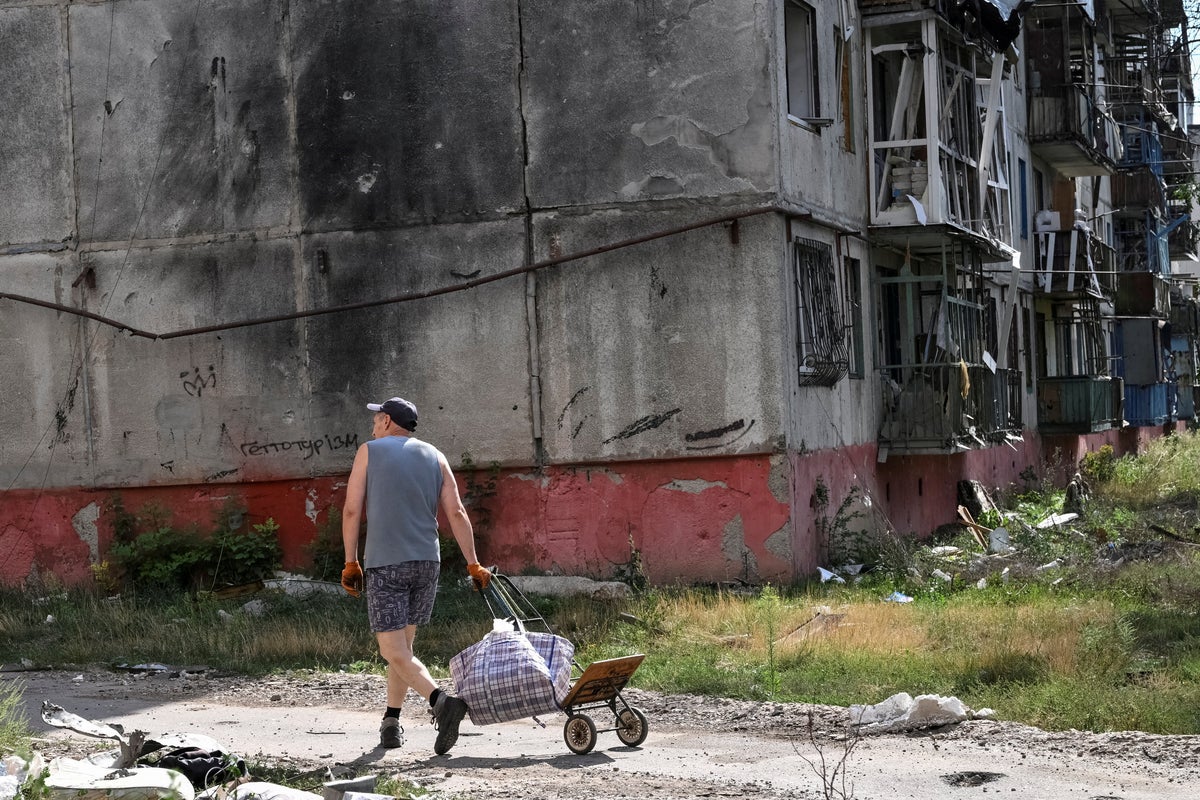
The operational friction governing the eastern Ukrainian theater is frequently mischaracterized as a chaotic scramble for square kilometers. In reality, the methodical erosion of settlements along the Donetsk industrial corridor represents a calculated kinetic exchange. When frontline positions like Druzhkivka transition from municipal hubs to contested ruins, observers often mistake tactical displacement for systemic collapse. A rigorous examination of the Donbas theater reveals that territorial loss operates as a lagging indicator of structural attrition, driven by distinct mechanical constraints rather than erratic military performance.
The Donbas defensive framework relies on an urban-industrial node network often termed the fortress belt. This architecture functions through three distinct operational pillars that alter standard military geometry.
The first pillar is urban spatial density. Soviet-era concrete construction, subterranean industrial infrastructure, and multi-story housing blocks convert civilian settlements into formidable defensive barriers. These nodes absorb high explosive payloads with minimal structural degradation of subterranean utility networks, allowing defenders to maintain command nodes and personnel protection despite surface devastation.
The second pillar is logistical interdiction vulnerability. The road networks connecting the fortress belt are subject to continuous surveillance and precision strikes by uncrewed aerial systems. Surface transit requires physical shielding, such as overhead anti-drone netting, transforming logistics into a slow-velocity operation where throughput capacity dictates defensive sustainability.
The third pillar is force-to-space ratios. The theater is saturated with reconnaissance and strike drones, creating transparency zones that prohibit massed mechanized assembly. Consequently, both offensive and defensive operations devolve into small-unit infantry infiltration supported by remote-controlled ground supply vehicles and decentralized artillery adjustments.
The strategic cost function governing this zone is asymmetric. For the offensive force, territorial acquisition requires sustaining continuous personnel replacement rates despite high casualty multipliers per kilometer advanced. Mechanized columns are systematically neutralized by layered drone teams before reaching breaching points, forcing a reliance on attritional infantry infiltration. For the defensive force, the cost function is measured in structural integrity and municipal viability. When a town like Druzhkivka is reduced to rubble, its utility as a protective shelter diminishes, forcing a retrograde movement to secondary lines to preserve combat power.
Territorial retreat under these conditions is not an operational failure; it is an economic adjustment within a brutal kinetic market. The tactical value of a ruined settlement approaches zero once its subterranean layers are compromised and its logistics corridors fall within direct fire range. Holding rubble beyond this threshold increases the liability of encirclement and catastrophic personnel loss. Therefore, retrograde maneuvers are executed to reset the exchange ratio, trading space to maximize enemy attrition during subsequent infiltration attempts.
This dynamic explains the prolonged timelines of the current campaign. Political imperatives demanding rapid territorial conquest clash directly with the physical realities of a drone-saturated battlefield. As military leadership restructures command hierarchies to empower operational-level autonomy and decentralize tactical response, the defensive network adapts to counter incremental infiltration.
The trajectory of the Donbas campaign will not be determined by symbolic breakthroughs or sudden collapses of the frontline. The determining variable is the comparative sustainability of each belligerent's industrial and demographic reserves against the baseline cost of urban attrition. Future operational phases will depend entirely on which side can optimize its rear-area logistics and electronic warfare resilience faster than the opposing force can exhaust its operational momentum.