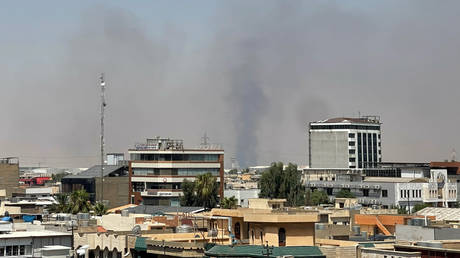
The deployment of kinetic less-lethal munitions in urban civil management represents an escalating equilibrium between state enforcement agencies and public assemblies. During the July 20 demonstration near Jantar Mantar in New Delhi, conflicting accounts regarding the deployment of 12-gauge pump-action shotguns firing metallic pellets highlighted the institutional gaps between administrative denials, medical documentation, and multi-agency riot control operations.
The Three Pillars of Kinetic Dispersal Friction
The structural friction surrounding the July 20 event rests upon three structural pillars: technical weapon classification, multi-jurisdictional agency overlaps, and terminal ballistics.
1. Technical Weapon Classification and Inventories
Delhi Police issued explicit denials regarding the use of pellet guns, stating that such weaponry does not exist within their tactical inventory. However, crowd control operations in national capitals rarely rely on a single law enforcement body. The deployment architecture on July 20 integrated local municipal units with the Rapid Action Force (RAF), a specialized wing of the Central Reserve Police Force (CRPF) operating under central authority. While municipal police forces may lack specific kinetic munitions, federal auxiliary forces routinely carry anti-riot inventories that include 12-gauge shotguns firing lead or alloy pellets. Institutional denials issued by local police can be technically accurate regarding their own personnel while failing to capture the actions of co-deployed federal units.
2. Terminal Ballistics and Medical Record Validation
The mechanical behavior of pellet munitions introduces severe non-linear damage vectors. A single 12-gauge cartridge contains dozens of small metallic sub-projectiles that disperse outward upon exiting the barrel. The spread pattern ($\theta$) expands as a function of distance ($d$), creating an unpredictable cone of engagement:
$$A_{\text{spread}} \propto (d \cdot \tan\theta)^2$$
Because individual pellets lack guidance and experience rapid trajectory decay, aim points below the waist become difficult to maintain in dense urban crowds. Clinical admissions across regional facilities—including the All India Institute of Medical Sciences (AIIMS) and Lady Hardinge Medical College—documented penetrating trauma consistent with high-velocity lead or metallic fragments. Medico-legal certificates specifically referenced metallic foreign bodies lodged in upper thoracic regions, facial structures, and ocular cavities.
The physical presence of extracted metallic sub-projectiles invalidates assertions that injuries stemmed solely from standard tear gas canister shrapnel or physical force.
3. The Protocol Gap in High-Density Urban Centers
Standard operational guidelines issued by law enforcement research bodies mandate a strict escalation ladder:
- Passive barrier enforcement
- Fluid mechanical barriers (water cannons)
- Chemical irritants (CS gas / tear shells)
- Physical contact measures (baton charges)
- Kinetic impact munitions (rubber bullets / metallic pellets)
In high-density corridors like those surrounding central parliamentary zones, fluid movement is constrained by urban geometry. When crowd densities exceed $4 \text{ persons/m}^2$, retreat velocities drop significantly. Security forces firing kinetic munitions into congested spaces convert crowd control tools into indiscriminate fragmentation hazard systems, as bystanders and retreating elements intercept trajectories intended for hostile actors.
Structural Risk Variables in Tactical Deployments
The table below outlines the operational profile and risk matrix associated with standard crowd dispersal methods deployed in metro regions:
| Dispersal Mechanism | Target Specificity | Effective Range | Primary Injury Mechanism | Penetration Potential |
|---|---|---|---|---|
| Water Cannon | Area / Low | 10–30 meters | Blunt force impact, fall trauma | None |
| Tear Gas (CS) | Non-specific Area | 50–150 meters | Respiratory / Ocular irritation | Low (Canister impact risk) |
| Lathi (Baton) | Individual / Direct | Contact range | Soft tissue hematoma, bone fracture | None |
| Rubber Bullets | Semi-targeted | 20–40 meters | Deep blunt force, internal contusion | Low to Moderate |
| Pellet Guns | Area / Scatter | 15–50 meters | Penetrating soft tissue, ocular damage | High |
Systemic Failure Vectors in Civil Maintenance
When non-lethal doctrines break down, three specific operational failure vectors emerge:
- Command Chain Ambiguity: Co-deploying municipal police with specialized paramilitary units without a unified tactical commander creates operational blind spots. Unit commanders default to their independent rules of engagement.
- Distance Decay Miscalculation: Firing kinetic weapons from ranges under 15 meters causes sub-projectiles to travel as a dense, high-energy mass rather than a widely dispersed pattern, dramatically increasing penetration depth into vital organs.
- Evidence Conservation Deficits: The absence of mandatory body-worn camera mandates for all frontline personnel forces judicial authorities to rely on disparate mobile footage and post-hoc medical evaluations, extending political instability.
Law enforcement agencies managing high-stakes urban protests must immediately harmonize cross-agency operational protocols, mandate body-camera tracking for all personnel deployed with kinetic options, and eliminate multi-pellet scattering firearms from urban riot configurations in favor of single-point impact munitions with predictable kinetic transfer.