The air tasted like copper and old paper long before the first sirens reached the valley.
It is a strange thing to watch the horizon turn the color of a bruised plum at three in the afternoon. You do not think of statistics then. You do not think of the dry winter, the meager rainfall charts, or the policy briefs gathering dust in municipal offices across the continent. You think of a photograph left on the kitchen table. You think of the heavy wooden door, and whether you locked it properly.
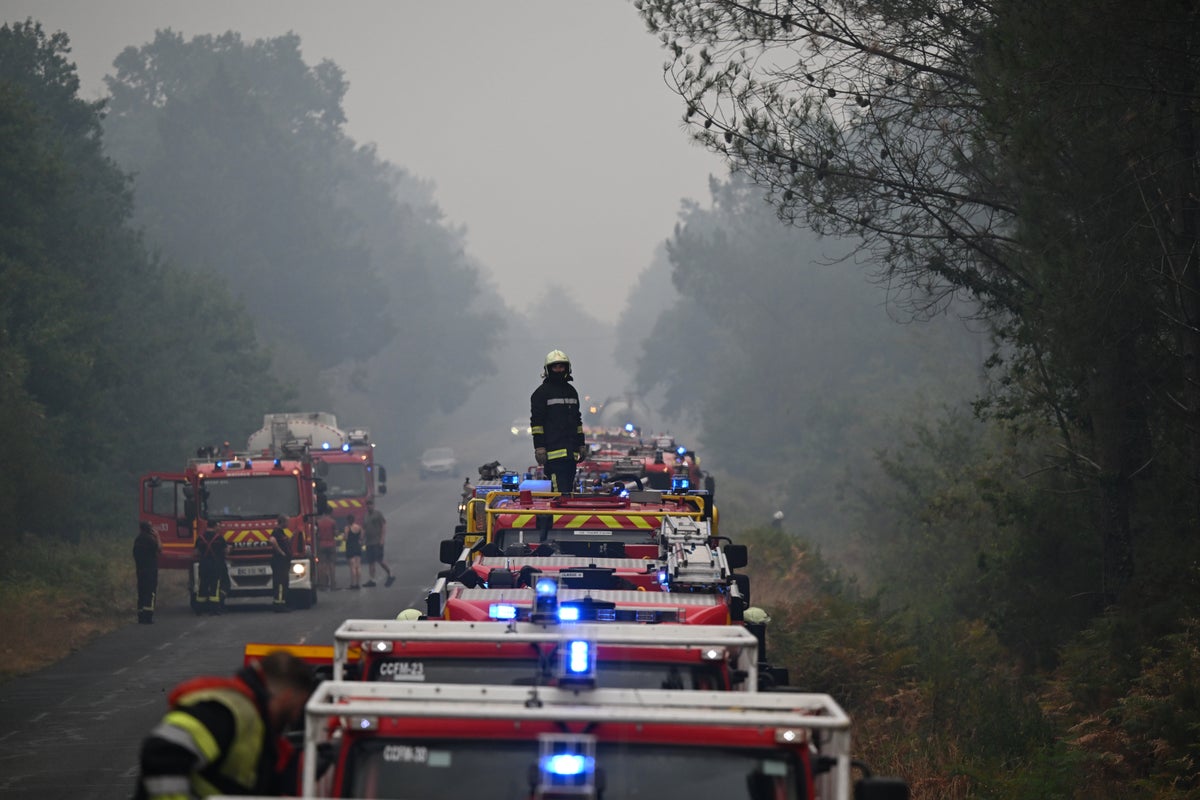
Across southern Europe, that copper sky became the ceiling under which hundreds of thousands of lives were suddenly re-written. The official tallies tell a story of scale that numbs the mind: more than 280,000 people forced to flee as devastating wildfires ripped through the parched geography of Spain and France.
Numbers are shields. They protect us from the unbearable weight of individual grief.
Consider a hypothetical resident of the Gironde department in southwestern France, a man named Jean whose family has tended a small patch of pine-scented earth for three generations. Jean did not read the climate models predicting extreme fire weather days in advance. He smelled the resin burning before he saw the flame. When the local gendarmerie pounded on his door, giving him precisely ten minutes to gather what mattered, the vastness of human history narrowed down to a single cardboard box.
Evacuation is not an orderly military maneuver. It is chaos wrapped in smoke.
It looks like bumper-to-bumper traffic on narrow country lanes flanked by walls of amber fire. It looks like children clutching stuffed animals, staring out car windows at a world transforming into cinders. It looks like elderly farmers refusing to leave their livestock, arguing with exhausted firefighters who have been awake for forty-eight hours straight.
The fire does not care about property lines. It does not care about borders. Leaping from the pine forests of southwestern France down into the scorched earth of Spain’s Extremadura and Valencia regions, the flames acted with a singular, hungry logic. Heat creates its own weather. It sucks oxygen from the valleys, creates towering columns of pyrocumulonimbus clouds, and hurls burning embers half a mile ahead of the main front, setting new fires before the old ones have even consumed their prey.
Physics is unforgiving.
When temperatures climb year after year, turning once-lush underbrush into kindling, the landscape shifts from a living ecosystem into a loaded weapon. Experts call this a mega-fire regime. That phrase sounds clinical, sterile, almost academic. But standing on a scorched hillside where an ancient olive grove used to stand, you realize the academic terms are just whispers trying to describe a monster.
The human cost hides in the quiet moments after the headlines fade. It lives in the temporary gymnasiums converted into Red Cross shelters, where strangers share cots and stare blankly at mobile phones, waiting for news of whether their village still exists. It lives in the lungs of firefighters coughing up black soot, heroes whose names never make the evening news. It lives in the psychological fracture of displacement—the lingering terror that every gust of wind carrying the scent of a neighbor's barbecue might be the return of the beast.
We have built our modern lives on the illusion of permanence. We pave roads, build brick houses, plant vineyards, and assume the script of the seasons will repeat forever without alteration.
The smoke tells a different story.
When 280,000 people are displaced in a matter of days, the maps we rely on change shape. Tourism boards scramble. Rural economies fracture. The intricate web of rural life—the bakers, the vintners, the schoolteachers, the shepherds—is unspooled in a single afternoon.
Yet, beneath the ash, something else persists. It is not resilience in the shiny, corporate sense of the word. It is the stubborn, quiet refusal of communities to vanish. It is the neighbor who opens his garage to house three families he has never met. It is the veterinarian treating burned paws in makeshift field hospitals. It is the stark, sobering realization that while we cannot always outrun the climate we have shaped, we are still bound tightly to one another when the sky falls down.
The wind shifts. The embers finally die in the damp earth of dawn. And the survivors step outside to look at a horizon that will never look the same again.