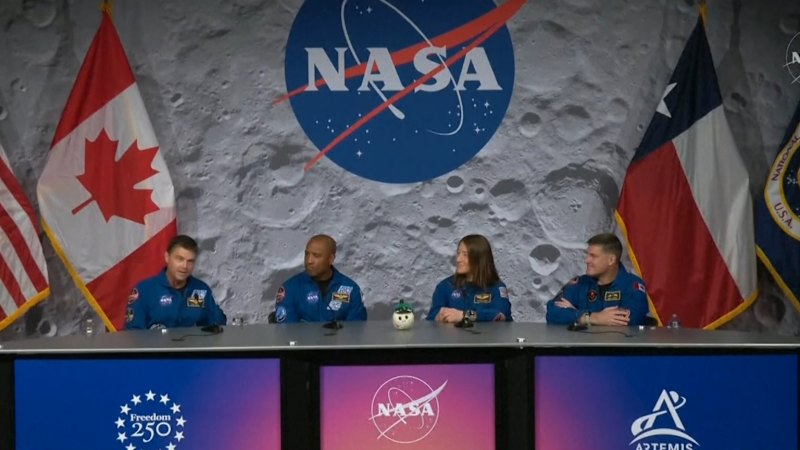
The Artemis II mission represents a transition from low-Earth orbit (LEO) saturation to deep-space operational validation. While public discourse often focuses on the narrative of "returning to the moon," the actual strategic value of Artemis II lies in the systematic stress-testing of the Orion Life Support Systems (LSS) and the Heat Shield’s thermal performance under high-energy reentry conditions. This mission is not a repeat of Apollo; it is the calibration of a reusable deep-space architecture designed to function within a vastly different risk tolerance framework than its predecessor.
The High Earth Orbit Strategy and System Saturation
Artemis II utilizes a High Earth Orbit (HEO) maneuver to mitigate the risk of premature Trans-Lunar Injection (TLI). Unlike the Apollo missions, which burned for the moon shortly after achieving LEO, Artemis II will spend approximately 24 hours in a highly elliptical orbit. This delay serves a specific engineering purpose: the validation of the Orion spacecraft’s environmental control and life support systems (ECLSS) while still within a reachable distance for an emergency abort.
The mission architecture hinges on two distinct orbital phases:
- Initial Orbit (ICPS Phase): The Interim Cryogenic Propulsion Stage places the crew into an orbit with a perigee of roughly 185 kilometers and an apogee of 2,900 kilometers.
- HEO Phase: A second burn raises the apogee to approximately 74,000 kilometers.
During these phases, the crew must verify that the nitrogen-oxygen atmosphere regulation, CO2 scrubbing, and water recycling systems can maintain homeostasis under the metabolic load of four humans. Previous uncrewed testing (Artemis I) provided data on the physical integrity of the hull, but it could not simulate the biological humidity, heat production, and waste management requirements of a live crew. The HEO phase is the "go/no-go" gate for the lunar flyby. If the ECLSS displays a marginal failure rate during these 24 hours, the mission can be aborted using the Service Module's propulsion to return to Earth immediately.
Thermal Protection Systems and Reentry Kinematics
The most significant technical bottleneck in deep-space exploration is the management of kinetic energy during atmospheric reentry. Artemis II will return from the moon at velocities exceeding 11 kilometers per second (approximately 25,000 mph). At these speeds, the Orion heat shield must dissipate temperatures reaching $2,760^{\circ}C$ ($5,000^{\circ}F$).
The heat shield is an ablative system composed of Avcoat. This material is designed to erode in a controlled manner, carrying heat away from the capsule through a process of phase change and mass loss. However, data from Artemis I indicated unexpected "char loss" patterns—small pieces of the ablative material liberated during reentry rather than vaporizing smoothly.
For Artemis II, the risk assessment shifts from theoretical modeling to empirical survival. The reentry trajectory uses a "skip" maneuver, where the capsule enters the upper atmosphere, bounces back slightly to bleed off velocity, and then re-enters for the final descent. This reduces the peak G-loads on the crew but extends the duration of thermal exposure. The structural integrity of the heat shield is the single point of failure that cannot be bypassed or redundantized; it is a binary success metric.
The Three Pillars of Deep Space Communications
Operating 400,000 kilometers from Earth introduces a latency and bandwidth constraint that alters command-and-control dynamics. Artemis II serves as the primary testbed for the Deep Space Network (DSN) under human-in-the-loop conditions. The communication architecture is divided into three functional layers:
- S-Band (Command and Telemetry): Low-bandwidth, high-reliability links for vital signs and orbital data.
- Ka-Band (High-Volume Data): Used for transmitting high-definition video and complex scientific telemetry.
- Optical (Laser) Communications: Artemis II will carry the O2O (Orion Artemis II Optical Communications System), which aims to demonstrate data rates up to 260 Mbps.
The shift toward optical communication is a necessity for future Mars missions. Radio waves spread over distance (the inverse-square law), leading to significant signal degradation. Laser communication remains more collimated, allowing for higher data throughput with lower power consumption. The challenge lies in the precision required for pointing; the spacecraft must maintain a laser lock on a ground station with arcsecond accuracy while traveling at lunar velocities.
Human Factors and the Radiation Environment
Beyond the Van Allen belts, the crew is exposed to a stochastic radiation environment consisting of Galactic Cosmic Rays (GCRs) and potential Solar Particle Events (SPEs). Artemis II is the first mission in over 50 years to place humans in this environment without the protection of Earth's magnetosphere.
The Orion spacecraft handles this through a combination of passive shielding and operational protocols. In the event of a significant solar flare, the crew is instructed to retreat to the center of the capsule, using the mass of the storage lockers and water supplies as a makeshift radiation storm shelter. The "mass-shielding" strategy relies on the principle that hydrogen-rich materials (like water and plastic) are more effective at stopping high-energy protons than heavy metals, which can produce secondary radiation (spallation) when struck.
The Propulsion Bottleneck and the SLS Block 1 Limits
The Space Launch System (SLS) Block 1, which powers Artemis II, is a legacy-derived heavy-lift vehicle. While capable, its current configuration is optimized for the Orion/Service Module stack and little else. The mission profile reveals a tight mass margin. Every kilogram of life support, radiation shielding, or scientific equipment added to the capsule requires a proportional increase in propellant, which in turn increases the total mass the SLS must lift out of Earth's gravity well.
The ICPS (Interim Cryogenic Propulsion Stage) is the current weak link in the chain. It lacks the restart capability and endurance required for more complex orbital insertions. This is why Artemis II is a "free-return" trajectory. The spacecraft is placed on a path that uses the moon's gravity to whip it back toward Earth without requiring a massive engine burn to enter lunar orbit. This "figure-eight" path is an elegant solution to a propulsion deficit, but it limits the crew's ability to react to anomalies once they have left HEO.
Structural Redundancy vs. Operational Complexity
The Artemis program intentionally bifurcates mission goals between the spacecraft (Orion) and the launch vehicle (SLS). This decoupling allows for modular upgrades but introduces integration risks. The Orion Service Module, provided by the European Space Agency (ESA), manages the propulsion and power for the capsule.
- Power Generation: The four solar array "wings" must track the sun while the spacecraft maintains an orientation that protects the crew from radiation and optimizes thermal management.
- Thermal Control: Ammonia-based cooling loops reject heat through radiators on the Service Module. A failure in these loops would require an immediate mission termination, as the electronics and crew would overheat within hours.
The interdependence of these systems creates a "cascading failure" risk profile. A power drop affects the pumps in the cooling loop, which leads to thermal buildup, which eventually triggers an emergency shutdown of the flight computers. The Artemis II mission is designed to find the margins of these interdependencies before the hardware is committed to the Lunar Gateway or a moon landing.
Strategic Allocation of Lunar Mission Assets
The Artemis II mission is not merely a flight; it is an industrial stress test. The data gathered will determine the final design specifications for the Exploration Upper Stage (EUS) and the docking protocols for the Starship Human Landing System (HLS).
The immediate tactical priority is the verification of the "Manual Handling" mode. While the spacecraft is highly automated, the crew will perform proximity operations with the ICPS after separation. This test validates the optical sensors and the pilot’s ability to maneuver a 25-ton spacecraft with precision. This skill is non-negotiable for future missions involving docking with the Lunar Gateway or the HLS in lunar orbit.
The decision-making matrix for the mission must prioritize the integrity of the heat shield and the reliability of the ECLSS over scientific objectives. If the telemetry from the first 24 hours in HEO shows even a 5% deviation from the expected oxygen consumption or CO2 scrubbing efficiency, the mission must be diverted to a high-speed reentry test. The success of the Artemis program depends on the willingness to abort a high-profile mission to preserve the hardware and human capital for the long-term goal of a sustainable lunar presence.
The definitive forecast for the next 36 months is a focus on "char-loss" mitigation. NASA will likely re-evaluate the Avcoat application process, possibly moving toward a more monolithic or reinforced structure if Artemis II reveals that the "skip" reentry places too much mechanical stress on the current shield design. The move toward Block 1B of the SLS will also be accelerated to remove the propulsion constraints that currently dictate the free-return trajectory.