The air inside the control room in Boca Chica, Texas, does not smell like rocket fuel. It smells like stale coffee, recycled oxygen, and the sharp, metallic tang of collective anxiety. Hundreds of engineers sit shoulder-to-shoulder, their faces illuminated by the cold blue glow of telemetry screens. They are watching a silver monument, taller than any statue of antiquity, screaming through the upper reaches of the atmosphere at twenty times the speed of sound.
On the public broadcast, millions see a sleek, futuristic cylinder dancing with plasma. But inside the room, they see data. They see a trembling line on a graph. They see friction translated into numbers that shouldn’t make sense for a machine built by human hands.
Then, the screen goes white.
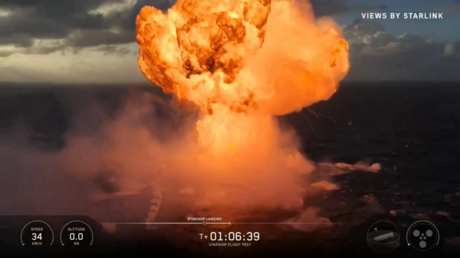
A standard news headline reports this moment with practiced detachment: SpaceX Starship bursts into flames during fiery Indian Ocean splashdown after test flight. It sounds like a disaster. It reads like a eulogy for a multi-billion-dollar piece of hardware that ended its life as a scattering of charred metal sinking into the dark abyss of the sea.
But they are misreading the room. They are misreading the history of how humanity actually builds the future.
To understand what happened in the lonely stretches of the Indian Ocean, you have to look past the explosion. You have to look at the people who cheered when it happened.
The Price of Admission to the Cosmos
We have been conditioned by decades of government spaceflight to believe that a successful mission looks like a clean, predictable math equation. A rocket launches, a satellite deploys, a capsule splashes down under three perfect orange-and-white parachutes, and everyone gets a medal. That was the Apollo model. It was magnificent, but it was also unsustainably expensive, bureaucratic, and slow. It treated every vehicle like a priceless glass ornament.
Consider a hypothetical engineer named Sarah. She didn't sleep last night. For the past six months, her entire universe has narrowed down to the thermal protection tiles lining the belly of Starship. These hexagons of silicon fiber are designed to withstand temperatures reaching $1500^\circ\text{C}$—hot enough to melt steel.
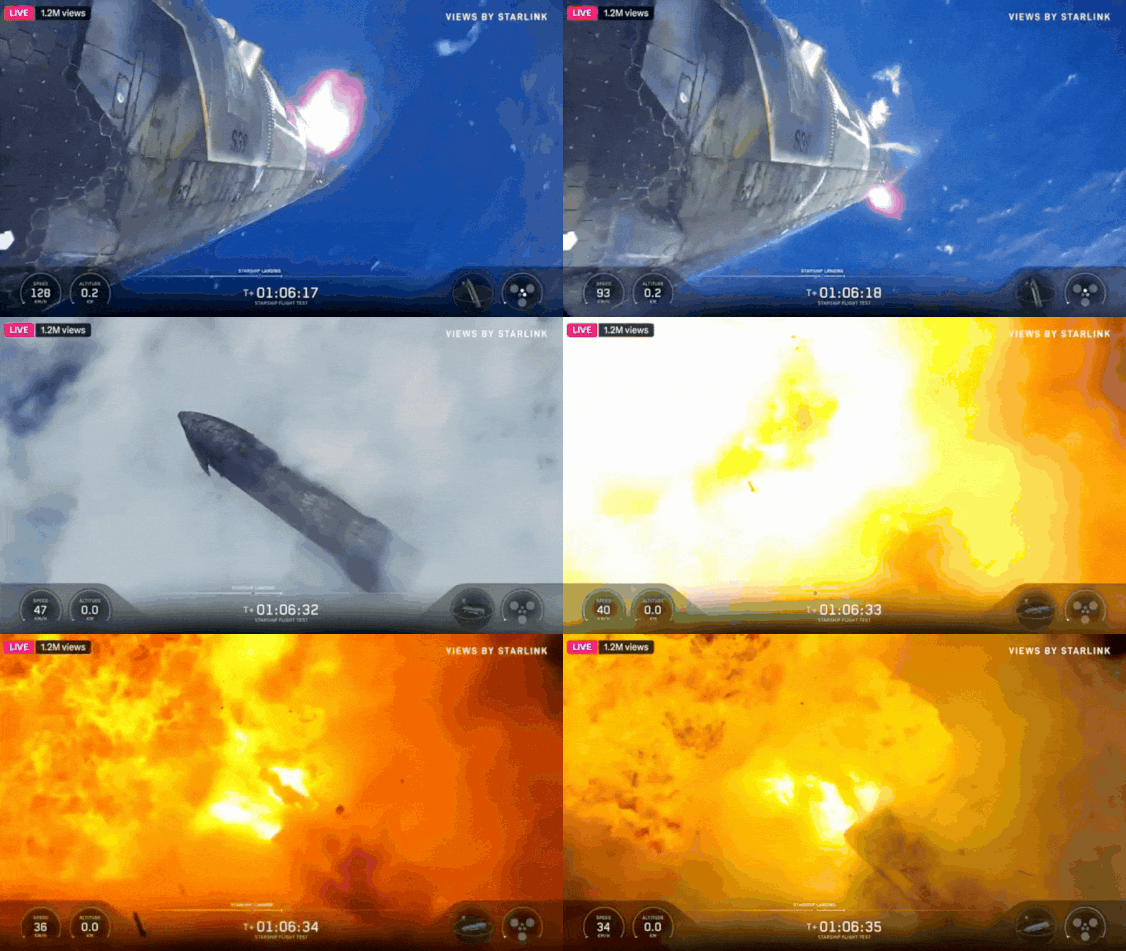
During this flight, Sarah watches the live feed as Starship plunges belly-first into the atmosphere. The friction of the air creates a terrifying, beautiful envelope of superheated plasma around the ship. It glows a deep, demonic purple, then a blinding white. On the camera feed, you can see the ship's steering flaps beginning to erode. Pieces of the thermal tile break away like burning scales flaking off a dragon.
Sarah isn't panicking. She is leaning forward, memorizing how the metal warps.
When the vehicle finally succumbs to the intense pressure and structural stress during its final descent, erupting into a fireball over the water, the headline writers see a failure. Sarah and her team see a mountain of invaluable, irreplaceable data. They pushed the machine until it broke, which is the only way to truly know where the breaking point lies.
This is the philosophy of iterative design. You don't spend ten years trying to build a flawless machine on paper. You build ten machines, fly them, break them, fix the flaw, and fly again. It is loud. It is messy. It looks like a catastrophe to the uninitiated.
But it works.
The Illusion of the Perfect Launch
The public often asks why a company would willingly sacrifice a machine the size of a skyscraper just to gather a few gigabytes of telemetry. The answer lies in the sheer scale of what is being attempted.
Starship is not just another rocket. It is an attempt to make orbital spaceflight as routine as commercial aviation. When a commercial airliner lands at an airport, it doesn't get thrown into the ocean; it taxis to a gate, refuels, and takes off again a few hours later. To achieve that with a vehicle traveling at $27,000\text{ km/h}$ requires mastering forces that defy intuitive engineering.
Imagine driving a car down a highway at ninety miles per hour and trying to stick your hand out the window. The wind pushes your hand back with immense force. Now, multiply that speed by two hundred. The air stops acting like a gas and starts acting like a solid wall. The friction turns the very atmosphere into a furnace.
During this specific test flight, Starship achieved something extraordinary before its fiery end. It survived the absolute worst of this orbital re-entry phase. It controlled its descent through the thickest parts of the atmosphere, steering its massive bulk using aerodynamic flaps that were actively melting under the heat.
The explosion at the very end was not a structural collapse during flight; it was the violent climax of a vehicle reaching its absolute limit at the final hurdle. The ship made it to the ocean. It hit its target zone.
The fire was just the ocean reclaiming the steel.
What the Headlines Miss
The danger of standard reporting is that it frames technological progress as a binary game of wins and losses. If the rocket survives, it’s a win. If it explodes, it’s a loss.
This mindset stalls human progress. If we are afraid of the fire, we never light the fuse.
The true milestone of this flight wasn't that the ship broke apart; it was how far it went before it did. Previous tests saw vehicles disintegrating minutes after clearing the pad, or losing control in the vacuum of space. This time, the booster stage—the massive Super Heavy rocket—performed a flawless countdown, separated cleanly, and executed a soft landing in the Gulf of Mexico, hovering over the water precisely as planned before gently tipping over.
That alone would have been a historic triumph five years ago. Now, it is treated as a footnote because the upper stage had the audacity to put on a fireworks show over the Indian Ocean.
We are witnessing a shift in human capability that happens only once every few generations. The stakes are entirely invisible to someone looking only for a pristine landing video. The stakes are the cost per kilogram of lifting humanity's future into the stars. If you can make a rocket fully reusable, the cost of space exploration drops by an order of magnitude. The cosmos opens up.
The Remnants in the Water
Out in the Indian Ocean, the waters are quiet now. The steam has cleared. The fragments of stainless steel have sunk to the ocean floor, joining the remnants of old maritime voyages and the silent topography of the deep.
To the casual observer, it is a graveyard of wasted capital.
But back in Boca Chica, the lights are still on. The engineers aren't mourning. They are already looking at the telemetry from the final three seconds before the telemetry cut out. They are analyzing the precise millisecond the structural integrity failed. They are already modifying the design of the next ship, which is already sitting in the hangar, gleaming under the Texas sun, waiting for its turn to burn.
Progress is not a smooth, gilded highway. It is a path forged through twisted metal, scorched earth, and the stubborn refusal to accept that an explosion is the end of the story. The fire in the sky over the Indian Ocean wasn't a defeat. It was the rough, violent calligraphy of human ambition rewriting the limits of what is possible.