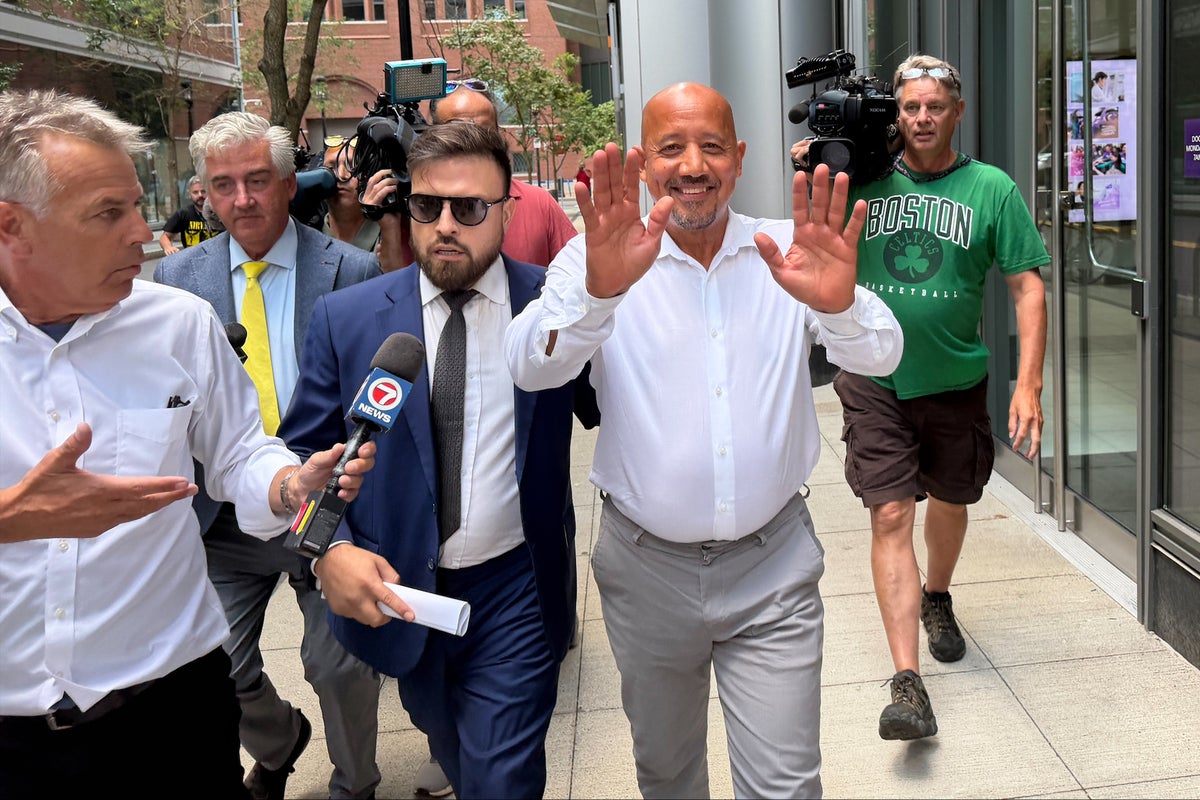
Another week, another local politician slapped in cuffs over pandemic-era cash. The headlines scream about greed, betrayal, and broken public trust. The narrative writes itself: a corrupt official dipped their hand into the cookie jar, federal investigators swooped in like cinematic heroes, and justice was served.
It makes for neat, comforting theater. It also misses the entire point. For another view, check out: this related article.
Focusing moral outrage on a mayor who allegedly pocketed one and a half million dollars in relief loans treats a systemic structural design flaw as a simple character defect. I have spent years advising municipal budgets and watching public funds move through bureaucratic pipelines. When you spray trillions of dollars across the economy with virtually zero upfront verification, you do not create a safety net. You build a stress test for human opportunism, and then you act shocked when people pass the test.
Blaming the greedy individual lets the architects of the legislation off the hook. Similar reporting on this trend has been shared by NPR.
The Architectural Flaw of Emergency Liquidity
Let us look at the mechanics of the emergency programs. When the federal government deployed rapid-fire funding to stabilize local economies, speed was prioritized over accountability. That was the explicit trade-off. Lawmakers decided that a wave of fraudulent claims was an acceptable price to pay to keep municipal lights on and small businesses afloat.
Speed means loose underwriting. Loose underwriting means trust-based allocation in a system that has never operated on trust.
When you tell local governments that millions of dollars are available with minimal paperwork, you create an invitation. We can moralize about civic duty all day long, but policy is not built on how we wish people behaved. Policy must be built on how people actually behave under perverse incentives.
A system designed with zero friction invites extraction. Charging the individual who took advantage of that open door satisfies our appetite for villain narratives, but it does nothing to prevent the next crisis from playing out the exact same way.
The Illusion of Deterrence Through Prosecution
Every time a municipal leader gets perp-walked for relief fund abuse, commentators act as though this specific arrest will deter the next bad actor. This is fantasy.
Deterrence relies on the certainty of detection, not the severity of punishment. In local government procurement and emergency spending, detection is notoriously weak. Oversight committees are underfunded, internal auditors are overworked, and compliance checks happen months or years after the capital has already vanished into commercial real estate, luxury vehicles, or shell accounts.
Imagine a scenario where a city administrator looks at a mountain of emergency funds, realizes nobody is checking the ledger until the fiscal year closes, and weighs the immediate utility of capital against a distant, improbable audit. That is not a complex criminal conspiracy. That is a rational calculation made inside a broken economic vacuum.
Prosecuting a mayor after the fact is clean-up work disguised as law enforcement. It is the equivalent of mopping the floor while leaving the fire hydrant wide open. If we genuinely want to stop the hemorrhage of public money, we have to talk about structural friction, not prison sentences.
The Real Cost of Performing Accountability
Why do we cling so tightly to these individual arrests? Because they are cheap.
Putting a politician on trial allows institutions to project competence and righteousness without doing the hard, grinding work of fixing bureaucratic architecture. An indictment costs a fraction of what it takes to overhaul procurement protocols, build real-time transaction monitoring, or professionalize local oversight boards.
Every hour spent sensationalizing a mayoral fraud case is an hour not spent auditing the hundreds of other municipalities that took the exact same money with the exact same lack of supervision. The scandal is never just that one person stole. The true scandal is that the vault was left wide open, bolted from the outside, and guarded by people who preferred plausible deniability to actual governance.
Stop treating emergency fund theft as an isolated moral failure. It is an engineering failure. Until we design systems that make extraction impossible rather than merely illegal, we are simply waiting for the next headline.
Burn the playbook. Fix the architecture.