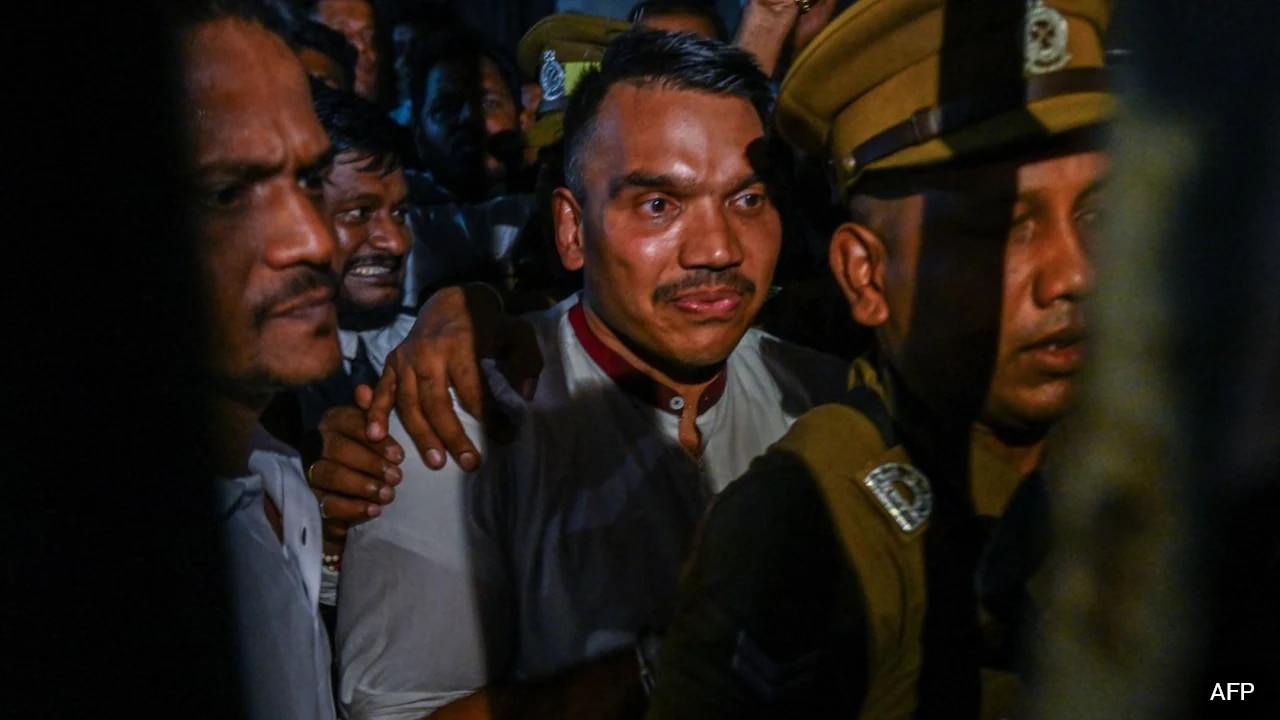
Another day, another high-profile political perp walk in Colombo. The Commission to Investigate Allegations of Bribery or Corruption slaps cuffs on Namal Rajapaksa, dragging the ghost of a 2013 aircraft transaction back into the spotlight. The media laps it up, screaming about an alleged $800,000 kickback tied to a multi-billion-dollar Airbus procurement.
Stop celebrating. This entire spectacle is a convenient distraction designed to keep you blind to how transnational corporate extraction actually functions. For a different perspective, read: this related article.
The mainstream narrative feeds you a comforting fairy tale: corrupt local politicians steal from the public purse, a righteous anti-graft agency swoops in, and justice is served. It is a neat, tidy story that completely misses the structural reality of global aerospace contracting. By focusing entirely on political theater and family dynasties, the public misses the mechanics of how industrial conglomerates actually capture developing markets.
Let us look at the structural facts. Way before any local politician allegedly touched a fraction of a million dollars in backchannels, western enforcement agencies already mapped the anatomy of this crime. A massive joint investigation by French, British, and American authorities exposed a $16 million global bribery machine built directly into Airbus operations. They handed down a staggering $4 billion corporate settlement in 2020. Related coverage on the subject has been published by Reuters.
Notice what happened to Airbus? They paid a fine, adjusted their balance sheets, and kept selling planes. No executives served hard time in a Colombo cell. No structural trade embargoes crippled the manufacturer. The architects of international corporate corruption paid a financial toll to foreign governments, while the local political class takes the fall years later in front of domestic television cameras.
Focusing solely on whether an individual lawmaker pocketed a fraction of a million dollars ignores the bleeding wound: SriLankan Airlines is sitting on nearly $2 billion in crushing, systemic debt. The airline was a bankrupt corporate entity long before these specific contracts were signed, and it remains a financial black hole because successive administrations use it as a patronage dumping ground.
Fixating on a single dynastic family lets the institutional enablers off the hook. Behind every corrupt procurement deal lies a web of international financiers, local bureaucrats, compliant board members, and external auditors who looked the other way. When a national carrier buys wide-body jets it does not need, the destruction of state capital is a collaborative enterprise.
Consider the dead-end nature of these investigations. The chief executive who supposedly handled the kickbacks turned up dead under mysterious circumstances before he could face trial. Key witnesses retract statements under pressure. What remains is pure political theater—a weaponized judiciary tossing red meat to a frustrated public while the structural conditions that allowed the theft remain entirely untouched.
If you want to fix state-owned enterprise looting in emerging economies, arresting politicians' sons after a decade of legal posturing changes nothing. It is performative accountability. Real reform requires stripping away sovereign immunity for commercial contracts, blacklisting multinational contractors who systemic-bribe their way into foreign markets, and completely privatizing or liquidating zombie airlines that drain national treasuries.
Until the public stops cheering for hollow political arrests and starts demanding structural transparency in international trade, these perp walks will continue. They are cheap entertainment for a nation paying off debts it never voted to incur.