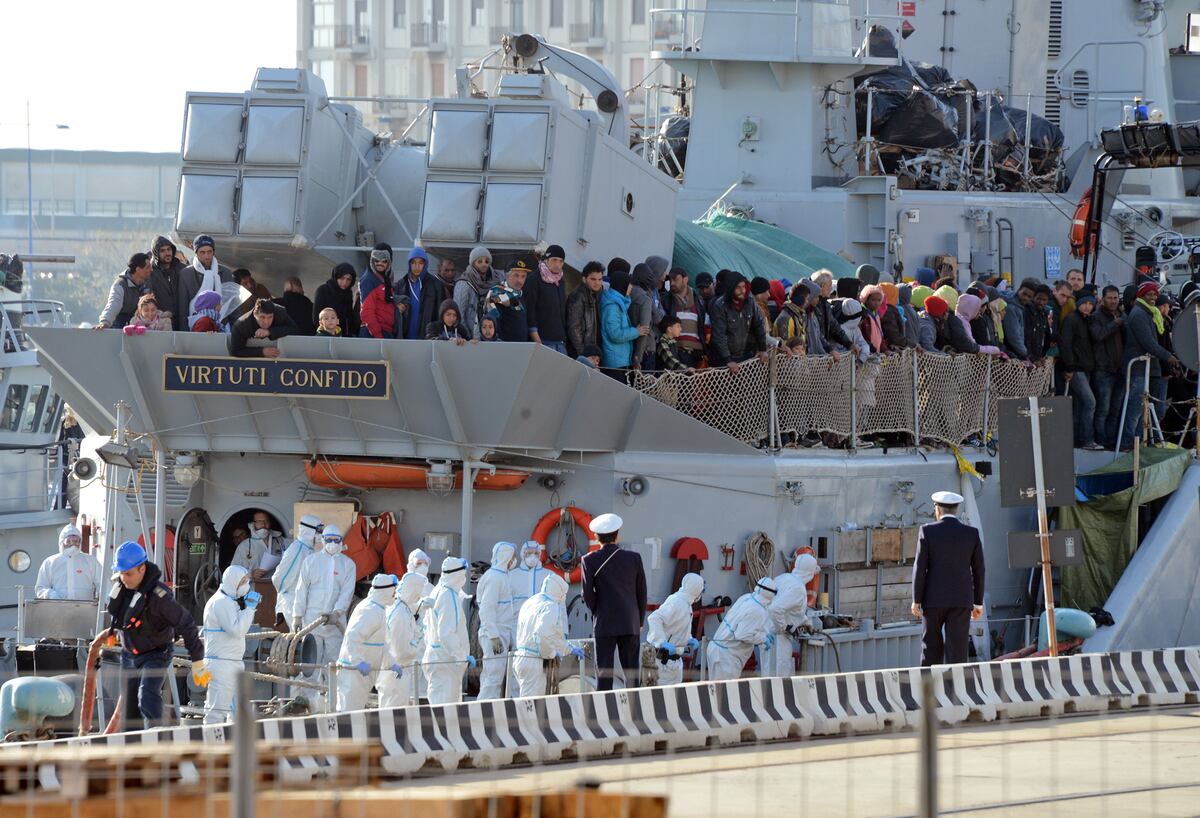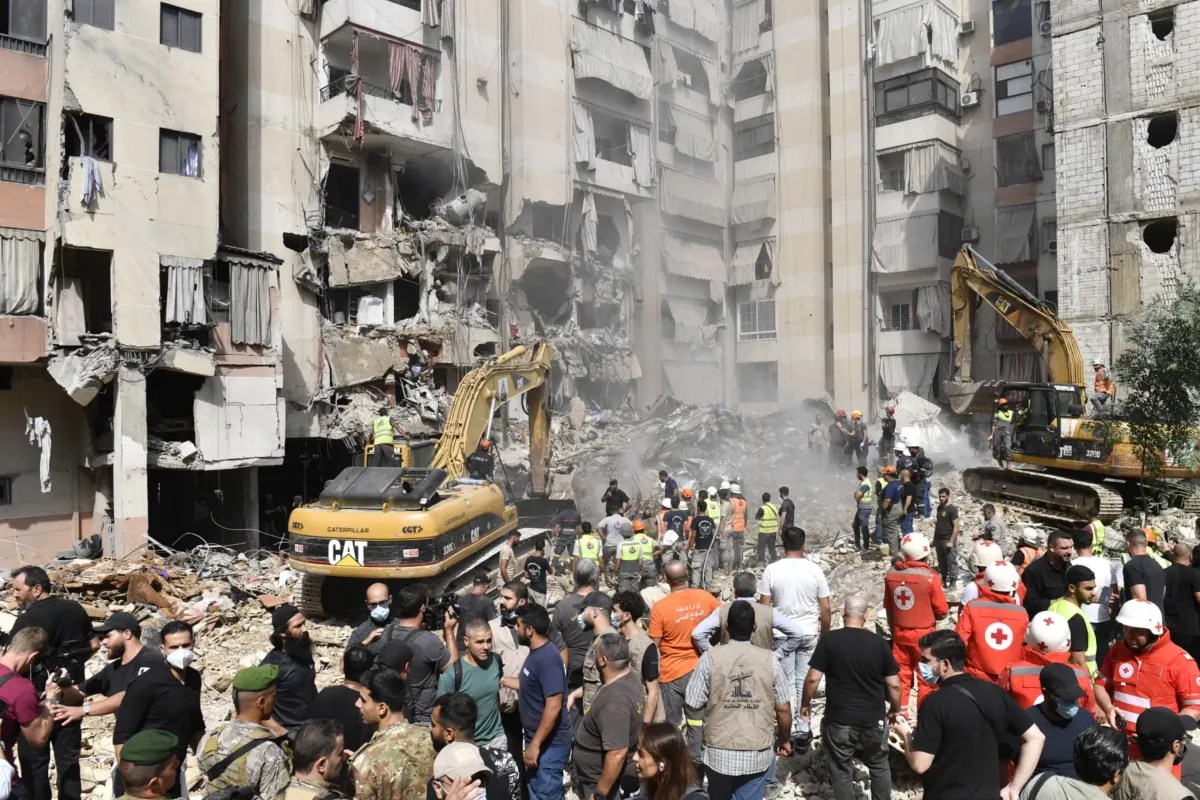
The deployment of emergency responders and medical personnel in modern asymmetric conflict zones, specifically within the Lebanon-Iran geopolitical corridor, is no longer governed solely by humanitarian urgency. It is now a calculated exercise in Strategic Asset Allocation. When recruitment agencies or state-aligned NGOs query a volunteer’s marital status or parental responsibilities, they are not conducting a social survey. They are calculating the Risk-Adjusted Impact Quotient of human capital. This vetting process identifies individuals with the lowest "social friction" and highest "long-term liability insulation."
The Logic of Human Capital Depreciation
In high-intensity conflict zones, the loss of a primary responder creates a cascading failure in the operational ecosystem. The query regarding family status functions as a crude but effective proxy for three specific variables:
- The Continuity of Operations (COOP) Cost: Replacing a deceased responder is expensive; managing the multi-decade pension and psychological support for a bereaved family is an exponential increase in that cost.
- Psychological Resilience and Risk Tolerance: Proponents of this vetting suggest that individuals without dependents possess a higher threshold for high-risk maneuvers, as their "internal hazard assessment" is not tempered by the biological imperative to return to offspring.
- Domestic Stability as a Strategic Variable: In Lebanon and Iran, where social safety nets are often informal or tied to specific political factions, the death of a "breadwinner" creates a vacuum that the state or the sponsoring organization must fill to maintain public legitimacy.
The Three Pillars of Vulnerability Assessment
Organizations operating in the Levant and Tehran must weigh the immediate need for boots on the ground against the long-term geopolitical cost of casualties. This creates a triage system for personnel selection:
- Pillar I: Financial Liability Mitigation
The cost function of a casualty is defined by the sum of immediate extraction, replacement training, and survivor benefits. For a single individual, the function $C = E + R$. For a married individual with children, the function expands to include $C = E + R + (L \times D)$, where $L$ is the life-cycle support cost and $D$ is the number of dependents. - Pillar II: Political Optics and Martyrdom Economics
While "martyrdom" has high social capital in these regions, a high volume of casualties among parents of young children creates a different, often negative, political pressure. It signals a failure of the state to protect its most vital demographic. By prioritizing single responders, the organization reduces the visual and social impact of loss. - Pillar III: Mental Bandwidth and Operational Focus
Tactical environments require absolute presence. There is a documented psychological phenomenon where responders with young children may hesitate for a micro-second in a "kill-or-be-killed" or "rescue-or-retreat" scenario. In a theater of war where micro-seconds determine the survival of the unit, this hesitation is a liability.
Technical Analysis of the Pager and Solar Battery Escalation
The context of the current inquiry into responder backgrounds is inextricably linked to the recent technological breaches in Lebanon. The transition from digital to analog, and the subsequent weaponization of low-tech devices, has shifted the "threat surface" from the frontline to the domestic interior.
The Supply Chain as a Weapon
The detonation of communication devices and solar power systems signifies a shift in the Tactical Horizon. When consumer electronics are converted into kinetic weapons, the "safety zone" for responders disappears.
- The Infiltration of the "Cold Chain": Just as medical supplies require a cold chain to remain viable, security-sensitive hardware requires a "hardened chain." The failure to secure the hardware transit route from manufacturer to Lebanese end-users indicates a total collapse of the supply chain integrity.
- Thermal Runaway as a Strategic Tool: The use of lithium-ion batteries as the explosive medium demonstrates an intimate understanding of modern energy storage. By triggering a thermal runaway—a process where an increase in temperature changes the conditions in a way that causes a further increase in temperature—the attackers turned a standard power source into a predictable, high-heat incendiary device.
Decoupling the Responder from the Device
Because the threat is now embedded in the equipment, the human element must be further hardened. This explains the rigorous vetting. If the equipment cannot be trusted, the person carrying it must be "disposable" in the coldest, most analytical sense of the term. The organization is essentially asking: "If this device kills the user, how many lives are disrupted?"
The Cost Function of Modern Volunteerism
We must quantify the difference between a "professional" soldier and a "civilian" responder in these regions. The professional soldier is an insured asset with a clear contractual understanding of risk. The volunteer—often the target of these "married/children" queries—is an uninsured or under-insured variable.
The mechanism at play is Externalization of Risk. By selecting for single, childless individuals, the entity managing the response is externalizing the risk away from the core social structure (the family unit) and onto the individual. This preserves the "Social Replacement Rate" of the community even during a period of high attrition.
Data Gaps and Heuristics
While centralized databases on responder mortality in Lebanon are often classified or obscured by partisan reporting, we can use Heuristic Modeling to understand the vetting logic:
- Urban Density Variable: In Beirut, a casualty in a high-density apartment block has a higher "social ripple" than one in a rural outpost. Vetting becomes stricter based on the intended deployment zone.
- Specialization Variable: A surgeon or a high-level engineer represents a greater "sunk cost" in education and training. These individuals are rarely asked these questions because their utility outweighs their social risk. The questions are almost exclusively reserved for the "expendable" frontline extraction teams.
The Bottleneck of Trust
The fundamental problem facing Lebanon and Iran’s medical infrastructure is the Trust Deficit. When even a solar panel or a walkie-talkie is a potential IED, the only remaining "secure" technology is the human being.
However, humans are susceptible to compromise through their families. A responder with a wife and children is a responder who can be coerced. A responder with no dependents has fewer "vectors of influence" that an opposing intelligence agency can exploit. This is the unspoken fourth pillar of the vetting process: Counter-Intelligence Security.
Structural Limitations of the "Single Responder" Model
While logically sound from a risk-management perspective, this strategy encounters three immediate bottlenecks:
- Demographic Exhaustion: There is a finite pool of young, healthy, single, and ideologically aligned individuals. As conflict persists, this pool depletes, forcing the organization to lower its standards or begin accepting "high-liability" (married) responders.
- Skill Attrition: Wisdom and expertise in emergency medicine are usually correlated with age. By filtering for the young and single, agencies inadvertently filter out their most experienced veteran leaders, who are statistically more likely to have families.
- The Radicalization Loop: When an organization explicitly recruits those with "nothing to lose," they create a force that is more prone to radicalization and less prone to tactical restraint, which can lead to strategic blunders that draw more international heat.
The Strategic Shift to Autonomous and Remote Response
To solve the "Parental Liability" problem, we should anticipate a pivot toward remote-operated and autonomous systems within these conflict zones. If the human cost is too high—politically, financially, and socially—the logical move is the De-humanization of the Frontline.
- UAV-Based Medical Delivery: Using drones to drop stabilizers and trauma kits to bypass the need for human couriers who might be targeted.
- Hardened Communication Nodes: Replacing individual pagers with localized, guarded "mesh networks" that do not require personal devices.
- The "Grey" Volunteer: A move toward recruiting older individuals whose children are already grown, thereby reducing the "Dependent Support" cost while retaining the "Single Point of Failure" advantage.
The current trend of asking invasive personal questions is a desperate attempt to apply 20th-century insurance logic to 21st-century technological warfare. It is a stop-gap measure. The next phase of this evolution will not be better vetting of humans, but the systematic removal of humans from the high-risk points of the supply chain. Agencies that fail to automate their "high-attrition" roles will eventually find themselves bankrupt—either financially or in terms of their social license to operate.
For the strategic analyst, the signal is clear: Watch the recruitment criteria. When the questions about family status disappear, it will not be because the risk has decreased, but because the human responder has been replaced by a machine, or the organization has reached a state of total demographic mobilization where liability no longer matters.