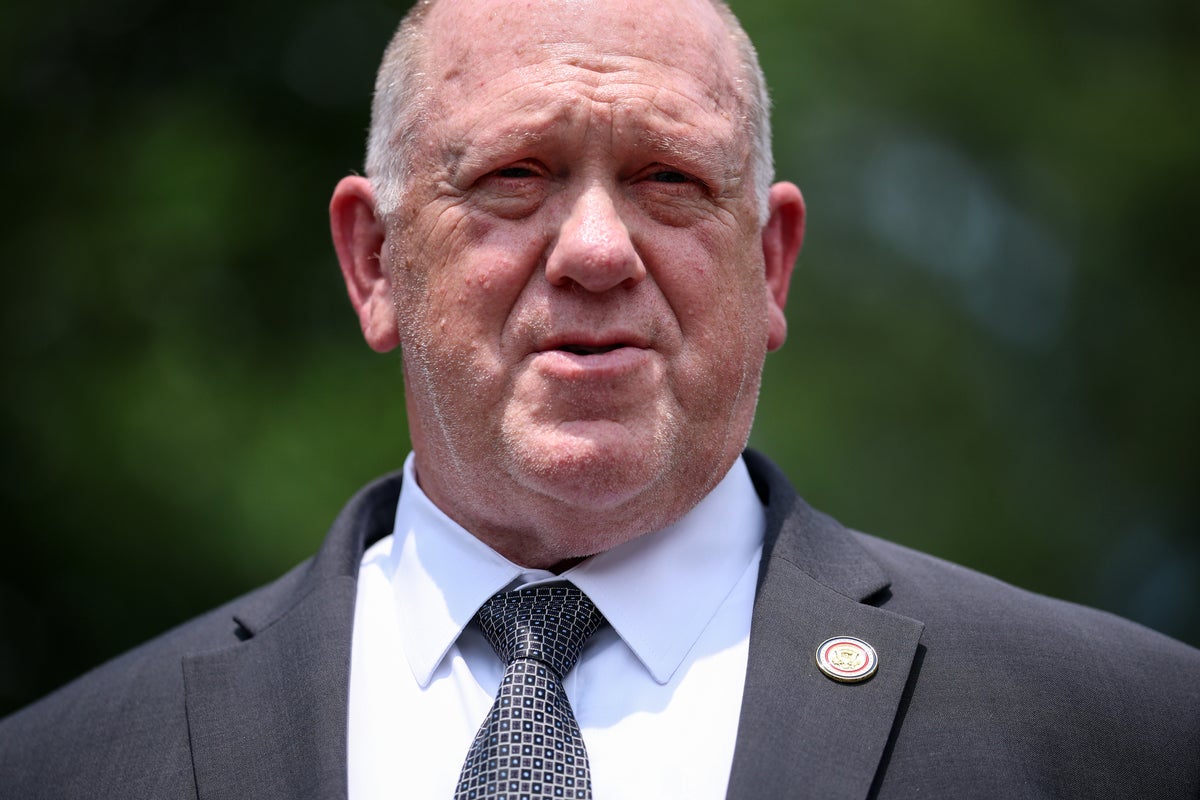
Federal bureaucracy rarely sounds charismatic, but when the machinery of state expulsion shifts gears, the rhetoric accompanying it usually relies on a thin veneer of bureaucratic neutrality. Tom Homan stepped back into the public eye wearing the badge of an equal opportunity administrator, pushing back against accusations that immigration enforcement targets specific communities with malicious prejudice. Yet beneath the public relations posture lies a complex logistical labyrinth of federal detention, local sheriff cooperation agreements, and political maneuvering that fundamentally defines modern state power.
Understanding how modern immigration enforcement operates requires looking past the soundbites and examining the administrative pipeline. When a federal agency targets individuals for removal, the operation relies on a patchwork of local police data sharing, automated license plate readers, and institutional databases that track individuals long before enforcement officers ever knock on a door. The claim of equal opportunity administration ignores the structural disparities baked into a system where certain nationalities face disproportionate rates of apprehension due to historical enforcement priorities, geographic proximity to border checkpoints, and bilateral repatriation agreements with specific foreign governments.
Critics pointing to racial profiling often miss the structural reality. The system does not always need explicit racial animus to produce racially disparate outcomes because the targeting criteria are written into administrative law. When enforcement priorities focus heavily on individuals with criminal histories, but local jurisdictions interpret minor traffic infractions as gateways to federal notification systems, the net catches a vast swath of low-level offenders who happen to live in high-surveillance neighborhoods. This creates a feedback loop where communities heavily policed for local infractions become primary feeders for federal removal proceedings.
The economic engine driving this apparatus is equally significant. Private prison corporations and technology contractors secure multi-million dollar federal outlays to expand bed space and digital tracking infrastructure. Every time policy rhetoric hardens around mass expulsion, stock prices for detention facility operators react accordingly. These financial incentives create an entrenched lobby that actively pushes for broader enforcement parameters, ensuring that the machinery of removal remains perpetually funded regardless of which political party holds the White House.
Municipal pushback further complicates this national strategy. Sanctuary city policies create jurisdictional friction, pitting local police departments against federal immigration agents. Local leaders argue that cooperating with federal authorities erodes public trust, making immigrant communities fearful of reporting crimes or cooperating with local investigations. Federal officials counter that these local ordinances compromise public safety by releasing individuals who might otherwise be detained. This ongoing tug-of-war transforms local governance into a battleground over constitutional authority and federalism, with federal funding often dangled as a carrot or withheld as a stick to force compliance.
On the ground, the human cost of this administrative machinery is measured in fractured families and economic disruption. Industries ranging from agriculture to hospitality rely heavily on undocumented labor, creating a silent contradiction where economic demand pulls workers across borders while state apparatuses push them out. Economists note that mass removal initiatives send shockwaves through regional supply chains, driving up labor costs and forcing businesses to restructure operations or shut down entirely.
The assertion of equal application rings hollow to families caught in the crosshairs of an enforcement surge that disproportionately impacts specific linguistic and ethnic groups simply due to global migration patterns and historical enforcement infrastructure. As political rhetoric continues to sharpen, the underlying machinery of state removal grinds forward, driven by legal mandates, corporate interests, and an unyielding bureaucratic imperative that cares little for the ethical debates swirling around its operation.