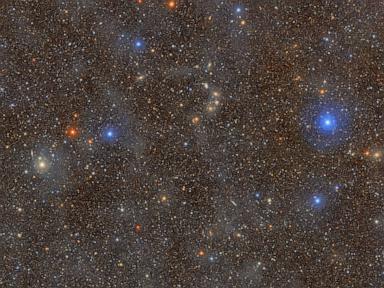
Large-scale astronomical surveys have traditionally been constrained by a trade-off between angular resolution and sky coverage. The deployment of the Legacy Survey of Space and Time (LSST) at the Vera C. Rubin Observatory fundamentally alters this dynamic by shifting from targeted object observation to a continuous, wide-field data-generation engine. This operational model transforms a traditional observatory into a high-throughput data factory, utilizing the largest digital camera ever constructed to execute a decade-long census of the southern sky.
Understanding the strategic value of this system requires decoupling its three core components: the optical throughput (etendue), the sensor architecture of the 3.2-gigapixel focal plane, and the automated data pipeline required to process approximately 20 terabytes of raw telemetry nightly.
The Etendue Framework: Maximizing Survey Throughput
The fundamental metric governing the efficiency of a survey telescope is etendue, defined as the product of the collecting area of the primary mirror ($A$) and the area of the field of view ($\Omega$). Traditional research telescopes optimize for $A$ to resolve distant, faint objects within a narrow field. The Rubin Observatory optimizes the $A\Omega$ product to maximize the volume of space scanned per unit of time.
Etendue = A × Ω
Where:
A = Effective collecting area of the optical system
Ω = Solid angle of the field of view
The optical design achieves this via a unique three-mirror system (M1, M2, M3) configured to deliver a 3.5-degree field of view. The primary mirror (M1) and tertiary mirror (M3) are fabricated from a single monolithic piece of glass, a structural choice that reduces alignment tolerances and thermal variance.
- M1/M3 Monolithic Subsystem: The outer 8.4-meter ring acts as the primary mirror, while the inner 5.0-meter section forms the tertiary mirror. This nesting minimizes the overall physical length of the telescope structure, allowing for faster slew times and shorter settling periods between exposures.
- M2 Secondary Subsystem: A 3.4-meter convex mirror completes the optical train, directing light through the camera lens assembly.
This structural geometry yields an effective collecting area of approximately 35 square meters. When multiplied by the 9.6 square degree field of view, the resulting etendue surpasses any existing ground-based survey facility. The direct operational consequence is the ability to image the entire available night sky every few nights, establishing a baseline for time-domain astronomy that was previously statistically impossible.
Focal Plane Architecture and Sensor Mechanics
The capture mechanism driving the LSST is a 3.2-gigapixel charge-coupled device (CCD) imaging matrix. To achieve the required sensitivity across a broad spectral range (320 to 1050 nanometers), the focal plane is segmented into a modular, redundant architecture designed to mitigate single-point failures and manage thermal noise.
Silicon Segmentation and CCD Module Layout
The focal plane is strictly planar, measuring 64 centimeters in diameter. Maintaining flatness across this surface requires custom mechanical tolerances to prevent defocusing at the edges of the field. The grid is organized as follows:
- Science Rafts: The surface contains 21 autonomous modules called "rafts." Each raft functions as an independent imaging system, housing nine 4K x 4K CCD sensors.
- Corner Rafts: Four specialized rafts occupy the corners of the focal plane, dedicated to guiding the telescope and providing wavefront sensing data for real-time active optics correction.
The sensors themselves are thick, fully depleted back-illuminated silicon CCDs. The choice of thick silicon enhances quantum efficiency in the near-infrared spectrum, preventing the interference patterning (fringing) common in standard sensors. To suppress dark current—the spontaneous generation of thermal electrons that corrupts long exposures—the entire focal plane is housed inside a vacuum cryostat and chilled to an operational temperature of -100 degrees Celsius.
The Spatial Resolution Boundary
The physical pixel size is 10 microns, translating to an angular resolution of 0.2 arcseconds per pixel. This sampling rate is mathematically optimized to match the median atmospheric seeing conditions of the Cerro Pachón site in Chile. A finer pixel scale would oversample the atmospheric blur, inflating data storage requirements without yielding additional spatial information; a coarser scale would undersample the PSF (Point Spread Function), losing critical morphological data for weak lensing calculations.
The Data Pipeline: Resolving the Real-Time Telemetry Bottleneck
The primary operational constraint of the Rubin Observatory is not photon collection, but the processing and distribution of the resulting data stream. Capturing a 3.2-gigapixel image every 15 to 30 seconds generates an unprecedented data velocity for ground-based astrophysics.
Raw Data Generation Rate:
3.2 × 10^9 pixels × 16 bits/pixel = 6.4 Gigabytes per exposure
At 2 exposures per minute ≈ 15 Terabytes to 20 Terabytes per night
Prompt Processing and Transient Alert Generation
The data pipeline is governed by a strict temporal SLA (Service Level Agreement): any transient change in the sky—such as an asteroid movement, a supernova detonation, or a variable star fluctuation—must be identified and published to the global scientific community within 60 seconds of shutter closure. This requires an automated alert system operating through specific algorithmic steps:
- Cross-Talk Correction: Raw digital counts are read out across 3,024 independent channels simultaneously in 2 seconds. The software immediately corrects for electronic cross-talk between adjacent channels.
- Difference Imaging Analysis (DIA): A high-fidelity template image of the identical sky coordinates, constructed from historical observations, is spatially warped and flux-matched to the new exposure.
- Pixel-Level Subtraction: The template image is subtracted from the new image. Pixels with significant residual flux (positive or negative) denote structural or positional variations.
- False-Positive Filtering: Machine learning classifiers evaluate the residuals to filter out artifacts caused by cosmic rays, satellite trails, or sensor defects.
- Alert Distribution: Validated detections are packaged into standardized data packets containing the object's coordinates, flux history, and shape parameters, then streamed to international brokers.
Annual Data Releases and Co-addition Mechanics
Beyond the real-time alert stream, the secondary data product involves stacking every image taken over the 10-year period. This co-addition process increases the signal-to-noise ratio, effectively pushing the detection threshold to a limiting magnitude of r ~ 27.5. This allows the survey to map billions of faint galaxies, providing the statistical sample size needed to constrain dark energy parameters via weak gravitational lensing and baryon acoustic oscillations.
Systematic Bottlenecks and Operational Risks
The scale of the LSST infrastructure introduces unique systemic vulnerabilities that differ sharply from targeted space missions like the James Webb Space Telescope.
Megaconstellation Interference
The proliferation of low-Earth orbit (LEO) satellite constellations presents a structural degradation risk to wide-field surveys. Because the Rubin Observatory features a highly sensitive optical path and a wide field of view, a significant percentage of twilight exposures will contain satellite trails.
When a bright satellite crosses the focal plane, it does not merely ruin the affected pixels; it can cause electronic ghosting, optical reflections (glints), and sensor crosstalk that bleeds into adjacent CCD channels. Mitigating this requires advanced masking algorithms in the processing pipeline, which inherently reduces the effective area of the survey and lowers overall statistical completeness.
Optical Distortion and Filter Exchange Mechanics
The telescope utilizes a physical filter changer containing five slots, while the survey requires observations across six bands ($u, g, r, i, z, y$). Consequently, one filter must be manually swapped out based on the lunar cycle (e.g., heavy utilization of the infrared-adjacent $z$ and $y$ filters during bright moon phases).
The physical movement of these large optical elements introduces mechanical settling times and potential alignment drifts. Because the depth of focus across the 64-centimeter focal plane is incredibly shallow, any micro-deviation in the filter seating directly impacts the integrity of the point spread function.
Strategic Deployment Metrics
The success of the survey will not be measured by single discoveries, but by the final statistical precision of its catalog. The framework for evaluating its operational efficiency relies on two primary vectors:
- Spatial Completeness: Mapping the 20,000 square degrees of the southern sky over 825 distinct visits per field, ensuring uniform depth.
- Temporal Cadence: Optimizing the revisit schedule to capture rapid astrophysical phenomena without creating spatial gaps in the deep co-added maps.
By standardizing wide-field data capture, the Rubin Observatory shifts astronomy away from opportunistic targeted proposals and toward a deterministic, algorithmic analysis of the universe. The structural value lies entirely in this standardization; the data catalog will serve as the foundational baseline for astrophysics for the mid-21st century.