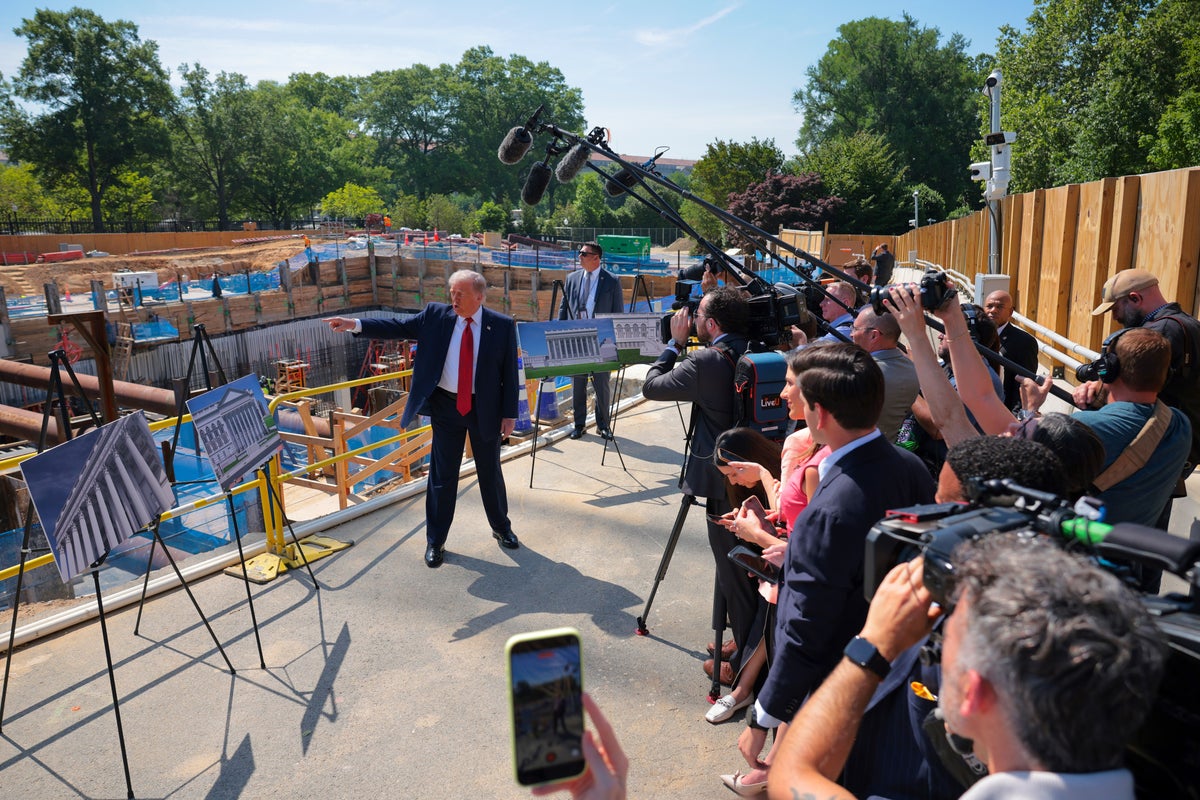
Public discourse surrounding executive infrastructure projects frequently operates as a proxy war for broader institutional conflicts. The recent rhetorical escalation between United States Attorney General Todd Blanche and Philadelphia District Attorney Larry Krasner over the construction of a White House ballroom illustrates a deeper friction point within American governance: the collision of executive architecture, federal authority, local prosecutorial commentary, and the boundaries of jurisdictional focus.
This analysis deconstructs the structural mechanics of the dispute, evaluating the legal vectors of the construction project, the mechanics of rhetorical friction between federal and local officials, and the systemic allocation of institutional attention.
The Cost Function and Jurisdictional Mandate of Local Prosecutors
The public clash initiated when Krasner, addressing an audience in Philadelphia, projected a future demolition of the newly constructed White House ballroom, stating an intention to preserve a fragment of the structure as a desk paperweight following an "official ceremony". Blanche responded during a media appearance by characterizing the commentary as misplaced, emphasizing that a municipal prosecutor ought to prioritize local municipal caseloads and urban governance challenges rather than federal architectural undertakings.
This exchange highlights a fundamental divergence in institutional accountability frameworks:
- The Local Accountability Loop: Municipal district attorneys operate within a localized feedback loop governed by urban crime rates, municipal resource allocation, and county-level judicial backlogs. Their performance metrics are tied directly to district-level public safety indicators.
- The Federal Scope Expansion: High-profile local figures frequently engage in nationalized rhetoric to signal alignment with broader ideological coalitions. This creates an efficiency loss where administrative attention shifts away from statutory duties toward symbolic political positioning.
When municipal law enforcement leadership directs administrative bandwidth toward federal capital projects, it exposes an allocation mismatch. The operational friction arises because public statements regarding federal architectural modifications carry zero legal weight yet function as high-yield instruments for political signaling.
The Legal Vectors of Executive Property Modification
Beneath the rhetorical crossfire lies a complex web of constitutional and statutory challenges regarding executive authority over federal grounds. The White House ballroom project—estimated at approximately $400 million and structured largely through private funding mechanisms alongside security-associated fund transfers—has triggered intense litigation regarding the separation of powers.
The litigation path features distinct institutional mechanisms:
- The Statutory Challenge: Initiated by preservation entities such as the National Trust for Historic Preservation, legal challenges argue that modifications of this scale to historic federal property require explicit congressional authorization rather than executive fiat alone.
- The Judicial Stay Architecture: Lower courts previously imposed injunctions halting above-ground construction, but subsequent emergency interventions by the Supreme Court—including administrative stays issued by Chief Justice John Roberts—have permitted construction continuity while appellate reviews proceed.
- The National Security Justification: The administration has defended the project through sworn affidavits from security officials, framing the East Wing structure not merely as an aesthetic upgrade for the nation's 250th anniversary, but as a hardened, controlled environment necessary to mitigate vulnerabilities associated with off-site presidential events.
The tension between judicial injunctions and emergency stays demonstrates the fluid nature of executive authority during active litigation. While federal defenders like Blanche maintain that the structure "is being built and is not stopped", the underlying legal merits regarding congressional oversight remain an unresolved constitutional variable.
The Rhetorical Economics of Polarization
The exchange between Blanche and Krasner is not an isolated event but a symptom of hyper-polarized institutional communication. In modern political discourse, executive officials and municipal leaders deploy operational platforms to dispute symbolic milestones.
The mechanism relies on reciprocal escalation:
- A municipal official issues a speculative, provocative forecast regarding the reversal of a federal policy or physical asset.
- A federal official responds by questioning the official's competence regarding local governance and municipal crises.
- The exchange reinforces partisan cohesion by framing the opposition as either lawless or parochial.
This dynamic displaces technical debate over administrative law, property rights, and procurement transparency with performative antagonism. The core issue—whether an administration possesses the inherent authority to reconfigure the White House East Wing without legislative sign-off—is obscured by theatrical declarations about future demolitions and desk paperweights.
Track the ongoing appellate rulings in the D.C. Circuit regarding congressional consent and property management statutes to determine the structural viability of the ballroom project, as judicial precedent will ultimately override rhetorical posturing from both municipal critics and federal defenders.


