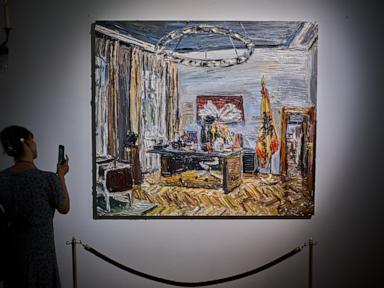
The decision to transition Bellevue Palace, the official residence of the German President, into a temporary public art exhibition space prior to a multi-year renovation represents a textbook optimization of an underutilized state asset. Real estate assets undergoing long-term depreciation or awaiting significant capital expenditures typically incur high carrying costs while yielding zero public or operational utility. By converting the vacant palace into a pop-up cultural venue, the administration mitigates the political and economic liabilities of an empty state monument, transforming a looming fiscal drain into a high-yield civic vehicle.
This strategy addresses a core challenge in public asset management: how to extract value from infrastructure during the dead-band period between operational shutdown and the commencement of physical reconstruction.
The Three-Pillar Framework of Interim Asset Conversion
To understand why this pop-up art exhibition serves as an efficient strategic maneuver, the intervention must be deconstructed into three distinct vectors: asset stabilization, civic equity generation, and fiscal narrative management.
                  [Interim Asset Conversion]
                              │
         ┌────────────────────┼────────────────────┐
         ▼                    ▼                    ▼
[Asset Stabilization]  [Civic Equity]    [Fiscal Narrative]
 - Environmental control - Public access   - Expense justification
 - Security continuity   - Cultural yield  - Pre-renovation baseline
1. Operational and Asset Stabilization
Leaving a historical structure vacant introduces severe operational risks. Unoccupied buildings suffer from accelerated microclimate degradation, as HVAC systems are frequently dialed back, leading to humidity spikes and subsequent material decay. Introducing an active, managed public footprint forces the maintenance of strict environmental baselines required for preserving both the building fabric and the loaned artwork. Furthermore, maintaining an active human presence inside the facility minimizes security vulnerabilities more effectively than passive electronic surveillance, protecting the asset from vandalism or undetected structural failures.
2. Civic Equity Generation
The economic value of a state-owned cultural asset is tied directly to its public utility yield. When a landmark closes for a prolonged period, its civic equity drops to zero, often sparking public resentment over restricted access. By opening the doors for a final, unconventional cultural event, the state creates a high-density utility spike. This access acts as a psychological buffer, satisfying public curiosity and democratic ownership expectations before the site enters a multi-year operational blackout.
3. Fiscal Narrative Management
Major renovations of historic state properties regularly face intense public scrutiny regarding budget allocations and timelines. Initiating the project lifecycle with a highly visible, low-cost cultural activation reframes the narrative. It establishes a clear, positive baseline for the property's transition, shifting public focus from the impending financial outlays of the renovation to the immediate, democratic utilization of the space.
The Cost Function of Structural Inertia
Every month a historic property sits vacant without a clear operational purpose, it generates negative economic yield. The cost function of this structural inertia is determined by three compounding variables:
- Fixed Carrying Costs: The baseline expenditure required for minimal climate control, structural monitoring, and basic perimeter security.
- Opportunity Cost of Capital: The unrealized public value and economic activity that a functional city-center asset should naturally generate for the local economy.
- Accelerated Depreciation: The physical toll that structural stagnation takes on historical materials when regular, high-frequency operational oversight is removed.
By inserting a pop-up art show into this timeline, the administration alters the variable mix. While fixed carrying costs remain constant, the opportunity cost of capital is dramatically reduced because the space generates measurable cultural value. Additionally, the labor required to install and manage the exhibition serves as a continuous, decentralized inspection mechanism, catching minor structural issues before they compound into costly renovation line items.
Cross-Sector Precedents and Structural Mechanics
This model relies on established mechanisms found in commercial real estate and urban planning frameworks, notably the concept of tactical urbanism and temporary adaptive reuse. Commercial developers frequently deploy "white-box" spaces to short-term retail or artistic tenants to maintain foot traffic and brand relevance during leasing transitions.
When applied to a state asset like Bellevue Palace, the mechanics shift from commercial monetization to institutional prestige preservation. The capital expenditure required to host an art exhibition is minimal compared to the overall renovation budget, as it utilizes the existing, pre-renovation interior shell without requiring permanent structural modifications. The artists interact with the space as it is, using the peeling wallpaper, aging parquet, and faded institutional aesthetics as part of the exhibition's visual texture. This minimizes preparation costs while maximizing the authenticity of the experience.
Strategic Boundaries and Execution Risks
While the benefits of interim asset conversion are clear, the strategy contains distinct structural limitations that risk failure if mismanaged.
The first limitation is the strict ceiling on operational duration. If the pop-up exhibition runs too long, it threatens the critical path of the primary renovation schedule. A delay in breaking ground on the core infrastructure work can trigger inflationary cost increases in construction materials and labor that far outweigh any civic equity generated by the art show.
The second bottleneck is the strict requirement for non-destructive installation methodologies. Because the building is awaiting a sensitive historical renovation, any temporary installation must be completely reversible. Artworks cannot be anchored in ways that damage protected historical substrates, and the increased foot traffic must be strictly metered to avoid accelerating structural wear on floors and staircases that are already slated for reinforcement.
The Definitive Forecast for State Asset Management
The Bellevue Palace deployment marks a permanent shift in how public institutions will manage major infrastructure transitions. The traditional model of locking the gates and erecting scaffolding the moment a building drops its primary operational status is obsolete. Moving forward, public asset management strategies will mandate an interim utility phase for all high-profile civic properties facing long-term shutdowns.
The immediate tactical mandate for public property administrators is clear: before approving any multi-year capital improvement project, a comprehensive secondary-use evaluation must be executed. This evaluation must identify low-impact, high-visibility activations that align the asset's idle period with localized civic or cultural demands. Failing to integrate an interim utility phase into the project lifecycle will increasingly be viewed as a failure of fiscal responsibility and asset optimization. Architectural downtime must be systematically monetized in the currency of public equity.