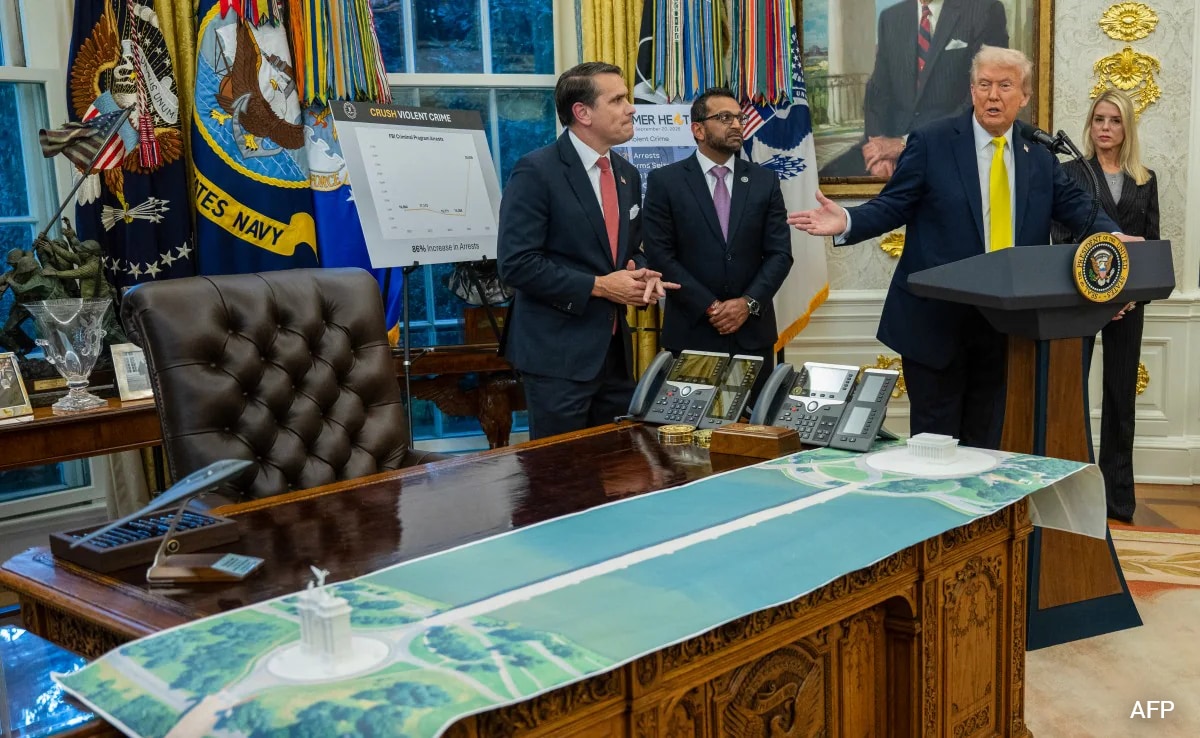
The skyline of Washington, D.C., has long been governed by an unwritten law of humility. No structure shall overawe the symbols of the republic; the Washington Monument remains the highest point, and the Lincoln Memorial sits in stoic, low-slung permanence. But on Friday, the Trump administration formally moved to shatter that aesthetic peace. With the unveiling of the final renderings for the Triumphal Arch, a 250-foot behemoth designed to dominate the Potomac riverfront, the capital is facing its most radical architectural upheaval since the McMillan Plan of 1901.
This is not a modest commemorative plaque. Dubbed the Independence Arch by the administration and the "Arc de Trump" by its detractors, the structure is a massive, gold-leafed gate intended to serve as the centerpiece for the nation’s 250th anniversary in July 2026. If built, it will stand more than double the height of the nearby Lincoln Memorial. It represents a fundamental shift in how the American story is told through stone and bronze—moving away from the somber, neo-classical restraint of the 20th century and toward a maximalist, "triumphalist" style that seeks to project power rather than democratic equality.
A Monument of Superlatives
The design, produced by Harrison Design and submitted to the Commission of Fine Arts, is a study in vertical ambition. Rising 250 feet from base to torch-tip, the arch is explicitly designed to "top" the Arc de Triomphe in Paris, which stands at a mere 164 feet. The President has made no secret of this competitive streak, remarking that while Paris has a famous arch, the American version will "blow it away."
Atop the structure sits a 60-foot golden Lady Liberty, wings spread, clutching a torch and a shield. She is flanked by two golden eagles with wingspans that could dwarf a small aircraft. At the base, four massive golden lions stand guard. The message is not subtle. While the Lincoln Memorial invites the viewer into a quiet chamber of reflection, this arch demands to be seen from miles away.
The most contentious element, however, is the inscription. Carved into the attic of the arch in massive, gilded letters is the phrase "ONE NATION UNDER GOD." On the opposite side, facing away from the National Mall, are the words "LIBERTY AND JUSTICE FOR ALL." By elevating the religious component of the Pledge of Allegiance to a height of 200 feet, the administration is effectively codifying a specific vision of American identity into the literal bedrock of the city.
The Strategic Placement of Memorial Circle
The chosen site is Memorial Circle, the traffic roundabout that connects the Arlington Memorial Bridge to the entrance of Arlington National Cemetery. For over a century, planners have envisioned a "terminal" monument for this location to complete the axis between the Lincoln Memorial and the Arlington House. But they always imagined something that would bridge the gap between the living city and the city of the dead.
The current plan does the opposite. By placing a 250-foot, gold-trimmed monument directly in the line of sight, the arch will effectively screen the view of Arlington National Cemetery from the Lincoln Memorial. For the thousands of veterans and families who visit the hallowed grounds of Arlington, the arch will become the dominant visual feature of their pilgrimage.
Obstruction or Elevation?
The administration argues that the arch will "enhance the visitor experience" by providing a visual reminder of the sacrifices made for American freedom. Critics, including a coalition of military veterans who filed a lawsuit this week, see it as an intrusion. They argue the structure:
- Blocks the historic "visual axis" between the Lincoln Memorial and Arlington House.
- Creates a safety hazard for aircraft landing at nearby Ronald Reagan Washington National Airport due to its height.
- Distorts the scale of the capital, making the existing 19th-century monuments look like miniatures.
The legal battle is already heating up. While the President recently dismissed the lawsuits with a wave of the hand—stating that "our veterans are the ones that should like it"—the courts may not be as easily swayed. A federal judge recently halted work on the President's proposed $400 million White House ballroom, and the arch faces a similar gauntlet of environmental and historical preservation reviews.
The 250 for 250 Vision
The arch is only one piece of a broader campaign called Salute to America 250. This isn't just a birthday party; it is a total branding of the American landscape. The President has already reauthorized the National Garden of American Heroes, a park slated to contain 250 lifelike statues of figures ranging from George Washington to Alex Trebek and Kobe Bryant.
The directive for these projects is strictly "classical." No modernism, no abstraction, and certainly no "tired" greenery. The President has frequently criticized the "broken" look of Washington's medians and parks, advocating instead for a city of stone, gold, and heroic bronze. It is an aesthetic of permanence, designed to ensure that long after this administration is gone, the physical environment of the capital reflects the "America First" philosophy.
The Cost of Triumphalism
When asked about the price tag, White House officials have been notably vague, stating that costs are "still being calculated." The funding is expected to be a "public-private partnership," a model that often involves wealthy donors contributing in exchange for naming rights or influence over the design process.
There is a historical irony here. Triumphal arches were originally Roman inventions, built to celebrate generals returning from foreign conquests. They were markers of ego and victory. By placing one at the gates of Arlington—a place of mourning and quietude—the administration is attempting to marry the celebration of power with the solemnity of sacrifice. It remains to be seen if the American public, 52% of whom currently oppose the project according to recent polling, will accept such a jarring shift in the national aesthetic.
The Commission of Fine Arts is scheduled to meet on April 16 to deliberate on the filing. Because the President replaced all six commissioners with loyalists last year, the design's approval in that chamber is nearly certain. The real fight will happen in the National Capital Planning Commission and the federal courts, where the unwritten rules of the D.C. skyline will be tested against the raw will of a President determined to leave a golden mark on history.