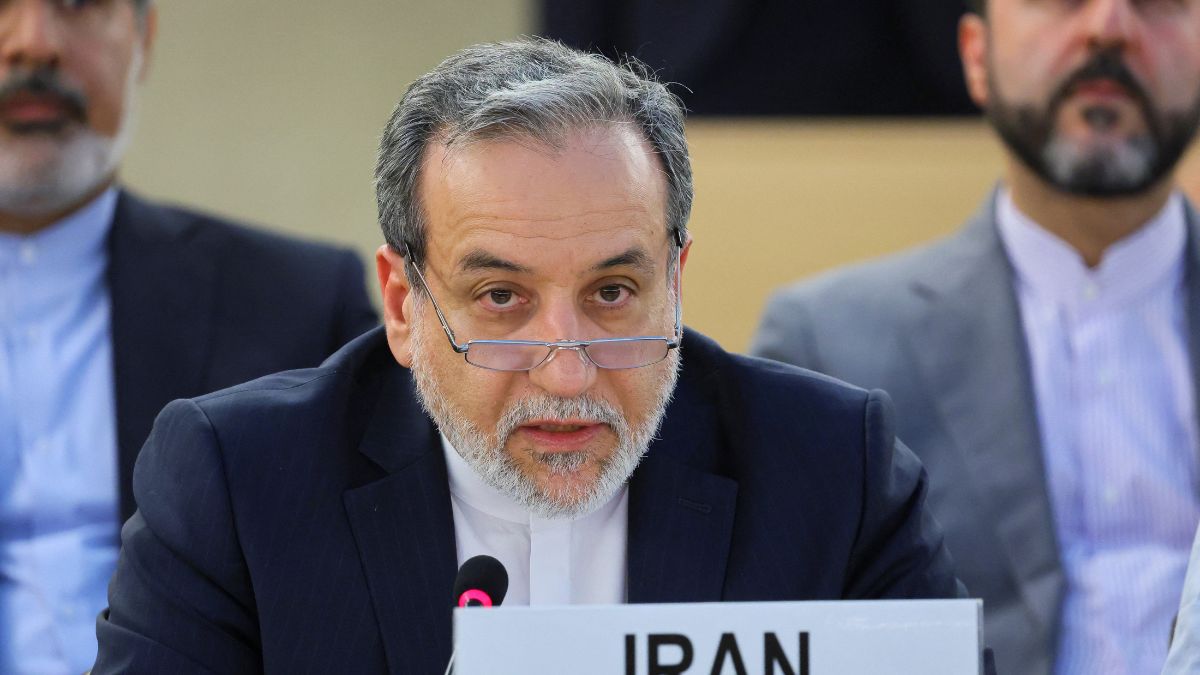
Iranian Foreign Minister Abbas Araghchi isn't just making small talk. When he sat down for an interview with MS Now this weekend, he confirmed what many in Washington have feared: Iran is actively receiving military cooperation from Russia and China. This isn't some vague promise for the future. It's happening right now, in the middle of a hot war with the United States and Israel.
If you've been following the news, you know the stakes. The regional conflict that exploded on February 28, 2026, has pushed Tehran into a corner. By publicly leaning on "strategic partners" like Moscow and Beijing, Araghchi is trying to show the world that Iran isn't standing alone. He’s being careful with the details—don't expect a shopping list of hardware—but the message of a unified Eurasian front is loud and clear.
The technological shield provided by Moscow and Beijing
For years, people talked about the "Look East" policy as a theoretical plan. That's over. Today, it's a survival strategy. Russia and China aren't just selling bullets; they're providing the high-tech "connective tissue" that keeps Iran’s military from being blinded by Western jamming and stealth technology.
We're seeing reports that Russia has finally started delivering on its 48-unit order of Su-35 "Flanker-E" fighter jets. These aren't your grandpa's planes. They come with Irbis-E radars specifically designed to sniff out stealth aircraft like the F-35. Add in the S-400 air defense components and Rezonans-NE over-the-horizon radars, and you've got a layered defense system that makes any air strike a high-risk gamble.
China’s role is quieter but maybe even more vital. Iran has officially ditched US-controlled GPS for China's BeiDou-3 navigation system. Why does this matter? Because BeiDou gives Iranian command nodes a way to talk even if the local internet is shredded. It offers centimeter-level accuracy for missile strikes that Western electronic warfare can’t easily mess with.
Intelligence sharing and the Russian connection
The most explosive claim recently didn't even come from Tehran. It came from US President Donald Trump, who suggested Russia might be sharing real-time intelligence with Iran regarding the location of US forces. When asked to respond, Araghchi didn't deny it. He just played it cool, saying he wouldn't go into details "right in the middle of a war."
This ambiguity is a weapon in itself. It forces US planners to assume that every move they make is being watched by Russian satellites and fed directly to Iranian missile crews. It’s a level of coordination we haven't seen in decades. Moscow has essentially become Iran’s "eyes" in the sky, providing the situational awareness needed to launch precision retaliatory strikes.
Key assets fueling the cooperation
- Russian Su-35 Jets: Advanced electronic warfare pods (Khibiny-M) to counter stealth.
- Chinese BeiDou-3: Jam-resistant satellite navigation for precision guidance.
- Russian S-400: High-altitude air defense to protect critical energy hubs.
- Chinese CM-302 Missiles: Supersonic anti-ship weapons currently being finalized for delivery.
Why the Strait of Hormuz is staying closed
Araghchi was also blunt about the world's most important oil artery. He claims the Strait of Hormuz "is open" to ships—unless you're from the US, Israel, or their allies. He essentially told the West to stop "begging" others, including China, to help secure the waterway.
Honestly, it’s a power move. By keeping the Strait partially choked, Iran is holding a knife to the throat of the global energy market. Araghchi’s logic is simple: if Iran’s oil infrastructure on Kharg Island gets hit, nobody’s oil is safe. He’s already vowed to strike any energy facility in the Persian Gulf that has American shareholders.
The limits of the new axis
Don't mistake this cooperation for a blank check. While Araghchi is hyping up the support, both Russia and China are playing a very pragmatic game. China, in particular, is walking a tightrope. They buy 80% of Iran’s oil, but they also have massive trade deals with Saudi Arabia and the UAE—countries Araghchi just accused of hosting US strike launches.
Beijing wants to be the "post-conflict stabilizer," not a frontline combatant. They’re happy to provide spare parts and satellite data, but they aren’t about to send the People’s Liberation Army to defend Tehran. Russia is in a similar boat, focused on its own slog in Ukraine. They want Iran to stay in the fight to distract the US, but they don't want to get sucked into a Third World War.
What this means for you
The shift from Western-centric security to this new Eurasian alignment is the biggest geopolitical story of 2026. For anyone watching oil prices or regional stability, the takeaway is that the "law of the jungle" has returned to international diplomacy.
If you want to understand where this is headed, stop looking at UN resolutions and start looking at the cargo manifests in the Caspian Sea port of Olya. That’s where the real cooperation happens. Watch for the official finalization of the CM-302 missile deal with China—if those supersonic weapons start showing up in Iranian batteries, the naval balance in the Persian Gulf changes instantly. Keep an eye on the diplomatic movements between Riyadh and Beijing as well; China’s ability to mediate between Iran and its neighbors will determine if this war stays contained or sets the whole region on fire.