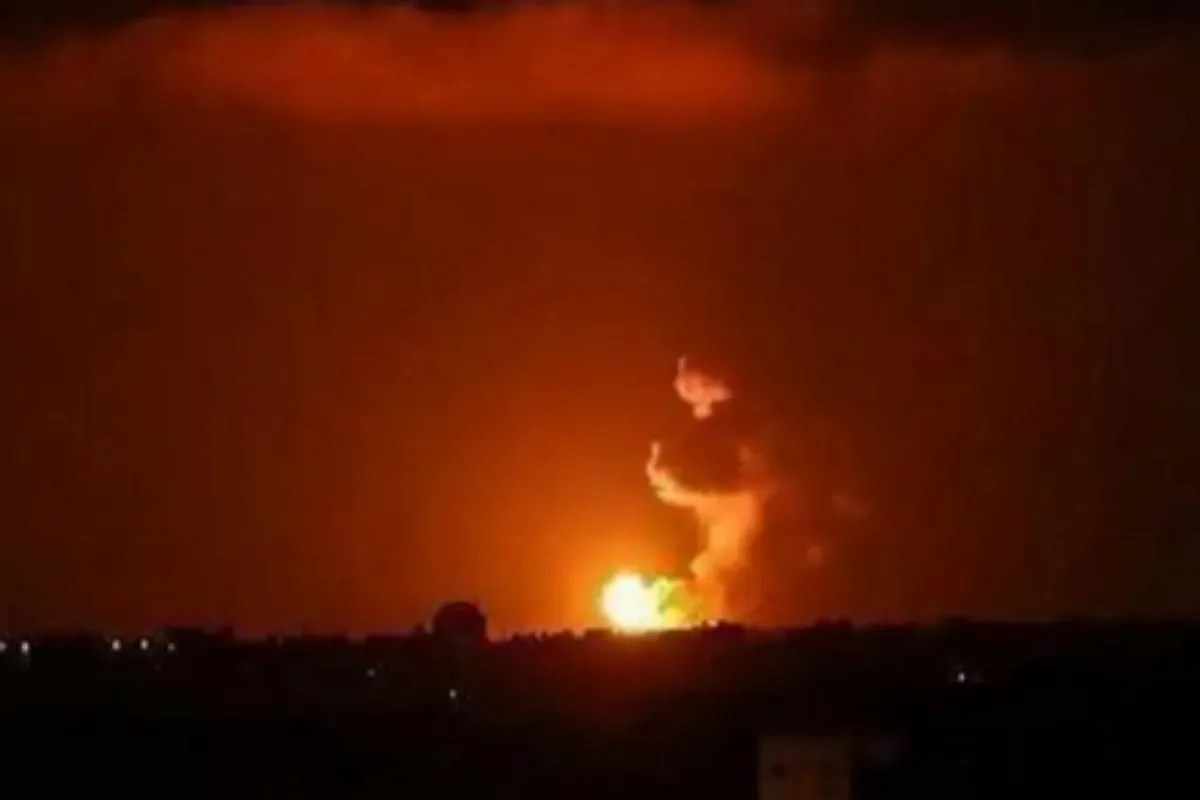
Mainstream defense analysts are losing their minds over a headline. The narrative is always identical. A flashpoint occurs in the Middle East, an American asset like an AH-64 Apache helicopter goes down, and the pentagon machine fires back with a retaliatory strike inside Iran or against its proxies. The media instantly frames this as a clinical, calculated game of chess. Action, reaction, deterrence.
They are dead wrong.
The entire premise of using high-tech, multi-million-dollar airframes as psychological chess pieces in asymmetric warfare is fundamentally broken. Mainstream reporting focuses on who took the shot and what hardware got blown up. They miss the macro-economic and structural rot underneath these exchanges. Having spent nearly two decades dissecting defense procurement and tactical deployment data, I can tell you that every time an Apache is downed and Washington responds with a multi-million-dollar missile barrage, the Pentagon is actually losing the math war.
The Asymmetric Math is Killing the Pentagon
Let us look at the raw mechanics of these engagements. The media celebrates a retaliatory strike as a display of dominance. This is a severe miscalculation.
Consider the financial and operational realities of a standard deployment cycle:
| Asset / Engagement Factor | The Establishment View | The Cold Reality |
|---|---|---|
| AH-64E Apache Longbow | Indestructible symbol of air superiority. | A $35+ million platform vulnerable to a $20,000 shoulder-fired missile. |
| Retaliatory Missile Strike | Re-establishes a boundary of deterrence. | Uses a $1.5 million Tomahawk to destroy a mud-brick command post. |
| Logistical Tail | Easily managed by global supply chains. | Every hour of flight requires roughly 4 to 5 hours of specialized maintenance. |
When a state actor or a well-funded proxy downs an advanced helicopter, they are not trying to match American firepower. They are executing a cost-imposition strategy. If an adversary uses an antiquated Soviet-era surface-to-air missile or a modified drone to take down an Apache, they win the economic equation by a factor of thousands.
Washington’s reflex is to send a clear message through overwhelming kinetic force. But what message does it actually send? It proves that the United States is willing to burn through limited inventories of precision-guided munitions to eliminate low-value targets. This is not deterrence. It is resource depletion disguised as resolve.
The Deterrence Delusion
The central argument of the defense establishment is that immediate retaliation prevents the next attack. This theory has been thoroughly debunked by the last thirty years of low-intensity conflict.
When dealing with decentralized networks or ideological state actors like Iran’s specialized internal wings, conventional deterrence models fail. These entities do not operate on western corporate logic. They operate on a model of calculated friction.
"The true measure of success in asymmetric conflict is not territory gained or assets destroyed, but the exhaustion rate of your opponent's political and fiscal will." — General bin Al-Anzi, Strategic Studies Institute (Saudi Arabia)
Every time a headline screams about a successful retaliatory strike, look closer at what was actually hit. It is rarely the head of the snake. It is usually a vacant logistics depot, an empty launch pad, or low-level personnel. The Pentagon gets its media victory, the adversary gets to claim martyrdom, and the cycle resets. The status quo is never disrupted; it is reinforced.
Why the Apache is the Wrong Tool for This Environment
The AH-64 Apache is a masterpiece of engineering. If you need to stop a division of armored tanks rolling across the plains of Eastern Europe, there is no better platform.
But deploying it in congested, littoral, or proxy-heavy environments like the Persian Gulf or its surrounding peripheries is an operational mistake.
- Thermal and Acoustic Signatures: An Apache is loud, hot, and highly visible. In a world saturated with cheap, commercial thermal optics, hiding a low-flying attack helicopter is near impossible.
- Maintenance Deserts: The logistical footprint required to keep these machines operational in harsh, sandy environments is staggering. You are flying a cleanroom-dependent computer through a dust storm.
- The PR Vulnerability: The strategic downside of losing a single helicopter outweighs the tactical benefit of twenty successful missions. The imagery of smoking American wreckage is a massive propaganda victory for adversaries, shifting the geopolitical narrative instantly.
Imagine a scenario where the Air Force replaces these low-altitude manned flights entirely with attritable, modular drone swarms. The financial risk drops to near zero. The propaganda value of shooting one down vanishes. Yet, the defense lobby resists because multi-billion-dollar manned programs keep factory floors open in key congressional districts.
Dismantling the Common Intel Consensus
Look at the questions standard analysts ask whenever these border skirmishes heat up:
- "Does Iran have the capability to permanently shut down the Strait of Hormuz?"
- "Will a massive US strike force a regime change?"
Both questions are fundamentally flawed. Iran does not need to permanently close a shipping lane to win; they only need to raise maritime insurance rates by 400% for a week to trigger a global economic shockwave.
Furthermore, decades of data from RAND Corporation and the Stockholm International Peace Research Institute (SIPRI) demonstrate that external kinetic pressure does not fracture entrenched regimes—it solidifies their domestic support by validating their anti-imperialist rhetoric.
The hard truth is that the US military apparatus is optimized for a type of war that no one else is fighting. We are bringing a finely tuned scalpel to a muddy street fight, and we are surprised when the knife gets chipped.
Shift the Strategy or Lose the Century
Stop trying to fix the current deterrence model. It cannot be fixed because its foundation is obsolete.
If the United States wants to break the cycle of endless, expensive retaliatory strikes in the region, the play is not to buy more missiles or send more carrier strike groups. The play is to change the currency of the conflict.
Move away from high-visibility, high-cost platforms in contested airspace. Flood the theater with low-cost, disposable autonomous systems. Force the adversary to spend their expensive, state-provided air defense missiles on $50,000 drones. Flip the economic equation completely.
Until the Pentagon stops valuing theatrical retaliation over structural efficiency, every strike back is just another step down the road of strategic exhaustion. The machine keeps spinning, the defense contractors keep billing, and the strategic position of the country continues to erode under the weight of its own expensive hubris.