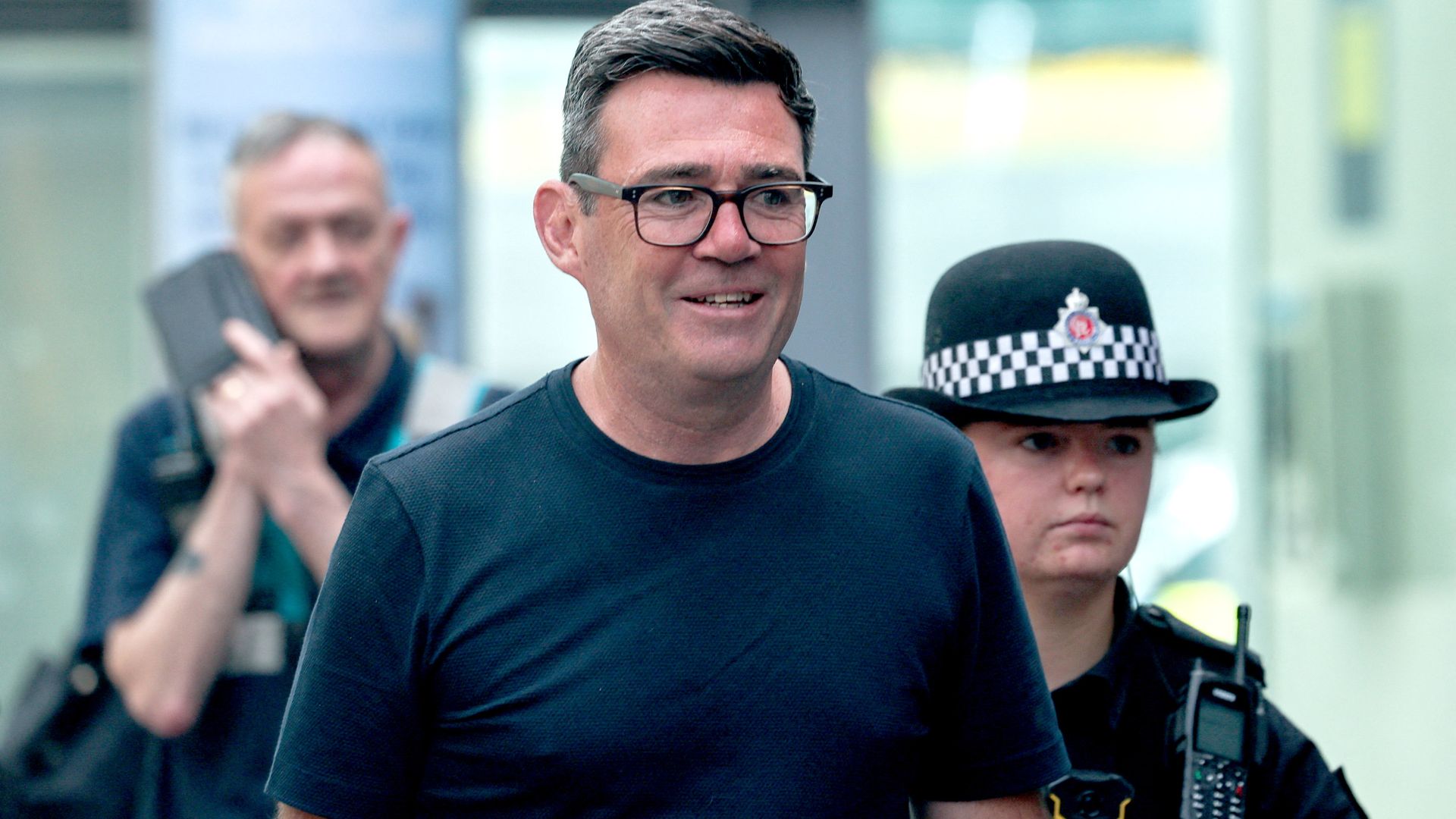
Big changes are brewing in British politics, and the future of how your local streets are policed is hanging in the balance. Keir Starmer is stepping down. Andy Burnham is the overwhelming favorite to enter Downing Street by mid-July. As the incoming prime minister prepares his policy agenda, whispers from Westminster reveal he wants to kill off one of the current government's most controversial plans.
He is looking to scrap the proposed mergers of the 43 regional police forces across England and Wales.
Back in January, Home Secretary Shabana Mahmood announced a major restructuring plan. The goal was to consolidate forces to cut costs and create a more uniform system. Former Metropolitan Police Commissioner Bernard Hogan-Howe was brought in to lead the review and draw up the new map. It looked like an unstoppable shift toward centralization.
Burnham is about to slam the brakes on the whole thing.
This isn't just a minor bureaucratic disagreement. It's a fundamental clash over how safety, accountability, and local power should work in Britain. Merging police forces sounds great on paper to management consultants and treasury officials. In reality, it usually creates distant, bureaucratic monsters that lose touch with the very communities they're supposed to protect. Burnham knows this because he spent nearly a decade as the Metro Mayor of Greater Manchester dealing with the messy realities of policing on the ground.
The Mirage of Efficiency through Size
The argument for force mergers always relies on the same old corporate playbook. Proponents say that 43 separate police forces is an outdated relic of the 1960s and 70s. They claim that combining them into fewer, larger entities will save millions on back-office costs, streamline procurement, and make it easier to fight cross-border organized crime.
It is a neat theory. It just doesn't hold up under scrutiny.
When you create massive policing areas, the administrative center inevitably sucks in the resources. Local police stations close. Response times in rural areas grow longer. The focus shifts naturally to the highest-crime urban centers, leaving smaller towns and suburban communities feeling abandoned.
We've seen opposition to this gathering pace outside of London. Surrey Police and Crime Commissioner Lisa Townsend openly warned that force mergers would be a disaster for her area. Her concern is simple. A merger would pull policing resources away from Surrey communities to support higher-crime areas nearby, leaving local taxpayers with a second-rate service. You can't blame her for being worried. When local accountability is diluted, local priorities get buried.
Burnham's skepticism likely stems from his time running Greater Manchester. He understands that a kid getting intimidated on a high street in Wigan requires a completely different approach than an organized drug ring operating out of central Manchester. If you merge forces into giant regional blocks, you lose the granular knowledge that makes neighborhood policing work.
The Devolution King Rejects Whitehall Control
You have to look at this decision through the lens of Burnham’s broader political philosophy. He has spent years arguing that London holds too much power. He basically built his modern political brand on the idea that the regions should control their own destinies. He is even planning to move parts of the Number 10 operation to Manchester to break the Westminster bubble.
It would make zero sense for a leader obsessed with devolution to turn around and centralize the police.
If you strip local communities of their distinct police forces, you strip them of their voice. Right now, Police and Crime Commissioners and metro mayors have a direct line of accountability to the voters. If the police screw up, the local public can punish the politicians in charge. Giant merged forces answerable to a distant regional board or directly to the Home Office smash that link.
Centralization is usually a cover for funding cuts. The government is facing a brutal fiscal outlook, with tens of billions needed just to meet defense commitments. The temptation to use police mergers as a cost-cutting exercise is massive. Burnham seems to realize that cutting costs this way leaves a permanent scar on community safety.
What Real Policing Reform Looks Like
Scrapping the mergers doesn't mean keeping the status quo. British policing has massive problems, but changing the logos on the squad cars won't fix them. Instead of moving around lines on a map, the next government needs to focus on how forces actually operate.
A better model already exists. The "Clear Hold Build" framework has shown real success in recent years. Forces target an area to clear out criminals, hold the ground to prevent them from returning, and then build up the community with long-term investment.
The problem isn't the structure of the forces. It's the funding for that final "Build" phase.
Instead of spending millions on the chaotic administrative nightmare of merging IT systems, HR departments, and command structures, that money should go straight into neighborhood teams. Experts point out that organized crime in Britain is essentially a massive cash-based business infrastructure, raking in billions through high street fronts like vape shops, cash-only bars, and candy stores. Fighting that requires smart, localized business intelligence and financial tracking, not giant regional bureaucracies. Local bobbies on the beat need to know which shops on their high street look suspicious. A manager sitting in a regional headquarters fifty miles away won't have a clue.
Moving Beyond the Corporate Playbook
If you want to see what happens when you rush into police mergers, look at Police Scotland. The creation of a single national force in 2013 was supposed to save money and improve efficiency. Instead, it led to years of political infighting, a loss of local accountability, and repeated budget deficits. It became an object lesson in the dangers of the "bigger is always better" mindset.
Burnham appears to have learned that lesson. By signaling that he will drop the merger plans, he is making a deliberate choice to protect local accountability.
If you want to stay ahead of where British policing is going next, keep a close eye on the upcoming leadership transition in July. Watch whether Burnham formally axes the Hogan-Howe review or shifts its mandate entirely. Local residents should pressure their current Police and Crime Commissioners to publish community safety data now, making it clear exactly what resources their local areas stand to lose if centralization ever rears its head again. The battle for the future of local policing is just getting started, and for now, localism is winning.