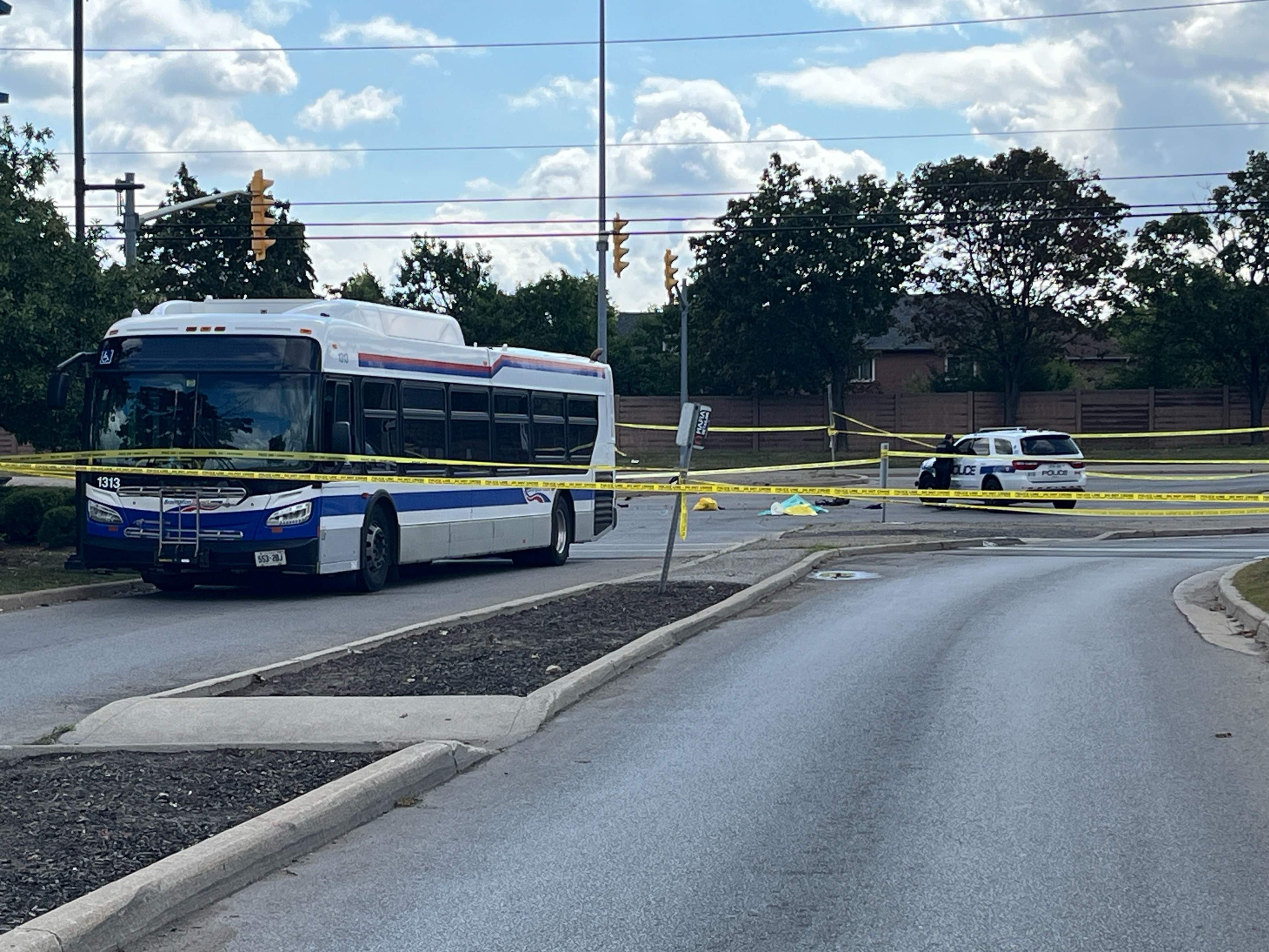
Urban arterial design, vehicular mass differentials, and kinetic energy management dictate the survival probability of vulnerable road users. When a collision occurs between a motorcycle and a heavy transit vehicle at intersections such as Bovaird Drive and Great Lakes Drive, the resulting fatality is not merely an isolated traffic anomaly. It represents the terminal point of a compounding structural failure involving municipal road geometry, kinetic transfer ratios, and human reaction time constraints. Peel Regional Police reported a fatal collision involving a motorcyclist in their fifties and a municipal transit bus, halting morning traffic and underscoring a persistent municipal safety hazard. Deconstructing this event requires moving past standard police blotter summaries to examine the underlying mechanics governing multi-ton transit corridors.
The Kinematics of Heavy-Vehicle to Motorcycle Impact
Understanding the fatality requires evaluating the physics of mass asymmetry. A standard municipal transit bus operates at a gross vehicle weight rating exceeding fifteen thousand kilograms, whereas a typical motorcycle and rider rarely exceed four hundred kilograms. This creates a mass ratio greater than thirty-to-one.
When a lateral or frontal intersection conflict occurs, the transfer of momentum follows conservation laws where the lighter body absorbs the overwhelming majority of the kinetic energy change.
- Inelastic Collision Dynamics: The rigidity of a transit bus chassis ensures that minimal energy is dissipated through structural deformation of the bus, transferring maximum deceleration shockwaves directly to the motorcycle frame and the operator.
- The Occlusion Factor: Large transit vehicles create massive visual blind spots for turning maneuvers, compounding the risk profile when combined with the accelerated approach velocity profiles typical of motorcycles.
- Intersection Geometry: Arterial roads featuring multi-lane configurations and high posted speed limits amplify stopping distances, leaving zero margin for error when a heavy vehicle initiates a left or right turn across oncoming traffic paths.
The Municipal Risk Matrix
The spatial concentration of serious collisions along Peel Region corridors points to systemic vulnerabilities in urban arterial management. Traditional traffic reporting treats each crash as an independent event, obscuring the systemic variables that tie these incidents together.
The first variable is signal phasing optimization. Many suburban arterial intersections prioritize traffic throughput over pedestrian and motorcycle clearance intervals. When high-cadence bus routes intersect with motorcycle traffic during peak commuting hours, the probability matrix shifts unfavorably due to high vehicle density and complex turning movements.
The second variable is infrastructural friction. Sub-optimal asphalt grading, heavy vehicle rutting, and inconsistent line-of-sight visibility near commercial zones degrade traction control for two-wheeled vehicles. A motorcyclist encountering an emergency braking scenario from a transit vehicle faces compromised friction coefficients that standard anti-lock braking systems cannot fully mitigate under high lean angles or wet conditions.
Operational Failures in Urban Traffic Safety
Emergency response data from Peel Regional Police highlights recurring patterns in regional traffic fatalities. Standard accident investigations focus on proximate causes such as speed verification or right-of-way infractions, yet they frequently omit the broader operational context of transit scheduling pressures and road design velocity mismatches.
Public transit operators navigate tight scheduling constraints across congested suburban corridors. The cognitive load on bus drivers navigating multi-lane intersections while monitoring passenger movement inside the cabin creates a high-risk operational environment. Simultaneously, motorcyclists operate within a narrow band of perceptual visibility, where motorists fail to process the angular velocity of an approaching bike.
Addressing these fatal intersections demands a shift from reactive policing to predictive infrastructure engineering. Municipal planners must decouple traffic throughput targets from intersection safety metrics. Implementing protected left-turn phases for all directions, deploying advanced optical sensor detection for smaller vehicle profiles, and lowering arterial speed limits during high-density transit windows represent the baseline requirements for altering the survival curve on regional thoroughfares.
Prioritize the redesign of high-conflict intersections by deploying dedicated phase-separated signaling for heavy commercial transit and vulnerable road users before the next municipal capital budget cycle closes.