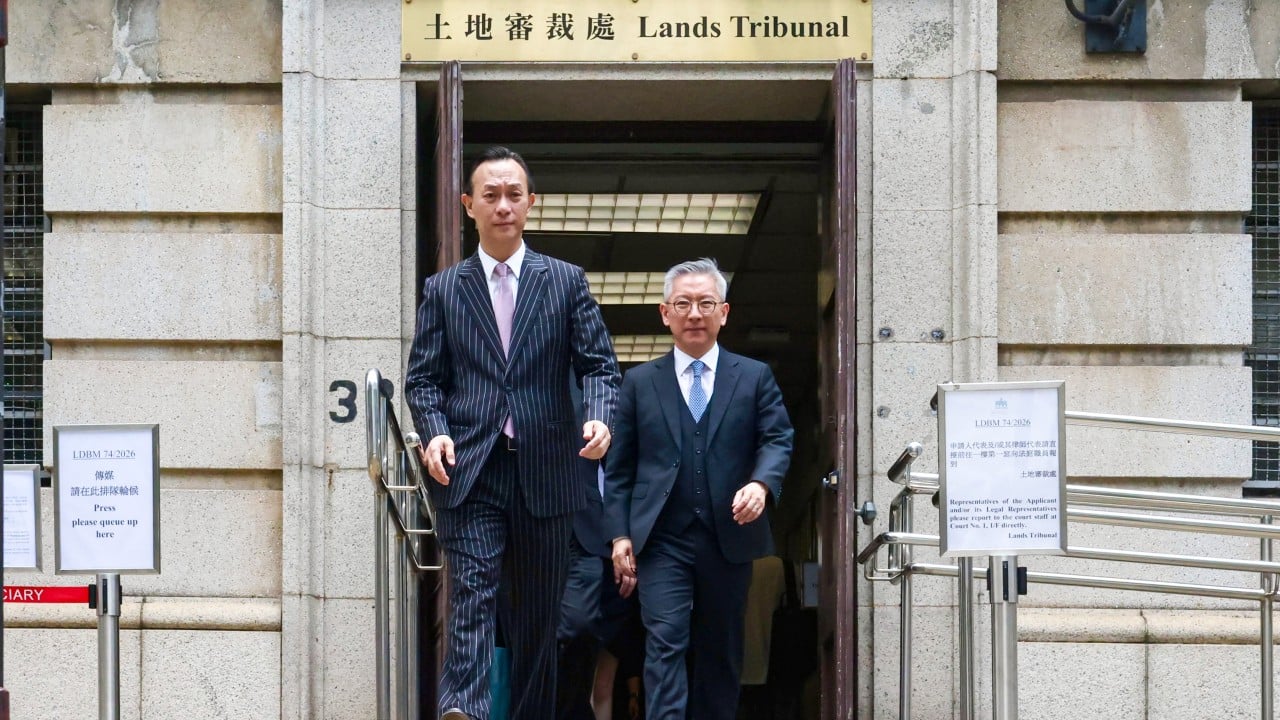
Statutory timelines within property management regimes exist to protect minority stakeholders from administrative inertia, yet rigid enforcement can paralyze operational recovery in high-stakes crises. The legal battle in Hong Kong’s Lands Tribunal between Hop On Management Company Limited and the displaced residents of the fire-damaged Wang Fuk Court exposes a critical systemic friction: the limits of implied judicial power when confronting explicit legislative mandates. By examining this dispute through structural legal and operational frameworks, we can deconstruct why standard regulatory compliance mechanisms collapse under pressure.
The Statutory Matrix and Corporate Implosion
The governance of private property in Hong Kong operates under a rigid legislative framework designed to balance the collective will of flat owners with institutional accountability. Under the Building Management Ordinance (Cap. 344), when five percent of owners petition for an extraordinary general meeting, the governing body faces a strict two-tiered temporal constraint: Learn more on a connected issue: this related article.
- The Notice Mandate: A formal notice of meeting must be dispatched to all registered owners within 14 days of receiving the petition.
- The Convening Mandate: The physical or virtual general meeting must be officially executed within 45 days of the initial petition date.
Following the catastrophic fire at Wang Fuk Court on November 26, 2025, the Lands Tribunal executed an unprecedented structural intervention in Secretary for Home and Youth Affairs v Incorporated Owners of Wang Fuk Court & Ors [2026] HKLdT 4. The court dissolved the volunteer-led Management Committee due to deep operational incapacity and structural conflicts of interest, appointing Hop On Management Company Limited as an independent corporate administrator.
When residents submitted a legally binding petition on April 29, 2026, demanding a massive general meeting to resolve long-term resettlement and financial strategies, the statutory clock began ticking toward a hard deadline of June 13, 2026. The administrator’s subsequent application to postpone this deadline highlights a fundamental operational mismatch between statutory obligations and crisis execution capabilities. Additional journalism by The Motley Fool delves into related views on the subject.
The Operational Bottleneck Framework
The administrator’s petition for judicial delay is not merely a matter of administrative preference; it is driven by a complex operational bottleneck. When a corporate administrator assumes control of a distressed asset following a mass-casualty event, the resource constraints of verifying ownership rights scale non-linearly. The operational cost function of executing a compliant general meeting under Cap. 344 involves three primary vectors:
1. Title Verification and Probate Latency
The fire resulted in multiple fatalities, instantly triggering a transition period for property titles. A corporate administrator cannot legally accept meeting credentials or proxy forms from a deceased owner's estate until the High Court grants letters of administration or probate. Forcing a statutory meeting prior to the resolution of these legal procedures creates a significant risk of disenfranchisement for lawful heirs, compromising the legal validity of any resolutions passed during the assembly.
2. Physical Logistical Scaling
The residents' petition specified explicit parameters: a venue capable of hosting at least 1,000 individuals and a meeting duration minimum of six hours. In a densely populated urban environment, securing an available, publicly accessible venue of this scale within a rolling 45-day window introduces severe logistical constraints.
3. Verification of Identity Mechanics
With 247 handwritten signatures submitted in the initial petition, the administrator faces a strict process of cross-referencing each signatory against the Land Registry's current database to ensure standing. In a post-disaster environment where physical documents are destroyed and residents are dispersed across transitional housing units, the administrative time required per capita increases significantly.
The Conflict of Jurisdiction: Express vs. Implied Power
The core legal friction presented before Lands Tribunal Judge Lam Chin-ching rests on a classic administrative law dilemma: the doctrine of ultra vires versus the theory of implied or incidental judicial powers.
[Statutory Text: Cap. 344 Mandates 45-Day Boundary]
                 │
                 ▼
[Does Lands Tribunal Possess Implied Discretionary Power?]
                 │
        ┌────────┴────────┐
        ▼                 ▼
[YES: Historical Precedent]    [NO: Strict Textualism]
- SARS (2003)                  - Lack of explicit clause
- Covid-19 Outbreaks           - Risk of infinite deferral
The Building Management Ordinance contains no explicit mechanisms granting the Lands Tribunal or an appointed administrator the power to extend the 45-day window for owner-requisitioned meetings. The strict textualist interpretation argues that the absence of an express extension clause means the court lacks the jurisdiction to modify the timeline. Under this view, the statutory deadline is an absolute boundary designed to prevent management companies from indefinitely delaying accountability.
To counter this, the administrator relies on the doctrine of implied powers, arguing that a statutory tribunal must possess the incidental authority to manage its own procedures and prevent injustice. The legal justification depends heavily on public health precedents, specifically the judicial extensions granted during the SARS outbreak of 2003 and the Covid-19 disruptions. The administrator argues that if a court can adjust statutory timeframes to protect public safety during a pandemic, it must logically possess the same equitable discretion when dealing with the administrative aftermath of a fatal residential disaster.
The Judicial Risk Vector and Slippery Slope Mechanics
During oral arguments, the tribunal's line of questioning exposed the long-term systemic risks of granting ad-hoc statutory relief. Judge Lam raised a fundamental institutional concern: if the court grants an extension based on operational difficulties, what stops an applicant from seeking repeated extensions every time a new challenge emerges?
This creates a systemic moral hazard within property governance. If the Lands Tribunal establishes a precedent where operational friction is sufficient cause to set aside statutory deadlines, the 45-day rule shifts from a mandatory protection for owners into a flexible guideline for administrators. Furthermore, the administrator’s inability to provide a concrete alternative date during the initial hearings aggravated this risk, threatening to turn a temporary delay into an indefinite freeze on corporate governance.
The tribunal is forced to balance two competing structural priorities:
- The Rights of the Requisitioning Minority: The absolute right of flat owners to force timely financial and operational transparency from their management structure.
- The Integrity of the Corporate Process: The requirement that any meeting held must be legally resilient, logistically viable, and inclusive of all lawful stakeholders, including the estates of the deceased.
Asset Stabilization Strategy
When navigating a governance crisis of this magnitude, relying on litigation to resolve administrative bottlenecks introduces unnecessary regulatory risk. A corporate administrator must deploy a parallel strategy that satisfies the spirit of statutory transparency while managing operational realities.
First, management must establish an immutable, blockchain-verified or centralized digital ledger for title tracking and proxy collection. By partnering with the Land Registry for expedited batch searches, the administrative timeline for verifying signatures can be reduced from weeks to days, mitigating the identification bottleneck.
Second, rather than requesting open-ended extensions from the Lands Tribunal, administrators must present a tiered, milestone-driven project schedule to the court. If a delay is necessary, it must be bound to a definitive alternative date and supported by pre-secured venue bookings. This demonstrates administrative diligence and eliminates judicial concerns regarding infinite deferrals.
Finally, to address the probate latency issue, administrators should proactively establish an escrow-style voting framework. This mechanism permits provisional proxy submissions from apparent heirs, subject to post-meeting verification or formal legal undertakings. This approach balances the preservation of voting rights with the need for timely corporate progress, ensuring that structural recovery is not indefinitely delayed by legal paperwork.