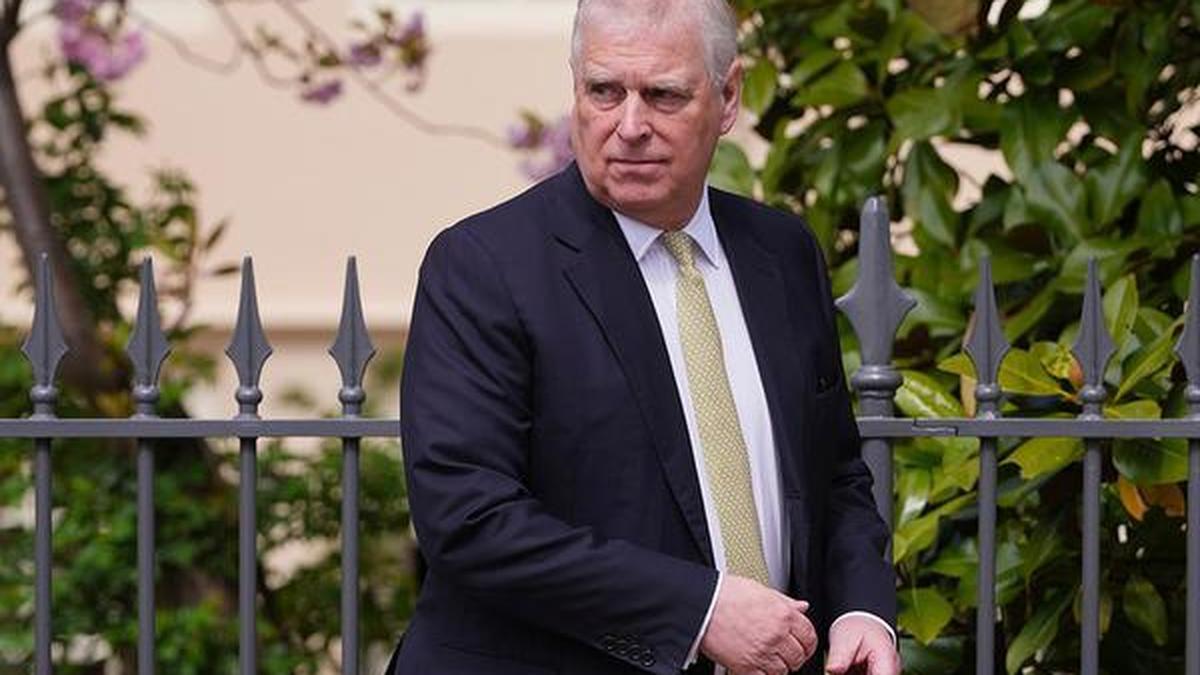
The expanded criminal inquiry by Thames Valley Police into Andrew Mountbatten-Windsor—formerly Prince Andrew, Duke of York—represents a structural pivot in how the British state manages systemic legal exposure within its upper echelons. This investigation operates at the convergence of public office liability, cross-border evidentiary friction, and institutional risk mitigation. By moving beyond specific transactions to a generalized appeal for witnesses, law enforcement has signaled a transition from a narrow, transaction-based inquiry into a structural assessment of institutional abuse.
To evaluate the trajectory of this investigation, one must discard the sensationalism of royal reporting and instead map the precise operational, legal, and jurisdictional mechanics driving the case.
The Scope Inflation Mechanism
The public statement issued by Thames Valley Police indicates a deliberate broadening of the legal framework governing the case. While the initial arrest on February 19, 2026, focused heavily on specific transaction data—namely, the alleged transmission of official trade reports to Jeffrey Epstein in 2010—the current strategy targets a wider operational matrix.
This expansion relies on the common law offense of Misconduct in Public Office (MIPO). MIPO is an exceptionally versatile prosecutorial instrument within English law, lacking the rigid statutory boundaries of modern financial or sexual offenses. To secure a conviction under MIPO, the Crown Prosecution Service (CPS) must satisfy four strict structural criteria:
- Public Officer Status: The defendant must be a public officer.
- Breach of Duty: The individual must misconduct themselves in the discharge of their public duties.
- Culpability Threshold: The misconduct must rise to the level of willful neglect or intentional abuse.
- Justification Absence: The conduct must occur without reasonable excuse or justification.
By shifting their public appeals toward a broader array of misconduct—explicitly enumerating corruption, fraud, financial impropriety, and sexual misconduct—investigators are executing a classic scope inflation strategy. This serves a dual operational purpose. First, it acknowledges that a single, isolated transaction (such as a leaked trade document) may fail the threshold of "seriousness" required to sustain a lifelong common law conviction. Second, it pools multiple distinct allegations to establish a systemic pattern of behavior, increasing the probability that the aggregate conduct meets the strict legal definition of willful misconduct.
The Jurisdictional Bottleneck and Evidentiary Friction
The critical operational vulnerability for British investigators lies in the distinction between public data and admissible evidence. The entire genesis of the current inquiry stems from the U.S. Department of Justice (DoJ) releasing millions of pages of unsealed files related to the Epstein estate.
However, a fundamental operational bottleneck exists between a printout downloaded from a U.S. federal court docket and an admissible piece of evidence in a UK criminal court. Thames Valley Police and the other eight British forces currently investigating Epstein-adjacent leads possess only secondary digital reproductions.
[U.S. Federal Court Docket] -> (Secondary Digital Copy) -> [UK Police Possession]
                                                                    |
                                                      [Legal Admissibility Gap]
                                                                    |
[U.S. Department of Justice] <- (Formal MLA Request) <------- [UK Crown Office]
To bridge this gap, British authorities face a complex international legal infrastructure:
- The Mutual Legal Assistance (MLA) Protocol: UK authorities cannot simply demand original hard drives, forensic images, or verified deposition transcripts from U.S. archives. They must route requests through the UK Central Authority to the U.S. DoJ.
- The Chronological Delay Matrix: Historical data shows that complex MLA requests involving high-profile targets take between six to eighteen months to clear federal review, assuming no domestic legal challenges intercede.
- The Reciprocity and Privilege Hurdle: Because the primary target was a senior royal and international trade envoy, specific materials may trigger assertions of diplomatic, state, or sovereign privilege, creating a prolonged constitutional standoff before evidence ever reaches a jury.
This reality explains the timing of the May 22, 2026, witness appeal. Faced with a multi-month delay in acquiring original U.S. documentary evidence, the investigation must generate domestic, firsthand witness testimony to maintain operational momentum and build an independent case file.
The Envoy Vetting Vacuum
Concurrently, the declassification of historical government documents regarding Mountbatten-Windsor’s 2001 appointment as the UK’s Special Representative for International Trade and Investment exposes a profound institutional vulnerability. The released records from British Trade International confirm that the appointment proceeded entirely at the behest of the Crown, explicitly driven by Queen Elizabeth II’s preference for a high-profile family member to lead trade delegations.
The critical finding within these disclosures is the absolute absence of due diligence. The Department for Business and Trade explicitly confirmed that no formal vetting, conflict-of-interest assessment, or standard civil service background checks were performed prior to the appointment.
This creates a distinct legal challenge for the defense. In a standard corporate or civil service environment, an executive can point to compliance training, institutional boundaries, and explicit codes of conduct to argue that their actions fell within accepted operational parameters. Because the former prince operated within a bespoke, unvetted constitutional pocket, there are no established institutional benchmarks defining what constituted "standard" versus "abusive" behavior in his specific deployment of state resources.
The defense will likely argue that because the role lacked a statutory definition, the parameters of "duty" were fundamentally amorphous, making it legally impossible to commit a "willful neglect of duty." Conversely, the prosecution will use this lack of formal structure to argue that the defendant possessed unmonitored executive autonomy, leveraging the authority of the state for private networks without the oversight applied to ordinary public servants.
Institutional Liability and De-risking Trajectories
The management of this crisis by the British state follows a clear corporate de-risking framework. The institutional behavior of the monarchy under King Charles III has shifted from defensive insularity to aggressive brand isolation.
The stripping of royal titles and the systematic removal of the former prince from public state appearances (such as the recent Easter services) reflect a calculated strategy to sever the institutional connection between the Individual Asset (Andrew Mountbatten-Windsor) and the Corporate Parent (The Monarchy). By reducing the target’s status to that of a private citizen under his family name, the state lowers the systemic risk to the constitutional framework.
Furthermore, the legal risk is no longer confined to a single individual. The parallel Metropolitan Police investigation into former U.S. Ambassador Peter Mandelson, alongside historical abuse inquiries launched by Surrey Police based on the same U.S. document troves, indicates that the state is bracing for a broader network failure.
Strategic Forecast
The operational timeline of this investigation precludes any rapid resolution. Given the structural necessity of securing formal U.S. Department of Justice data transfers and the meticulous requirement to interview secondary and tertiary witnesses across multiple jurisdictions, a formal charging decision by the Crown Prosecution Service will not occur before late 2026.
If the CPS authorizes an indictment under Misconduct in Public Office, the pre-trial disclosure arguments regarding sovereign immunity, public interest immunity, and the admissibility of decades-old deposition data will occupy the entirety of 2026. Consequently, any substantive criminal trial is structurally impossible before mid-2027.
The immediate tactical move for the defense will focus on challenging the foundational premise that the trade envoy role constitutes a "public office" under the strict definitions of English common law. If the defense can successfully argue that the role was purely ceremonial and lacked statutory public governance powers, the entire legal architecture of the prosecution's MIPO framework collapses. Investigators are currently directing their resources toward establishing an unbroken chain of state-funded executive action to preemptively neutralize this defense.