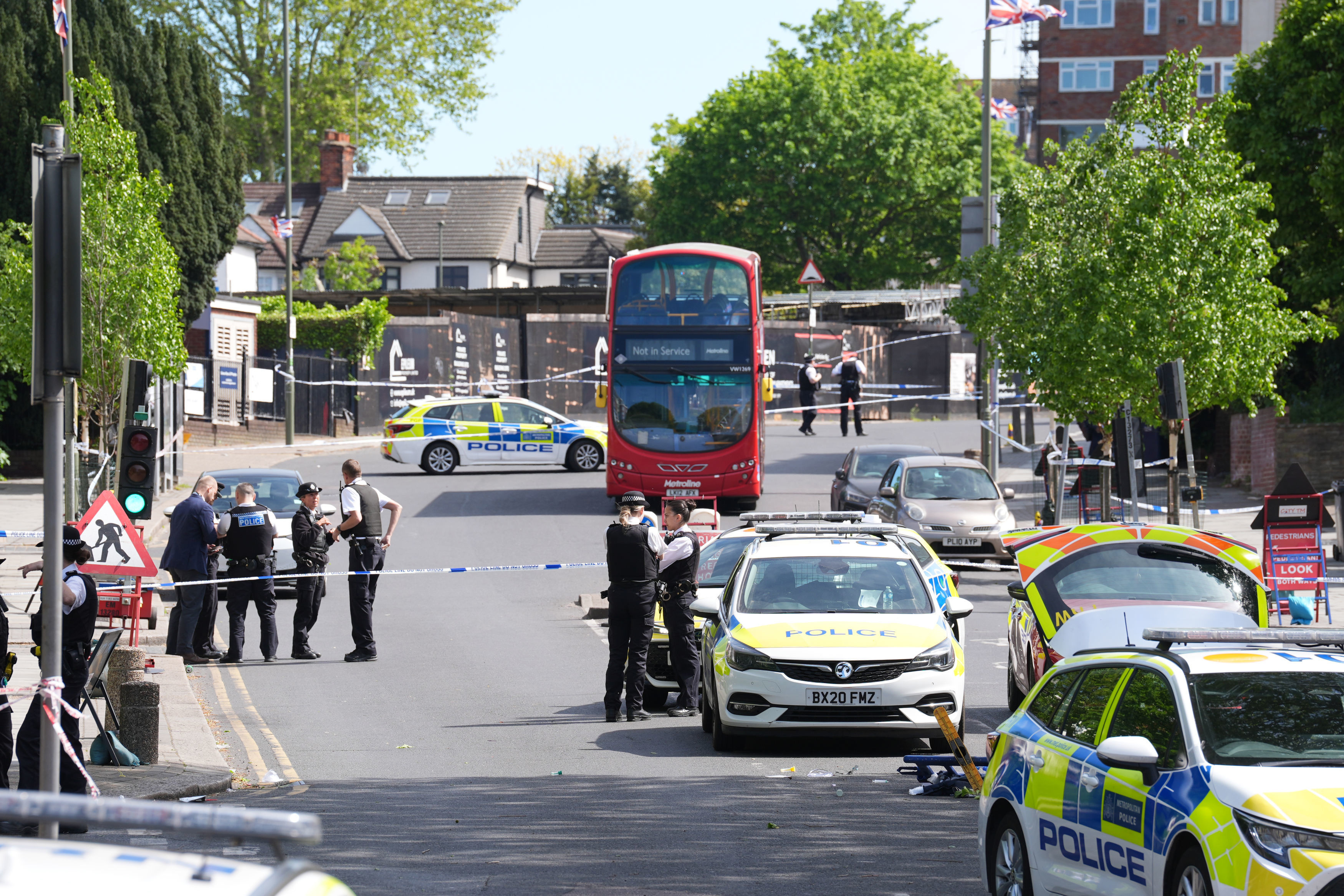
The tea in London is rarely hot enough by the time you actually get to drink it. You’re usually too busy dodging a rogue umbrella or checking the District Line status to notice the steam disappearing into the grey dampness of a Tuesday. It was an ordinary Tuesday. The kind of day where the biggest threat feels like a late train or a sudden downpour near Westminster. Then, the screaming started.
Terrorism is a clinical word. It belongs in briefings and courtroom transcripts. It lives in the mouths of politicians who wear somber ties and stand behind lecterns with the weight of a nation’s anxiety on their shoulders. But on the pavement, it isn't a word. It’s the sound of rubber screeching. It’s the metallic scent of blood hitting old stone. It’s the sight of a discarded shopping bag, its contents spilled out like a life interrupted.
The Prime Minister’s voice would later cut through the airwaves, sharp and definitive. He would call it an "appalling attack." He would declare it a "terrorist incident." He would speak of resolve. But before the official declarations, there was only the raw, human instinct to survive and the quiet, heartbreaking bravery of those who stayed to help.
The Geometry of Fear
When an attack happens in the heart of a city, the world shrinks. For a woman we’ll call Sarah—a hypothetical commuter but a stand-in for a thousand real souls—the map of London vanished. There was no more "East End" or "South Bank." There was only the distance between her and the man with the blade.
Five meters. Three meters.
The geometry of fear is precise. You calculate the exits. You weigh the thickness of a glass storefront against the velocity of panic. While the news cycles would later obsess over the perpetrator’s motives and the security failures that allowed him to stand on that specific corner at that specific second, Sarah was only thinking about the weight of her daughter’s hand in hers.
Statistics tell us that London is one of the most surveilled cities on Earth. There are millions of cameras. There are layers of intelligence meant to catch the whisper of a plot before it becomes a shout. Yet, the horror of a stabbing is its intimacy. It is low-tech. It is visceral. It is a violation of the unspoken contract we have with the streets we walk: that we are safe among strangers.
The Prime Minister spoke from a place of authority, but the real authority that afternoon belonged to the first responders. They arrived while the air was still vibrating with the echoes of the sirens. To look at the facts of the event—a stabbing, a cordoned-off street, a suspect in custody—is to see only the skeleton of the tragedy. To see the meat of it, you have to look at the paramedic kneeling in the rain, his knees soaking up the grime of the city while he fights to keep a stranger’s heart beating.
The Weight of the Word
Why do we declare it "terrorism" so quickly?
It isn't just a legal distinction. It’s a psychological one. By labeling the act, the state attempts to reclaim control over the chaos. If it’s a random act of violence, it’s a tragedy. If it’s terrorism, it’s an assault on the collective. It moves the event from the personal ledger to the national one.
But for the families waiting behind the police tape, the label doesn't dull the ache. A knife doesn't hurt less because it was wielded for a cause. The cold reality of the UK’s current security climate is that the "lone wolf" or "self-radicalized" actor is the hardest variable to solve. You can track a cell. You can intercept a shipment of explosives. It is much harder to intercept a thought in a bedroom in a quiet suburb that turns into an action on a crowded bridge.
Consider the ripple effect. One man with a weapon creates a vacuum that thousands of people rush to fill with their own anxieties. The stock markets don't move much for a single incident anymore—we have become tragically resilient to the data points of death. But the mental health of a city? That’s a different ledger.
Every person who ran that day will carry a new map of London in their heads. They will avoid that corner. They will eye a heavy coat in the summer with a sliver of suspicion. The victory of the act isn't the physical wound; it’s the persistent, nagging feeling that the person standing next to you at the Pret A Manger might be the end of your world.
The Persistence of the Ordinary
Hours after the Prime Minister finished his address, the cleaners arrived. This is the part they don't show on the rolling news. The blue lights are still flashing, but the cameras have mostly moved to the "experts" in the studios.
The cleaners use high-pressure hoses. They wash away the evidence of the struggle. They scrub the soot and the stains until the pavement looks like any other piece of London. It’s a necessary ritual. We have to keep moving. We have to open the shops. We have to pretend that the tea is still hot and the District Line is the biggest of our worries.
But the silence that follows an attack is different from the silence of a quiet night. It’s a heavy, expectant silence. It’s the sound of a city holding its breath, waiting to see if this was a singular crack in the glass or the start of a shattering.
The Prime Minister promised that "our values will prevail." It’s a sturdy phrase. It looks good in a transcript. But values don't stand on street corners; people do. The defiance isn't in the speech. The defiance is in the person who goes back to that same corner the next morning to buy a newspaper.
We often get the narrative of these events backward. We focus on the "why" of the killer, dissecting his digital footprint and his grievances as if we can find a logic in the illogical. We should be focusing on the "how" of the survivors. How they reached out to catch someone who tripped. How a shopkeeper pulled the shutters down but kept the lights on for those huddling inside.
The stakes aren't just national security or border policy. The stakes are the invisible threads of trust that allow a city of nine million people to function without falling apart. Every time a knife is drawn in the name of an ideology, those threads are pulled taut.
The miracle isn't that we have security services. The miracle is that, despite the horror, we keep walking toward each other.
The sun eventually set over the Thames, casting long, orange shadows over the barricades and the bouquets of flowers already leaning against the railings. London is a city built on top of other cities, a place where history is layered like sediment. This Tuesday will be another layer. Another date. Another speech.
But for those who were there, the city will always feel a little thinner at that specific spot. A little colder.
The tea will never be quite hot enough again.