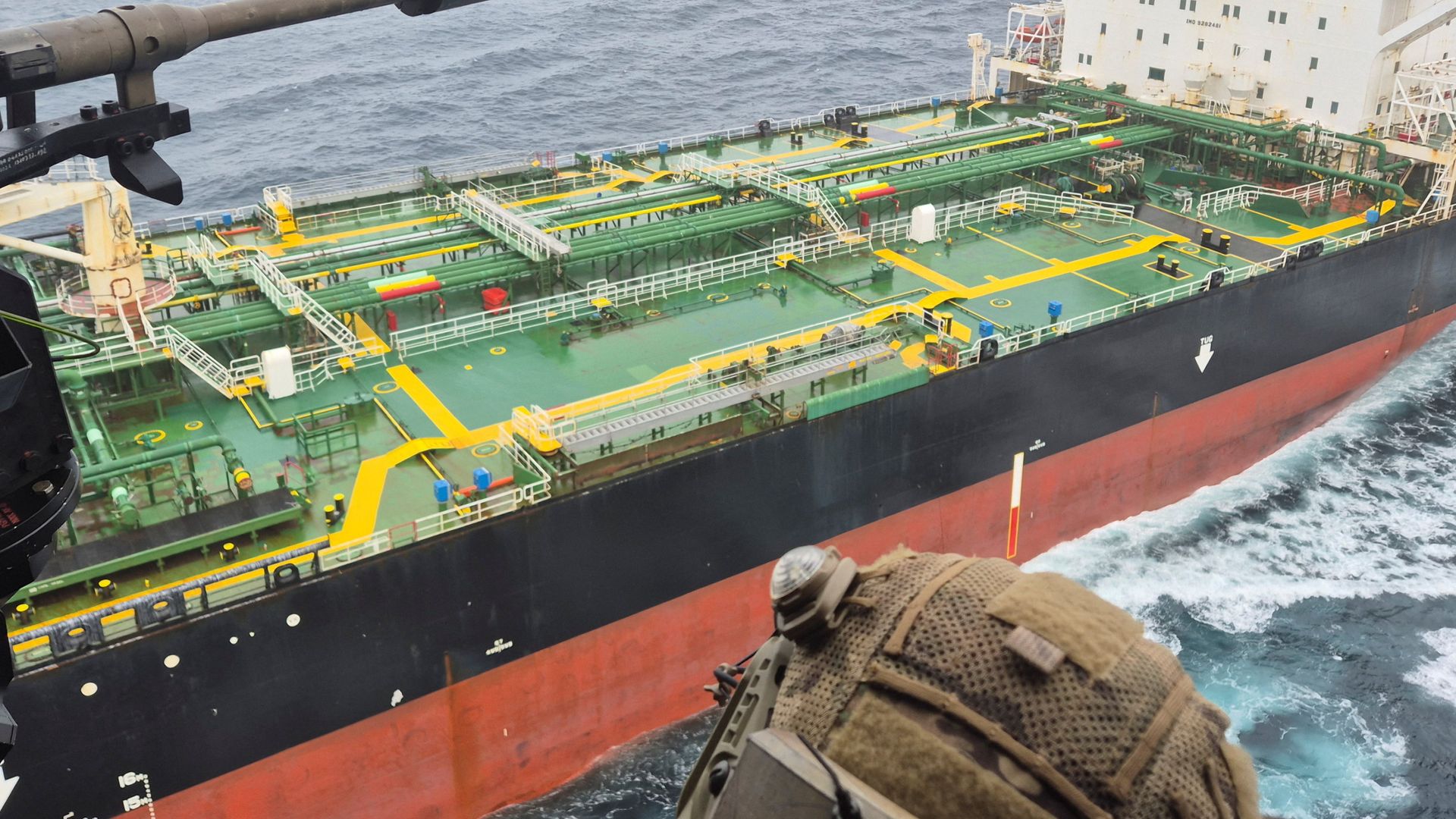
The seizure of the sanctioned Russian oil tanker Tagor in the international waters of the Atlantic Ocean exposes the structural friction between Western regulatory mechanisms and sovereign-backed maritime evasion networks. While political commentary frames the joint French-British operation on May 31, 2026, as an unmitigated success for international sanctions enforcement, an objective operational analysis reveals a more complex reality. The interception demonstrates the extreme tactical resources required to disrupt even a single component of Russia's logistics network, highlighting the systemic vulnerabilities in Western enforcement strategies.
To understand the mechanics of this confrontation, the event must be deconstructed not as a isolated maritime incident, but as a clash between two sophisticated operational architectures: the state-backed sanctions-evasion framework and the multilateral enforcement mechanism.
The Evasion Architecture: Deconstructing the Shadow Fleet
The Tagor is not an isolated bad actor; it is a node within a highly adaptive, capital-insulated logistics network designed to maintain Russia's oil export revenue. The operational logic of this network relies on three structural pillars designed to exploit the limitations of international maritime law.
Flag Hopping and Jurisdictional Arbitrage
The primary legal shield for shadow vessels is the manipulation of open registries, commonly referred to as "flags of convenience." The Tagor illustrated this tactical agility by rapidly shifting identities. Prior to its interception, vessel tracking data from MarineTraffic indicated the ship transmitted geolocation signals off the coast of Norway while flying the flag of Madagascar. By the time French commandos boarded the vessel 400 nautical miles west of Brittany, it was operating under a false Cameroonian flag, bound for Limbe, Cameroon.
This flag hopping creates a deliberate bureaucratic bottleneck. Under the United Nations Convention on the Law of the Sea (UNCLOS), a vessel on the high seas is generally subject to the exclusive jurisdiction of its flag state. By utilizing flags from states with weak regulatory oversight or by fabricating registration documents entirely, the shadow fleet forces Western navies to engage in time-consuming verification procedures before executing a physical boarding.
The Deceptive Tracking Protocol
The shadow fleet relies heavily on the manipulation of the Automatic Identification System (AIS), a mandatory automated tracking system used for collision avoidance. The operational protocol involves two main tactics:
- AIS Spoofing: Altering transmission data to report a false location, speed, or identity, effectively masking the vessel's true trajectory.
- Going Dark: Completely disabling the AIS transponder during critical operational phases, such as loading crude oil via ship-to-ship (STS) transfers or transiting high-scrutiny choke points.
In the case of the Tagor, the vessel went dark for a full week after passing Norway, blinding civilian tracking networks until its physical interception in the Atlantic.
Opaque Ownership Structures
The economic insulation of these vessels is achieved through multi-layered shell companies distributed across non-aligned jurisdictions. The true beneficial owners are hidden behind corporate veils, meaning that even if a specific hull is sanctioned or seized, the parent organization incurs only a marginal capital loss. The ships themselves are frequently aging hulls purchased at near-scrap value, making them economically disposable assets within the broader state-directed energy export function.
The Enforcement Mechanism: Multi-Domain Interdiction
Countering this decentralized evasion network requires an enforcement strategy that bridges the gap between digital intelligence and kinetic force. The interception of the Tagor provides a blueprint for how Western militaries are organizing this multi-domain approach.
[Tracking Phase: Satellite & AIS Analytics]
                 │
                 ▼
[Monitoring Phase: Airborne Telemetry (UK HMS Somerset Helicopter)]
                 │
                 ▼
[Kinetic Phase: Heliborne Assault & Boarding (French Navy Commandos)]
                 │
                 ▼
[Legal Phase: Flag Verification & Judicial Diversion to Brest]
The Intelligence-to-Kinetic Pipeline
The operation occurred more than 400 nautical miles west of the Brittany peninsula, far outside French territorial waters, requiring a highly coordinated cross-border military effort. The operational chain of events followed a precise, multi-tiered logic model:
- Persistent Anomalous Tracking: Synthetic Aperture Radar (SAR) satellite imagery and radio frequency data identified the Tagor as a high-probability target after it departed Murmansk and went dark.
- Airborne Monitoring and Telemetry: As the vessel approached Western European transit corridors, the British Royal Navy provided tracking support. A helicopter deployed from the Type 23 frigate HMS Somerset maintained constant visual and electronic contact, establishing the ship's speed, heading, and defensive posture without alerting the crew.
- The Kinetic Assault: With tracking data locked, French naval forces executed a vertical insertion. Commandos rappelled from a helicopter onto the deck of the Tagor on Sunday morning, securing the bridge and engineering spaces rapidly to prevent any attempts by the crew to scuttle the vessel or destroy documentation.
The Legal Leverage Point
Executing a boarding operation in international waters is fraught with geopolitical risk; Russia quickly condemned the operation as "international piracy." To remain within the bounds of international law, the French Maritime Prefecture of the Atlantic targeted a specific legal vulnerability: the validity of the vessel's flag.
Under international maritime law, a warship has the "right of approach" on the high seas if there are reasonable grounds to suspect a vessel is flying a false flag or is effectively stateless. Upon boarding, the French inspection team conducted an immediate audit of the ship's registration papers. Once the documentation confirmed the fraudulent use of the Cameroonian flag, the vessel lost its sovereign legal protections. The operational command immediately pivoted from a tactical inspection to a judicial diversion, handing jurisdiction over to the maritime public prosecutor in Brest, France.
The Cost Function of Sanctions Enforcement
Despite the tactical precision of the Tagor seizure, a cold assessment of the broader strategic landscape reveals a significant asymmetry in resource allocation. The current enforcement model faces severe limitations that prevent it from permanently neutralizing the shadow fleet threat.
The Operational Asymmetry
The fundamental flaw in the current Western strategy is the math of scalability. The Tagor represents just one vessel out of a Russian shadow fleet estimated to comprise over 1,300 hulls. The physical and military capital required to track, monitor, and board a single non-compliant tanker on the high seas is immense. It requires multi-million dollar naval frigates, specialized airborne assets, highly trained special forces, and complex diplomatic clearance.
In stark contrast, Downing Street recently acknowledged that since October 2024, the United Kingdom has challenged more than 700 suspected shadow fleet vessels. However, challenging a ship via radio or issuing a regulatory warning does not stop its voyage. Data indicates that since British Prime Minister Keir Starmer authorized the military to board shadow ships in March, hundreds of sanctioned vessels have successfully transited UK and European waters unhindered. The West lacks the naval density to scale kinetic boarding operations to a level that would meaningfully disrupt Russia's daily export volume.
The Financial Flaw of the "Catch and Release" Loop
The historical precedent of French interceptions reveals a recurring operational bottleneck: the financial penalty loophole. The Tagor is the fourth major shadow fleet vessel detained by France since September 2025, following the Boracay, the Grinch, and the Deyna.
The legal outcomes of these previous seizures expose the limits of the enforcement mechanism:
| Vessel Name | Seizure Window | Legal Resolution | Operational Outcome |
|---|---|---|---|
| Boracay | September 2025 | Captain jailed by French court | Vessel released back to trade network |
| Grinch | January 2026 | Multi-million euro penalty paid | Vessel released back to trade network |
| Deyna | March 2026 | Undisclosed financial fine paid | Vessel released back to trade network |
| Tagor | May 2026 | Pending investigation in Brest | Currently under naval escort |
Under current European legal frameworks, these vessels are treated as regulatory or civil violators rather than hostile state assets. When a shadow fleet tanker is seized, the shell companies backing it view the resulting fines simply as a transactional cost of doing business. Because global oil prices remain elevated—driven in part by broader geopolitical instability in the Middle East—the profit margins on a single successful transit of Russian Arctic crude far outweigh the periodic cost of a multi-million euro fine. The system operates on a "catch and release" basis, returning the asset to the sanctions-evasion network once the fine is processed.
The Strategic Path Forward
To break this cycle of ineffective deterrence, Western allies must transition from sporadic tactical interceptions to a strategy of systemic denial. If the objective is to choke off the revenues funding Moscow’s military operations, the cost function of operating a shadow vessel must be made unsustainably high.
First, European maritime authorities must end the policy of financial compromise. Seized vessels operating under fraudulent flags or found to be in flagrant violation of international safety and environmental regulations should be subject to permanent asset forfeiture. Instead of returning the hulls to the market after a fine is levied, the ships should be impounded indefinitely or sold for scrap, directly destroying the adversary's logistics capital.
Second, enforcement must target the systemic enablers of the fleet. This requires applying secondary sanctions to the specific maritime service providers—such as unaligned classification societies, refueling hubs, and insurers—that facilitate the operation of dark vessels. Interdicting the physical ship on the high seas will always be a rare and resource-intensive event; denying that ship access to port infrastructure, bunkering services, and legal cover is a scalable corporate blockade. Until the West closes the legal loopholes that allow these ships to buy their way out of detention, operations like the seizure of the Tagor will remain impressive tactical achievements that fail to alter the strategic calculus of the conflict.