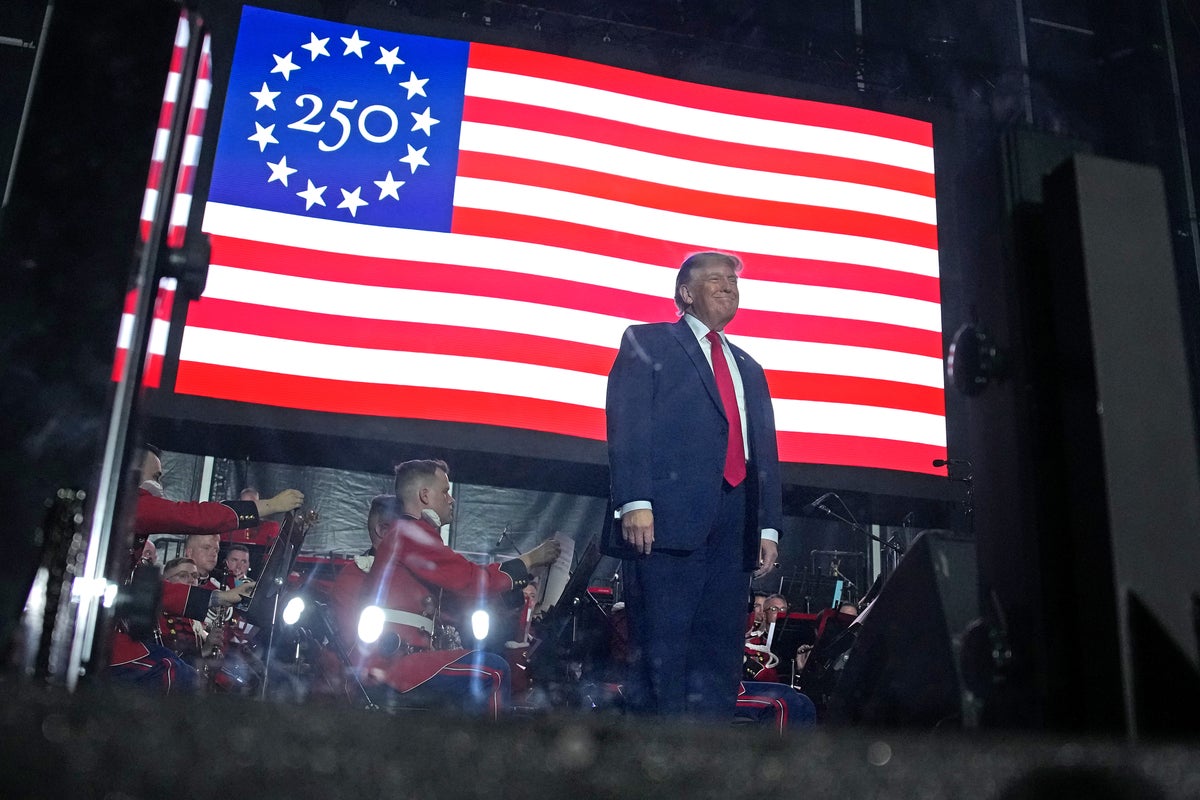
The execution of large-scale national commemorations relies on unified state-level coordination, centralized capital allocation, and non-partisan brand neutrality. When these conditions collapse, public infrastructure projects degenerate into redundant operational structures that destroy value and fracture corporate patronage. The planning of the United States Semiquincentennial—the nation’s 250th anniversary—serves as a case study in structural governance failure, illustrating how the introduction of parallel administrative bodies creates structural bottlenecks, drives vendor churn, and splits market execution.
The institutional framework designed to manage the milestone underwent a structural bifurcation. Congress originally established the America250 Commission in 2016 to serve as a bipartisan, centralized clearinghouse for nationwide programming. However, the establishment of Freedom 250 via executive order in January 2025 created a parallel, competing administrative architecture. This intervention disrupted existing procurement pipelines, fractured federal funding allocations, and introduced severe strategic friction across state and corporate stakeholder networks.
The Dual Entity Architecture and Capital Allocation Friction
The fundamental breakdown in the Semiquincentennial lifecycle stems from a fractured capital distribution mechanism. Large-scale public events operate under a strict cash-flow function where early capital commitment dictates logistical security, vendor retention, and infrastructure development. The co-existence of America250 and Freedom 250 split this function, causing a severe misallocation of public and private capital.
In fiscal performance terms, America250 requested a $150 million congressional appropriation for nationwide deployment, with an explicit understanding that $50 million would align with executive branch priorities. The structural failure manifested when the Department of the Interior withheld the anticipated capital, transferring only $25 million to the original commission by early 2026. This arbitrary reduction created an immediate operational deficit for localized state programs, while the remaining appropriated funds were diverted to subsidize Freedom 250's centralized initiatives on the National Mall.
This capital split introduced three distinct forms of structural friction:
- Donor Attrition Through Market Confusion: Corporate philanthropists and institutional donors operate on risk-mitigation frameworks. When presented with two competing entities—one congressionally mandated and the other executively directed—corporate compliance officers faced severe political exposure risks. The lack of a singular, legally clear recipient body led major corporate sponsors to freeze capital deployments entirely, preferring inaction over partisan alignment.
- Administrative Overhead Duplication: Operating twin committees naturally doubled the non-programmatic burn rate. Instead of capital flowing directly to regional infrastructure, historical restorations, or civic programming, funds were consumed by parallel executive salaries, separate legal counsels, and redundant marketing operations.
- Asymmetric Incentive Structures: Freedom 250 prioritized high-visibility, short-duration spectacles on the National Mall, such as a 16-day "Great American State Fair" and a commercialized Ultimate Fighting Championship event at the White House. Conversely, America250 focused on long-term distributed assets, including nationwide student essay contents and localized civic projects. The diversion of funds toward centralized entertainment starves long-tail civic infrastructure of necessary capital.
Operational Bottlenecks and Supplier Disruption Functions
The immediate operational cost of this dual-headed governance structure was felt directly in vendor procurement and logistics management. In large-scale event production, tier-one talent and infrastructure providers require long-lead contracts with ironclad indemnification clauses. The organizational instability within the America250 commission directly disrupted these supply chains.
The appointment of a former television producer as executive director of America250 in May 2025 introduced acute operational volatility. The leadership style—characterized by internal documents as maximalist and unilateral—culminated in severe organizational instability. This volatility peaked following the unauthorized utilization of official commission communication channels for politically polarizing statements, leading to the immediate termination of the executive director.
For commercial vendors, this level of executive churn signals high execution risk. Procurement departments face a specific bottleneck: contractual agreements signed under one director face legal challenges or cancellation under the next. The resulting vendor churn slowed down physical installations on the National Mall and escalated production costs as late-stage procurement premiums took effect.
The physical consequences materialized in the execution of the Great American State Fair. The venue, stretching across the National Mall, required complex integration with the National Park Service and municipal Washington D.C. infrastructure. A primary example of physical asset failure is the $14.1 million renovation of the Lincoln Memorial Reflecting Pool, engineered to coat the basin in an engineered liner. Due to substandard oversight and hurried execution timelines, the installation suffered rapid material degradation, resulting in severe algae blooms and peeling polyurethane. The administration’s public attribution of this failure to external vandalism, rather than engineering and procurement oversight deficiencies, underscores the absence of rigorous project management protocols.
Brand Equity and Patronage Flight Dynamics
A national milestone is fundamentally an exercise in brand management. To maximize public engagement and corporate sponsorship, the organizing entity must maintain high brand equity, which requires perceived stability, inclusivity, and historical authenticity. The transition of the D.C. programming from a non-partisan civic commemoration into a highly politicized event caused immediate brand degradation.
This degradation triggered a structural phenomenon known as patronage flight, operating along two distinct vectors: talent withdrawal and state-level non-participation.
Initially, Freedom 250 announced an entertainment roster designed to appeal to broad demographics, securing commitments from mainstream commercial artists including Martina McBride, the Commodores, and Young MC. As the messaging around the National Mall events shifted from a celebration of constitutional history to a campaign-style political rally, the risk profiles for these artists shifted asset-negative. Corporate management teams and public relations counsels recognized that participation would alienate significant segments of their consumer bases. The subsequent wave of high-profile cancellations forced organizers to backfill the roster with hyper-targeted, politically aligned performers, cementing the event's transition into a closed political ecosystem.
A parallel flight occurred at the state executive level. The Great American State Fair relied on a design architecture featuring individual pavilions for all 50 states and territories, intended to showcase regional economic and cultural contributions. The politicization of the master planning caused at least nine state governments to formally decline participation.
The structural mechanics of this multi-state boycott broke the event's core value proposition:
[Politicized Central Messaging]
       │
       ▼
[State Executive Risk Evaluation]
       │
       ├─► (Participation = Partisan Endorsement Risk) ──► Pavilion Cancellation
       │
       └─► (Non-Participation = Localized Capital Retention) ──► Regional Events
The withdrawal of these states left physical gaps in the planned Beaux-Arts pavilion layout, transforming what was engineered as a comprehensive national showcase into an incomplete, ideologically skewed assembly. The states that opted out diverted their regional capital away from the federal center, reinvesting in independent, localized counter-programming managed under grassroots umbrella groups like Next250. This fragmentation directly fractured the national market for Semiquincentennial tourism, diluting aggregate economic impact.
The Institutional Failure of Compromised Historical Asset Management
Beyond the immediate financial and logistical deficits, the structural conflict inflicted long-term damage on the curation of national historical assets. In previous major centennial celebrations, such as the 1976 Bicentennial, the official federal apparatus operated in lockstep with major cultural institutions like the Smithsonian Institution to produce peer-reviewed, educationally sound public assets.
Under the current split structure, the executive branch applied sustained pressure on the Smithsonian and federal monument authorities to align public exhibits with specific, state-sanctioned historical narratives. Early in the second term, an executive order directed the removal of materials referencing systemic historical inequalities, indigenous histories, and environmental crises from national parks and public grounds. Although later checked by judicial interventions ordering the reinstatement of these materials, the friction created a chilling effect across institutional curatorial teams.
The introduction of ideological oversight into historical curation creates an immediate institutional bottleneck. Curators, historians, and educational designers are forced to divert hours from asset generation toward compliance reviews and legal defense. The outcome is an engineered homogenization of public history, substituting comprehensive educational frameworks with simplified digital experiences. For instance, the primary educational offering at the Freedom 250 pavilion relies on artificial intelligence avatars of founding figures delivering pre-scripted biographical overviews and binary ideological quizzes. This prioritization of high-tech novelty over deep archival access reduces the intellectual utility of the commemoration, failing to generate lasting educational value.
Strategic Forecast and Remedial Frameworks
The structural fragmentation of the 2026 Semiquincentennial provides clear, empirical evidence that public-private partnerships of national scale cannot survive under competitive, dual-governance models. The friction between America250 and Freedom 250 has permanently split the event into two distinct, sub-optimal market offerings: a highly centralized, partisan festival in Washington D.C., and a disconnected web of underfunded, regional civic initiatives across the states.
For enterprise corporations, institutional philanthropies, and state agencies navigating the remainder of the Semiquincentennial calendar, the current environment demands an immediate pivot away from federal centralization. Continued capital deployment into the centralized Washington D.C. apparatus carries high volatility, unpredictability in vendor execution, and acute brand alignment risks.
The optimal strategic path requires the immediate implementation of a Decentralized Patronage Strategy. Capital allocation should be rerouted entirely away from federal entities and channeled directly into state-level historical societies, municipal infrastructure upgrades, and independent educational endowments. By bypassing the corrupted federal clearinghouses, corporate and state stakeholders can insulate their assets from central political volatility, ensure clear audit trails for deployed capital, and guarantee measurable, localized returns on community investment. The federal celebration is a sunken cost; preservation of the milestone's enduring civic value now rests entirely on regional execution.