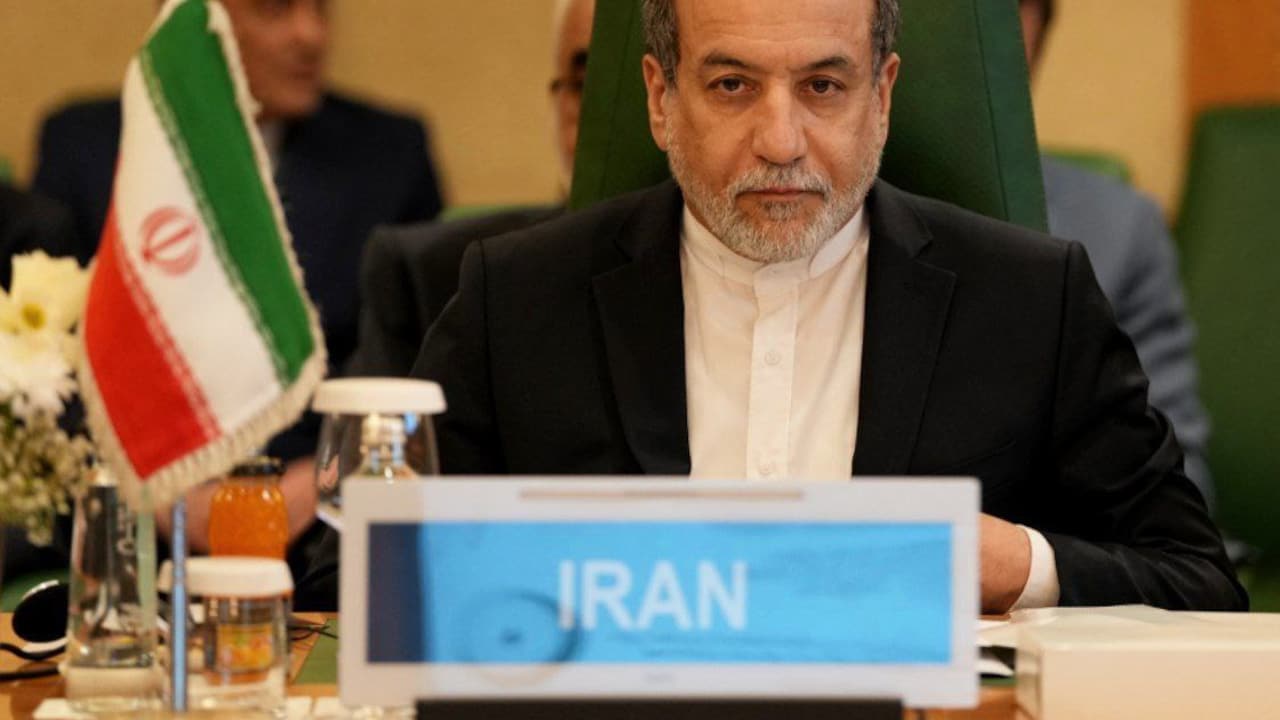
Iranian Foreign Minister Abbas Araghchi’s declaration that the war between Tehran, Israel, and the United States will conclude only when hostilities cease in Lebanon is not mere rhetoric. It is a calculated deployment of structural linkage diplomacy designed to alter the strategic cost functions of Western negotiators. By explicitly anchoring bilateral backchannel talks with Washington to the territorial status quo of southern Lebanon, Tehran seeks to convert a vulnerable proxy asset into an permanent geopolitical leverage point. This architectural framework demonstrates why regional security cannot be parceled into isolated diplomatic theatres.
Understanding this negotiation strategy requires breaking down Iran's operational matrix into three distinct analytical pillars: tactical linkage, the asymmetric defense of proxy infrastructure, and the exploitation of international maritime bottlenecks.
The Tri-Front Conflict Matrix
The primary mechanism driving Iran's diplomatic stance is the creation of a unified front liability. Tehran rejects any isolated or sequential de-escalation framework. The architecture of this policy functions through specific operational variables.
       [U.S.-Iran Backchannel Talks]
                     │
         (Demands Parallel Truce)
                     ▼
         [Southern Lebanon Front]
          ╱                  ╲
 (Hezbollah Rejects     (Israel Demands
 Security Zones)         Disarmament)
Tactical Linkage as a Cost-Imposition Tool
By asserting that a violation on one front constitutes a violation on all fronts, Iran effectively binds U.S. diplomatic capital to Israeli tactical decisions. In practice, this forces Washington to choose between two unpalatable options: either pressure Jerusalem to alter its military objectives north of the Litani River, or accept a permanent state of high-intensity conflict with Iran. This linkage strategy transforms Hezbollah from an external proxy into an internal variable within U.S.-Iran bilateral negotiations.
The Preservation of Deterrence Architecture
The core strategic objective behind linking the bilateral talks to Lebanon is the preservation of Hezbollah's territorial footprint. A U.S.-brokered ceasefire proposal that mandates the withdrawal of Hezbollah operatives from southern Lebanon or establishes "pilot" security zones directly threatens Tehran’s forward defense posture. For Iran, an isolated ceasefire that disarms or displaces Hezbollah represents a structural degradation of its regional deterrence capability. Consequently, Araghchi's demands for a complete Israeli military withdrawal serve as a protective barrier around Iran's most critical asymmetric asset.
The Security Zone Bottleneck
The structural breakdown of recent mediation efforts stems from a fundamental mismatch in definitions of regional order. While the United States and Israel view the exclusion of armed factions from southern Lebanon as a prerequisite for stability, Tehran and Hezbollah classify these security zones as a zero-sum concession. The immediate consequence of this deadlock is an operational feedback loop:
- Hezbollah formally rejects the creation of restricted zones.
- Israel increases its operational tempo, launching strikes on logistics nodes in southern villages such as Sarafand and Arqoun.
- Iran responds by placing its armed forces on full alert and freezing substantive progress on bilateral texts.
Maritime Chokepoints and the Economic Cost Function
The strategic leverage driving these diplomatic exchanges does not exist in a vacuum; it is anchored directly to global shipping vulnerabilities in the Middle East. Iran's naval maneuvers in the Gulf of Oman and the Strait of Hormuz serve as the explicit enforcement mechanism for Araghchi’s diplomatic conditions.
The threat model operates on a direct cause-and-effect loop. When Israeli pressure mounts against Beirut or southern Lebanon, Iran adjusts its posture along major maritime trade routes. The deployment of warning missiles and drone swarms near international warships is a deliberate demonstration of kinetic veto power. Tehran understands that even localized disruptions in the Strait of Hormuz introduce immediate risk premiums into energy markets. For instance, the mere introduction of a credible ceasefire rumor involving Lebanon can cause global crude benchmarks to fluctuate by over 5%, dropping toward $95 a barrel on the prospect of de-escalation. By reversing that dynamic, Iran signals its capacity to impose global inflationary shocks if its regional conditions are ignored.
The structural limitation of this economic leverage is the risk of over-escalation. While threats to shipping keep Western powers engaged in talks, actual kinetic closure of the chokepoint would trigger direct military intervention. This reality forces Iran to execute a highly calibrated strategy of calibrated friction—escalating maritime tension just enough to validate its diplomatic leverage without crossing the threshold that would completely collapse the backchannel communication framework.
Limitations of the Linkage Framework
The strategy of anchoring comprehensive peace to individual proxy fronts carries significant structural liabilities for Tehran. The model assumes a level of control over regional dynamics that may not match operational realities.
The first limitation is the asymmetry of veto power. By tying the resolution of its own economic and strategic isolation to Hezbollah’s survival, Iran grants both Israel and internal Lebanese factions a functional veto over Iranian foreign policy. If Jerusalem decides that the long-term national security benefit of degrading Hezbollah outweighs the short-term cost of protracted conflict with Iran, Tehran’s linkage strategy breaks down. Instead of forcing a comprehensive peace, it traps Iran in an indefinite war of attrition that continually drains its domestic economic reserves.
The second bottleneck is internal Lebanese political fragmentation. Araghchi’s insistence that Hezbollah remains an irreversible component of Lebanon's political and military reality ignores the growing domestic resistance within Beirut to the group's parallel state infrastructure. A diplomatic strategy built entirely on preserving a militant status quo faces diminishing returns when the host state’s socio-economic fabric fractures under the weight of military retaliation. Iran’s pledge to finance post-war reconstruction is an attempt to mitigate this domestic backlash, but the capital requirements for such an undertaking conflict directly with Iran's internal economic constraints.
The Strategic Path Forward
To break the diplomatic deadlock, international negotiators must decouple the U.S.-Iran bilateral track from the immediate tactical dynamics of the Levant. A multi-tiered framework offers the only viable path to de-escalate the interconnected crises.
                  [De-escalation Path]
                           │
         ┌─────────────────┴─────────────────┐
         ▼                                   ▼
[Tier 1: Freedom of Navigation]     [Tier 2: Symmetric Security]
- Demilitarize Strait of Hormuz     - Mutual withdrawals in Lebanon
- Remove maritime risk premiums     - Establish verifiable buffer zones
- Establish a Maritime Sanctions-for-Security Swap: The United States should leverage Iran's acute economic vulnerabilities by offering targeted, sectoral sanctions relief specifically tied to the verified cessation of maritime harassment in the Gulf of Oman and the Strait of Hormuz. This isolates the global economic risk from the territorial disputes in the Levant.
- Implement a Reciprocal Withdrawal Blueprint in Lebanon: Diplomatic efforts in Beirut must prioritize a phased, balanced security framework. Israel must commit to a full withdrawal from newly occupied positions in exchange for the verifiable relocation of Hezbollah heavy weaponry north of the Litani River, overseen by an expanded international monitoring mechanism rather than unilateral security zones.
- Institutionalize a Formalized U.S.-Iran Communication Protocol: The current ad-hoc system of exchanging intermediary texts through third parties like Pakistan must be upgraded to a permanent, direct military-to-military deconfliction channel. This structural change reduces the risk of miscalculation during regional flashpoints, ensuring that localized tactical actions do not automatically trigger large-scale strategic escalation.
For an objective assessment of the broader security architecture governing these regional choke points, The strategic realities of maritime security provides essential context on the geopolitical stakes involved. This broadcast breaks down how regional diplomatic suspensions directly impact international security frameworks.