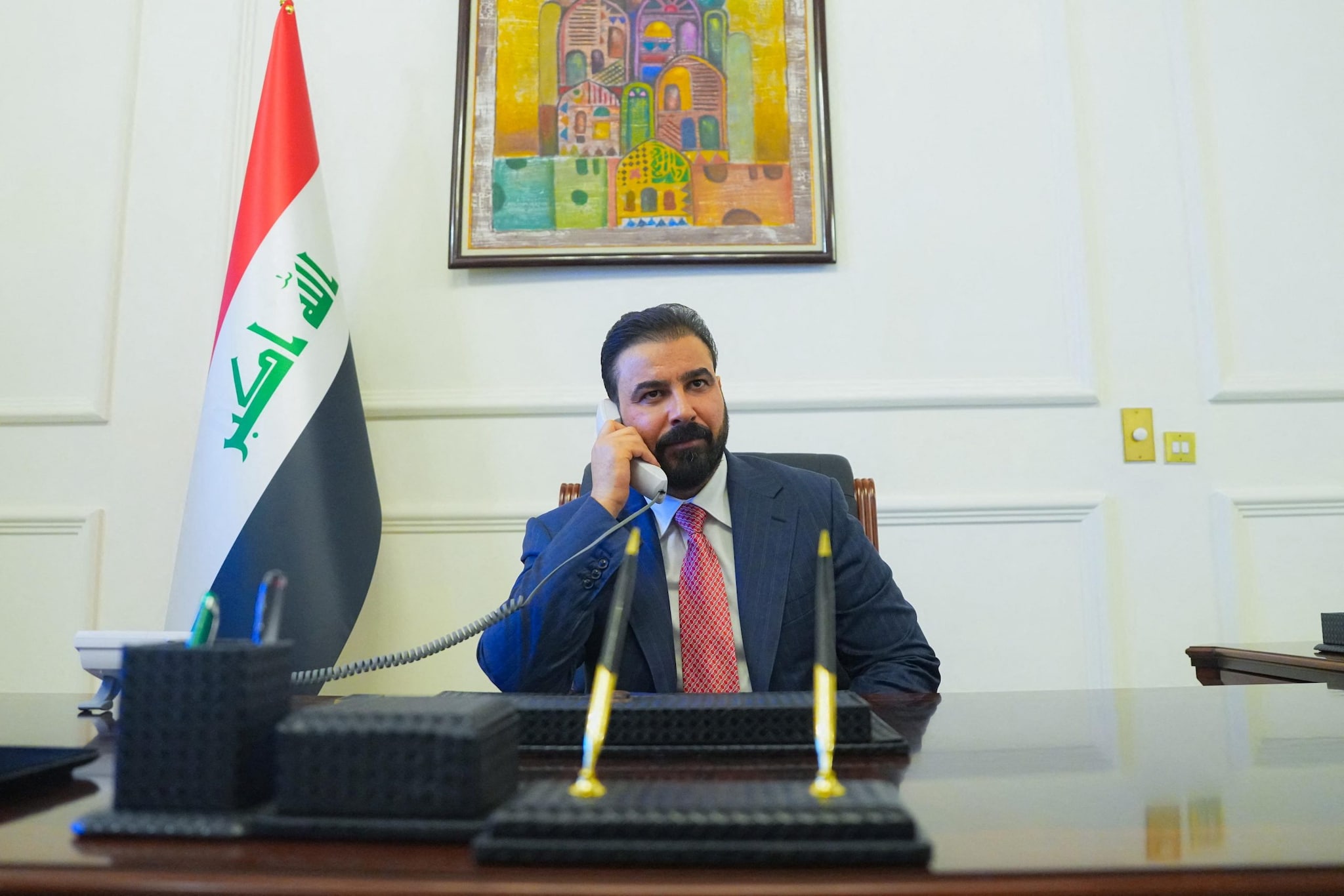
The appointment of Ali al-Zaidi as Iraq’s Prime Minister-designate on April 27, 2026, represents a calculated pivot in the Baghdad-Washington-Tehran triangle. By selecting a businessman with deep ties to internal economic committees rather than a career ideologue, the Coordination Framework (CF) has shifted its strategy from direct confrontation to a model of managed technocracy. This maneuver facilitated an immediate diplomatic opening with the Trump administration, evidenced by the April 30 invitation to the White House.
The transition from the rejected candidacy of Nouri al-Maliki to the acceptance of al-Zaidi functions as a stress test for Iraqi institutional stability and U.S. regional interests.
The Tri-Axis Approval Mechanism
Al-Zaidi’s emergence is the result of three distinct validation requirements that traditional political candidates failed to meet simultaneously.
- The Internal Consensus Variable: The Coordination Framework, a coalition of Shia parties, required a candidate who would not threaten the internal balance of power. Unlike al-Maliki, whose historical baggage and assertive leadership style created friction within the bloc, al-Zaidi’s lack of an independent political base makes him a palatable executive for the coalition's primary power brokers, including Qais al-Khazali.
- The Washington Veto: The Trump administration demonstrated a hardline stance against Iranian-aligned hardliners. The rejection of al-Maliki was a binary choice: exclude the former PM or face total cessation of U.S. financial and security support. Al-Zaidi functions as a "clean slate" candidate, allowing the U.S. to maintain its strategic footprint without violating its own anti-terrorism policy frameworks.
- The Economic Integration Factor: Al-Zaidi’s background in the private sector—specifically his chairmanship of Al-Janoob Islamic Bank and the National Holding Company—positions him as a candidate who speaks the language of capital. In an economy burdened by a four-trillion-dinar debt and a transition away from the Central Bank of Iraq's (CBI) dollar auctions, his profile is designed to reassure international markets and the U.S. Treasury.
Structural Vulnerabilities in the Zaidi Administration
While the nomination resolved the immediate deadlock, the structural composition of al-Zaidi’s background introduces specific operational risks.
The Conflict of Interest Matrix
Al-Zaidi’s career is inextricably linked to Iraq’s "economic committees"—informal bodies within political parties that control government contracts. His previous influence over the Ministry of Trade and the 2022 Food Security and Development Law creates a significant transparency bottleneck. The primary risk is the "Creditor-Executive Trap": al-Zaidi’s private entities are effectively creditors to the state he now intends to lead. This creates a circular flow of capital where state policy could be optimized for the settlement of private-sector debts held by the Prime Minister’s own networks.
The Banking Sector Bottleneck
The U.S. Treasury’s 2024 prohibition of Al-Janoob Islamic Bank from participating in dollar auctions remains a critical data point. Washington’s previous concerns regarding the flow of cash to sanctioned entities through Iraqi banks create a high-friction environment for al-Zaidi. To maintain the "new chapter" promised by the Trump administration, al-Zaidi must demonstrate a verifiable decoupling from the illicit finance networks that typically operate within the Iraqi banking system.
The Strategic Function of the Trump Invitation
The White House invitation is not merely a diplomatic courtesy; it is a tactical instrument of leverage. By extending this offer before the cabinet is even formed, the Trump administration has created a conditional reward system.
- Cabinet Composition Control: The invitation serves as an incentive for al-Zaidi to exclude U.S.-designated individuals from key ministerial positions, such as the Interior or Finance ministries.
- Regional Counter-Weight: Trump’s social media emphasis on a government "free from terrorism" signals a requirement for al-Zaidi to actively distance the Iraqi executive branch from the influence of the Popular Mobilization Forces (PMF) and other non-state actors.
- Economic Stabilization: For Baghdad, the visit is a prerequisite for discussing the future of U.S. energy waivers and the continued flow of physical dollar shipments required to stabilize the Iraqi Dinar.
Operational Forecast
The success of the al-Zaidi premiership will be measured by two primary metrics: the 30-day cabinet formation window and the subsequent audit of the CBI’s compliance measures.
The first bottleneck occurs within parliament. Al-Zaidi must secure the support of Kurdish blocs (KDP and PUK) and Sunni factions led by figures like Mohammed al-Halbousi. These groups will demand concessions regarding budget allocations and provincial control, which may conflict with the Coordination Framework's centralizing tendencies.
If al-Zaidi can navigate the cabinet formation without including sanctioned figures, the visit to Washington will likely focus on a "security-for-investment" swap. The U.S. will seek guarantees on the containment of Iranian influence in exchange for technical assistance in diversifying the Iraqi economy away from total oil dependence. Failure to secure a cabinet that satisfies the Trump administration's anti-terrorism metrics will result in the immediate withdrawal of the White House invitation and a resumption of the deadlock that paralyzed Baghdad throughout early 2026.
The strategic play for al-Zaidi is to utilize his "outsider" status to bypass traditional sectarian quotas, though his deep-rooted ties to the existing economic infrastructure suggest that any reform will be incremental rather than structural.
Trump Invites Iraq’s PM-Designate Ali al-Zaidi to Washington
This report provides a visual and narrative overview of the political deadlock that led to Ali al-Zaidi’s nomination and the subsequent diplomatic pivot by the United States.


