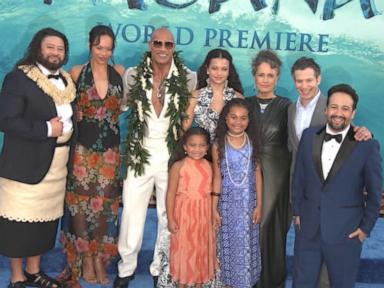
The theatrical execution of the live-action adaptation of Moana at its Hollywood Bowl world premiere exposes the mechanics of contemporary studio resource allocation. Media coverage often focuses on red-carpet celebratory sentiment, yet the production operates on a precise financial framework: mitigating original asset risk by leveraging proven streaming demand. Disney is converting its historically dominant video-on-demand asset into a front-loaded theatrical vehicle to extract immediate box office capital.
The economic thesis supporting this operational pivot relies on an unprecedented volume of historical performance tracking data. The 2016 animated predecessor stands as the most streamed feature film across major subscription platforms since tracking began. This persistent viewership creates an integrated optimization strategy that reduces audience acquisition costs while stabilizing projected opening weekend returns.
The Dual-Horizon Capture Model
Studios use specific structural mechanics to transform historic animated data into live-action theatrical revenue. This conversion relies on two primary financial pillars.
Core Asset Retention
The retention pillar relies directly on casting continuity to bridge the gap between distinct distribution eras. Securing Dwayne Johnson to physically embody Maui—reprising his 2016 voice role—acts as a direct transfer of intellectual property equity. This operational strategy mitigates the risk of audience alienation, an issue that frequently degrades the performance of standard cinematic reboots.
Generation Compression
The original 2016 consumer base has matured from early childhood into a demographic possessing direct purchasing power. Concurrently, continuous streaming accessibility has generated a secondary wave of younger consumers. The live-action adaptation exploits this overlap, effectively capturing two distinct consumer segments via a single marketing expenditure.
[2016 Animated Base]   ---> [Matured Consumers (Purchasing Power)]
                                                                    \ ---> Maximized Theatrical Return
[Continuous Streaming] ---> [New Youth Demographic (Consumer Group)]/
This structural framework minimizes the marketing inefficiencies common to unproven intellectual property. The baseline target audience is already highly receptive, transforming the traditional awareness campaign into a pure conversion cycle.
Production Constraints and Music Utility
The production model balances the requirements of visual spectacle with strict budgetary guardrails. Live-action translations of marine environments require significant technical expenditures, particularly regarding digital fluid simulation and composite environmental lighting. To offset these elevated post-production cost centers, the studio employs a optimized musical framework.
The integration of the original creative core—specifically Lin-Manuel Miranda, Opetaia Foa'i, and Mark Mancina—functions as a strategic cost containment measure. The foundational compositions remain structurally intact, which significantly reduces the pre-production developmental timeline. Financial resources are then reallocated toward engineering new audio assets, such as the end-credits track "Along The Way," to stimulate secondary streaming monetization via digital audio platforms post-theatrical window.
This resource allocation creates an operational bottleneck. While the musical framework delivers a reliable, lower-risk product, it imposes clear creative constraints. Early critical evaluation indicates that duplicating the narrative structure can lead to artistic stagnation, leaving the performance dependent entirely on visual novelty rather than narrative evolution.
Distribution Architecture and the Risk Profile
The theatrical distribution window for this adaptation exposes the fundamental trade-off governing contemporary intellectual property management. The standard domestic and international footprint provides rapid capital extraction, but it operates under a clear operational ceiling.
- Systemic Redundancy: Launching a live-action variant within ten years of the original release—while the broader franchise remains highly active across digital channels—risks cannibalizing long-term streaming consumption.
- The Novelty Deficit: Replicating established, highly visible animation frames in a photorealistic style creates a comparative structural disadvantage. Audiences assess the live-action product against an idealized, digitally perfect memory rather than evaluating it as an independent asset.
- Production Cost Inflation: The capital expenditure required to execute complex practical locations, choreographed dance troupes, and live orchestral accompaniment—such as the LA Philharmonic deployment at the premiere—raises the financial break-even threshold significantly.
This structural framework reveals that the live-action adaptation format is a defensive capital deployment strategy. Rather than financing unproven narrative structures, studio management favors predictable, highly quantified historical engagement metrics.
To maximize the lifetime value of this release, the theatrical run must be managed as a high-velocity acquisition phase. Theater operators must optimize high-capacity formats like IMAX and premium large format screens during the initial 14-day window. This captures the highly compressed demand curve before the asset transitions back into the high-margin, predictable ecosystem of subscription video-on-demand services, where its long-term retention value can be sustained.
:max_bytes(150000):strip_icc():focal(749x0:751x2)/chrissy-teigen-wren-split-071723-6256dab1033241bca6a15fdcd0f5c26a.jpg)

