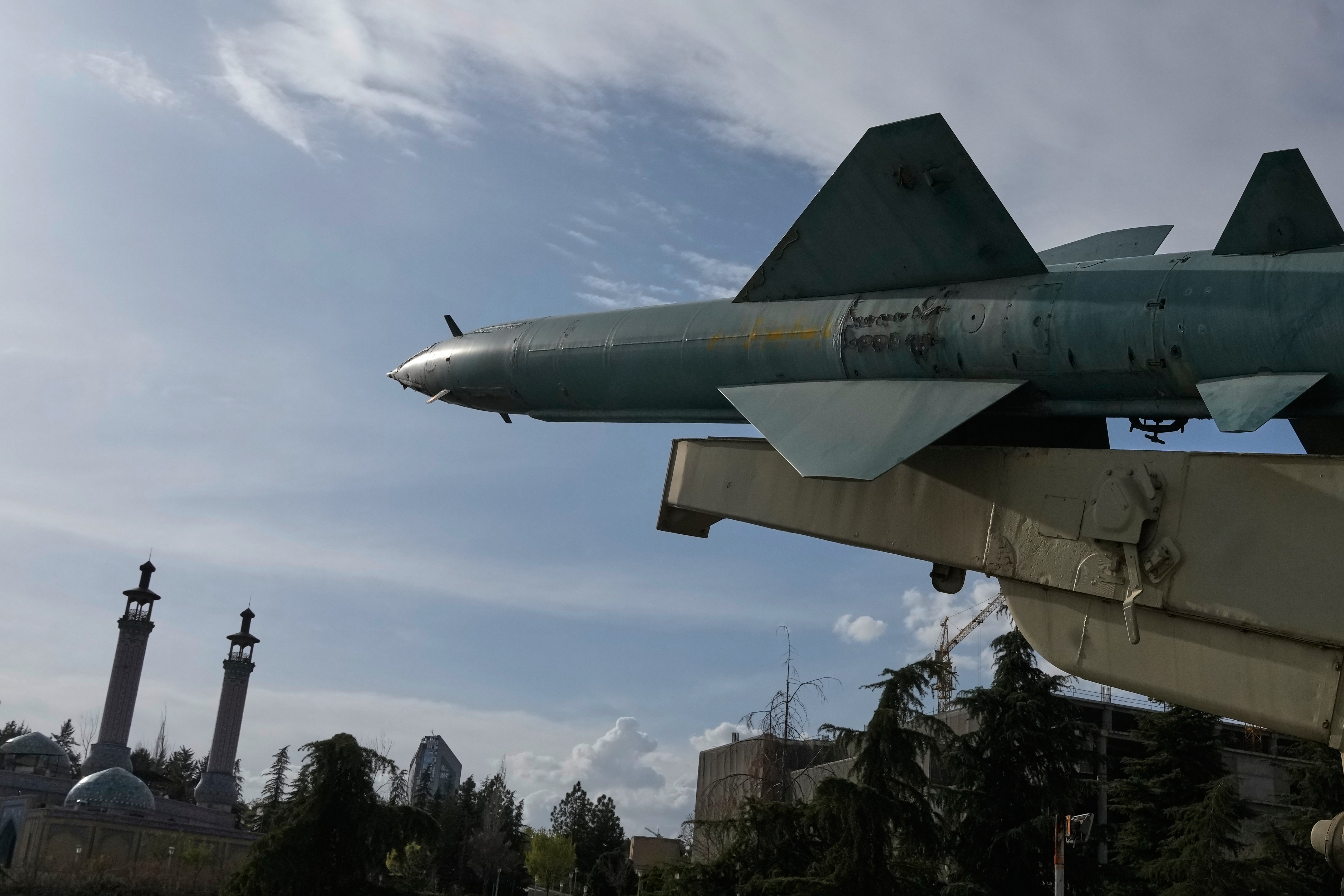
The convergence of advanced academic research and state-sponsored military modernization has exposed a structural vulnerability in Western immigration and security screening systems. When a sovereign nation relies on foreign talent to drive its high-technology sectors, the university becomes a primary vectors for Intangible Technology Transfer (ITT). The recent flagging of an Iranian doctoral candidate at Carleton University in Ottawa, specialized in aerospace engineering while linked to a sanctioned domestic entity, highlights the operational friction between open academic collaboration and defensive counter-proliferation frameworks.
Traditional export control mechanisms were designed around the physical shipment of dual-use goods, hardware, and raw materials. Modern asymmetric technology acquisition strategies bypass these physical checkpoints entirely. Instead, state actors exploit the open-access model of Western research institutions to absorb specialized knowledge—such as computational fluid dynamics, advanced structural materials, and guidance system algorithms—which is subsequently re-imported to bridge domestic capability gaps.
The Asymmetric Knowledge Pipeline
The acquisition of advanced technical capabilities by adversarial states follows a predictable optimization pathway designed to bypass economic sanctions. Building high-velocity missile or unmanned aerial vehicle (UAV) systems requires overcoming specific engineering bottlenecks, particularly in propulsion efficiency, aerodynamic stability, and guidance reliability. When domestic industrial bases are constrained by international sanctions regimes, the state must externalize its research and development costs.
[Academic Admissions Pathway] -> [Dual-Use Knowledge Extraction] -> [Domestic Military Application]
This externalization relies on sending specialized researchers to foreign institutions where the cost of foundational research is subsidized by Western governments and private grants. The knowledge pipeline operates via three primary phases:
- Institutional Arbitrage: Selecting foreign universities with world-class facilities in target disciplines, such as aerospace engineering, metallurgy, or quantum computing, where the open publication model allows deep access to proprietary or dual-use methodologies.
- Skill Acquisition and Specialization: Engaging in doctoral or post-doctoral research that resolves specific mathematical, computational, or structural problems directly applicable to military hardware development.
- Re-Importation and Domestic Integration: Returning to the country of origin or feeding research outputs directly back to sanctioned domestic entities, bypassing intellectual property controls and physical trade barriers.
In the case of the flagged Ottawa student, federal intelligence reports indicate that the individual was simultaneously pursuing studies in advanced aerospace domains while maintaining employment ties with an Iranian company under international sanctions. This duality represents a clear structural exploit of the student visa framework, turning an educational pathway into a direct conduit for state-sponsored military optimization.
Structural Failures in Academic Vetting and Inter-Agency Verification
The vulnerability of the academic research ecosystem stems from a decoupling of university admissions logic from state intelligence operations. Higher education institutions prioritize academic merit, research output, and tuition revenue. They lack both the mandate and the investigative capacity to verify the deep corporate or state affiliations of foreign applicants, particularly when those affiliations are obscured by complex domestic organizational structures within closed societies like Iran.
This systemic blind spot creates an operational gap that intelligence agencies must retroactively close. The timing of security interventions reveals a significant lag between the point of vulnerability creation—the admission of the student and commencement of research—and the point of enforcement, such as a Canada Border Services Agency (CBSA) or Canadian Security Intelligence Service (CSIS) intervention.
The delay occurs because the traditional visa screening apparatus relies on static databases, declaration forms, and historical records. It frequently fails to dynamically assess the dual-use potential of specific, highly granular research proposals. A research proposal framed as a benign study of civil aviation aerodynamics can possess immediate, highly transferable utility for optimizing the flight paths and payload capacities of long-range ballistic systems or low-altitude loitering munitions.
Defending the Intangible Research Frontier
Mitigating the threat of unauthorized technology transfer without completely dismantling the paradigm of international academic collaboration requires shifting from a reactive enforcement model to a proactive, risk-indexed vetting framework. Relying on post-facto deportations or judicial reviews after a researcher has already completed years of specialized training is inherently self-defeating; the knowledge asset has already been transferred.
A modernized protective framework requires the strict enforcement of three systemic boundaries. First, the establishing of an integrated, cross-referenced registry that binds academic admissions pipelines directly to active global sanctions databases, making prior employment with a sanctioned entity an automatic trigger for comprehensive, multi-agency security vetting prior to visa issuance. Second, the implementation of objective dual-use thresholds for graduate-level research topics, requiring mandatory technical audits of any thesis or project involving propulsion systems, advanced material sciences, or autonomous guidance code. Third, the standardization of liability for research institutions, compelling universities to maintain strict access controls on physical and digital laboratory spaces and to report any deviation from authorized research parameters.
The strategic imperative for Western regulatory bodies is to recognize that in the modern theater of geopolitical competition, scientific knowledge is an active security asset. The survival of an open academic ecosystem depends on its ability to systematically deny access to actors whose primary objective is the extraction of military utility for sanctioned state entities.