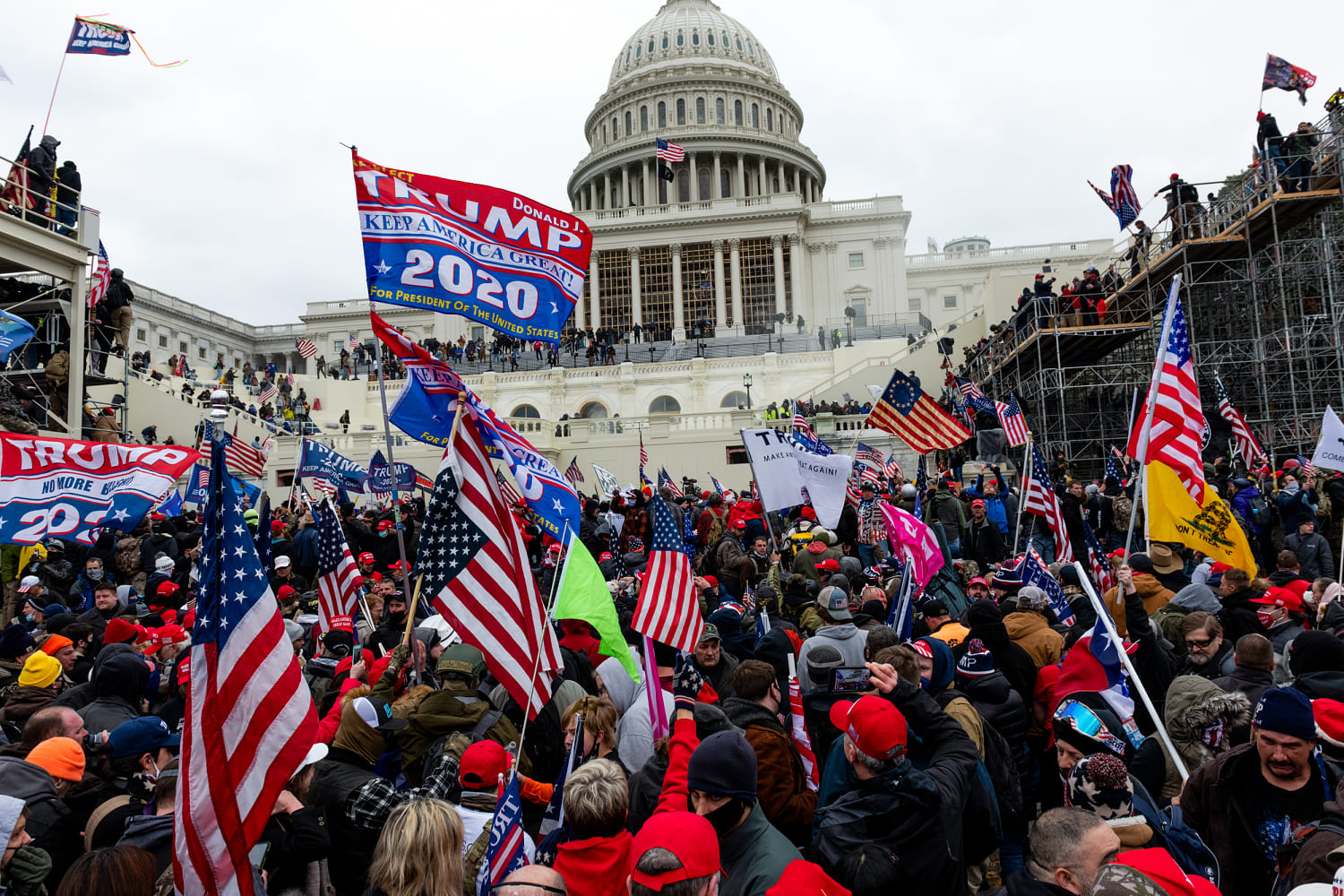
The creation of the Executive Branch’s $1.776 billion "anti-weaponization" fund represents an unprecedented mechanics-level shift in federal asset disbursement, converting what began as a corporate legal settlement into a highly liquid political capital pool. By utilizing the Department of Justice to establish a taxpayer-funded mechanism intended to compensate individuals claiming "lawfare" abuses—including those previously convicted of offenses during the January 6 Capitol riot—the administration has introduced a fundamental friction point within its own legislative coalition.
The structural flaw in this mechanism is not merely ethical; it is structural. By failing to draw an explicit boundary between non-violent civil claimants and individuals convicted of violent assaults on law enforcement, the fund creates a severe incentive misalignment. This structural misalignment has triggered a rare, predictable legislative firewall from Senate Republicans, exposed a core vulnerability in party cohesion, and initiated a complex legal and constitutional battleground over the boundaries of executive spending power.
The Financial Architecture of the Settlement Fund
To understand the current governance crisis, one must map the exact mechanics of the fund's capitalization. The pool of money did not originate via traditional congressional appropriation, which constitutes the standard legislative channel for federal spending. Instead, it was engineered through a legal settlement executed between the executive branch and its own Department of Justice, headed by Acting Attorney General Todd Blanche.
The primary source of leverage stemmed from a long-running civil dispute regarding the unauthorized disclosure of executive tax records. By settling this litigation internally, the executive branch bypasses the standard statutory guardrails established by the Antideficiency Act, which prohibits government officials from making expenditures or involving the government in contracts or obligations for the payment of money before an appropriation is made.
The transaction routes through the federal Judgment Fund, a permanent, indefinite appropriation available to pay judgments and compromise settlements against the United States.
[Federal Judgment Fund] ---> [$1.776 Billion Settlement] ---> [Anti-Weaponization Fund Managed by DOJ] ---> [Individual Disbursal Grants]
This structural architecture creates an institutional bottleneck characterized by three specific operational vulnerabilities:
- The Transparency Deficit: Because the settlement bypasses the traditional public notice-and-comment periods associated with agency rulemaking, the metrics for evaluating individual claims remain entirely opaque. The administration has resisted establishing explicit criteria to filter claimants based on the severity of their initial offenses.
- The Reversal of Financial Restitution: A percentage of the targeted claimant pool consists of individuals who previously paid court-ordered fines and financial restitution for property damage. Converting federal settlement funds into a mechanism to refund these penalties directly undermines the judicial branch's enforcement mechanisms.
- The Absence of Legislative Oversight: By utilizing a closed-loop settlement framework, the Department of Justice removes the funding from the annual evaluation of the House and Senate Appropriations Committees, eliminating the primary leverage point legislative majorities possess to control agency behavior.
The Three Pillars of Legislative Friction
The sudden resistance from historical legislative allies is a rational response to structural imbalances rather than a sudden shift in ideological alignment. The legislative pushback, spearheaded by figures such as Senator Thom Tillis and former Vice President Mike Pence, is driven by three distinct calculations.
1. The Erasure of Legal Monopolies
A political party built on a platform of structural law and order cannot easily absorb the systemic costs of subsidizing individuals convicted of assaulting law enforcement personnel. When the state financially rewards individuals who disrupted its own institutional succession, it erodes the state's monopoly on the legitimate use of physical force. This creates an existential tension for conservative legislators whose primary electoral stability relies on the endorsement of institutional law enforcement unions.
2. Capital Misallocation and Priority Crowding
Legislative majorities operate under tight constraints regarding political capital and floor time. The introduction of a highly controversial, multi-billion-dollar executive payout fund creates a massive legislative bottleneck. It immediately stalls high-priority party objectives, such as comprehensive immigration enforcement packages and budget reconciliation bills. The opportunity cost of defending the fund manifests as a direct delay in passing structural economic policies.
3. Asymmetric Electoral Risk
The electoral map dictates legislative behavior. While a blanket defense of all participants may resonate within highly concentrated, low-elasticity districts, it introduces severe electoral vulnerability in competitive suburban swing districts. Data from targeted congressional districts consistently demonstrates that a clear majority of moderate voters oppose the financial indemnification of political violence. Conservative senators facing reelection in competitive states recognize that defending an ambiguous slush fund carries an asymmetric downside risk with zero marginal upside.
Legal and Structural Firewalls
The conflict has moved rapidly into a dual-track containment strategy involving both judicial intervention and legislative maneuvers.
On the judicial track, the structural integrity of the fund faced an immediate disruption when a federal judge in Virginia issued a temporary injunction blocking all asset dispersals. The legal mechanism driving this halt rests on the doctrine of standing and the potential violation of the Separation of Powers. Plaintiffs, including law enforcement officers injured during the Capitol breach, argue that the creation of the fund constitutes an extra-legal compensation system that inflicts concrete, particularized injuries by devaluing the judicial remedies already secured through previous criminal trials.
Concurrently, the legislative track has exposed the precise boundaries of party discipline. While some institutional figures publicly label the initiative an improper political payoff, formal votes reveal a deeper structural hesitation.
When Senator Chris Coons introduced an amendment to a critical reconciliation bill specifically designed to bar taxpayer funds from compensating anyone convicted of assaulting law enforcement officers, the measure failed to reach the 60-vote threshold, falling in a 54-45 partisan split. This voting behavior reveals a critical operational reality:
While individual legislators will utilize media channels to distance themselves from the executive's rhetoric, the collective party apparatus remains highly reluctant to codify explicit statutory bans that directly strip the executive branch of its discretionary spending mechanisms.
The Cost Function of Executive Defiance
The administration’s refusal to rule out payouts to violent offenders operates on an aggressive executive-expansion framework. By purging historical Department of Justice data and press releases relating to prior prosecutions, the executive branch is actively attempting to reset the baseline narrative of the events in question.
However, this strategy introduces a compounding cost function for the broader conservative agenda:
$$C_{\text{total}} = C_{\text{leg}} + C_{\text{elec}} + C_{\text{inst}}$$
Where $C_{\text{leg}}$ represents the legislative friction delaying core statutory priorities, $C_{\text{elec}}$ represents the marginal loss of moderate voters in swing districts, and $C_{\text{inst}}$ represents the long-term degradation of judicial finality. As $C_{\text{total}}$ increases, the executive branch rapidly consumes the political capital required to sustain its broader economic and regulatory agenda.
Strategic Forecast
The current structural impasse will not resolve through rhetorical compromise; it will conclude through a definitive, system-level outcome.
The administration will likely maintain the formal existence of the fund to signal ongoing alignment with its core populist base, but it will be forced to accept highly restrictive, under-the-table administrative rules. To bypass the judicial injunctions and prevent a total fracture with Senate leadership, the Department of Justice will quiet down the disbursement process, utilizing narrow, non-violent legal technicalities to distribute funds rather than making high-profile, systemic payouts to controversial figures.
The fund will ultimately transform from a sweeping, revolutionary counter-weapon into a highly constrained, bureaucratic compensation program, demonstrating that the structural gravity of institutional checks and balances—and the electoral self-preservation of legislative majorities—consistently overrides unconstrained executive action.
The operational framework of executive spending power and the role of the Judgment Fund are critical to understanding how these funds bypass traditional congressional paths. For a detailed breakdown of how federal agencies navigate these legal boundaries and the historical precedents of executive fund redirection, watch this detailed analysis of the political and legal battle over the anti-weaponization fund. This resource provides direct context regarding the administration's public positions and the immediate political pushback from institutional lawmakers.