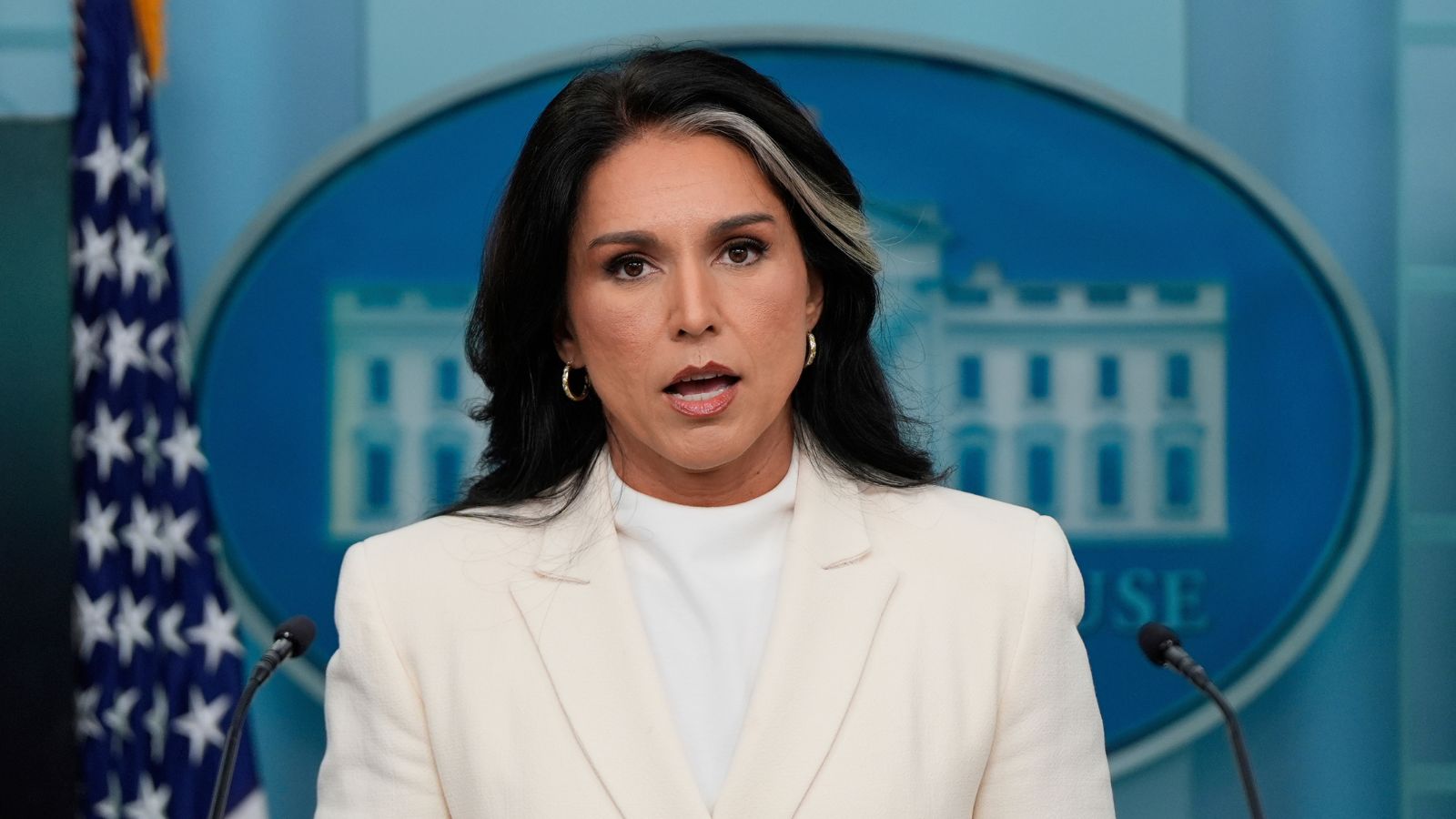
The resignation of Tulsi Gabbard as Director of National Intelligence (DNI), effective June 30, 2026, presents a classic case study in overlapping institutional stressors. While her formal resignation letter to President Donald Trump isolates a clear, acute variable—her husband Abraham Williams’ diagnosis with a rare form of bone cancer—an objective analysis of the Office of the Director of National Intelligence (ODNI) during her 16-month tenure reveals deeper structural, operational, and strategic inflection points that made this leadership transition inevitable.
Gabbard’s departure marks the fourth major Cabinet exit of the current administration, signaling a broader pattern of executive churn. To understand the trajectory of the U.S. intelligence community moving forward, one must decouple the immediate personal catalyst from the systemic friction that defined her leadership.
The Strategic Cleavage: Non-Interventionism vs. Active Kinetic Operations
The primary ideological bottleneck of Gabbard's tenure lay in the fundamental incompatibility between her core geopolitical philosophy and the administration's shifting operational posture.
Gabbard built her political identity on a strict platform of military non-intervention and skepticism of foreign engagements. This doctrine faced an existential stress test on February 28, 2026, when the United States coordinated with Israel to execute direct military strikes against Iran. This action triggered a cascade of internal friction:
- The Doctrine Mismatch: The execution of kinetic strikes against a sovereign state directly conflicted with the non-interventionist framework Gabbard championed. This created an immediate alignment deficit between the chief consumer of intelligence (the President) and the official tasked with synthesizing the nation’s 18 intelligence agencies.
- The Intelligence Divergence: During congressional testimony in March 2026, Gabbard openly de-escalated the administration's narrative, publicly downplaying assertions that Tehran posed an imminent nuclear threat. This created a visible rift in executive messaging.
- The Executive Attrition Chain: The friction was not isolated to ODNI leadership. Joe Kent, Director of the National Counterterrorism Center (NCTC), resigned in March 2026, explicitly stating he could not back the conflict. The departure of key counterterrorism officials signaled a systemic breakdown in policy consensus within the national security apparatus.
When an intelligence chief’s assessment of a core threat vector diverges sharply from the White House’s operational decisions, the utility of that intelligence chief to the executive diminishes. The policy-intelligence split created an unsustainable organizational tension.
The Structural Overhaul: Downsizing and Institutional Pushback
Beyond geopolitical strategy, Gabbard initiated a highly disruptive operational restructuring designed to shrink the footprint of the ODNI. While framed by supporters as a long-overdue optimization of a bloated bureaucracy, these moves introduced significant operational risk and institutional resistance.
The Contraction Metric
Gabbard’s primary operational directive was the consolidation or elimination of specialized offices. Her restructuring target focused heavily on functions tied to cyber defense, foreign influence monitoring, and intelligence integration. By reducing headcounts and flattening the reporting hierarchy, the administration sought to centralize control.
The Polarization of Oversight
The structural changes yielded asymmetric results. On one hand, the administration pointed to specific enforcement outcomes, such as the NCTC adding 85,000 individuals to the terror watchlist and blocking over 10,000 individuals with alleged links to narco-terrorism from entering the U.S. in 2025.
On the other hand, career intelligence professionals and congressional critics argued that dismantling integration offices created dangerous communication silos. The reduction of foreign influence monitoring capabilities occurred precisely as hostile actors amplified asymmetric grey-zone tactics, creating an intelligence vulnerability that career analysts resisted.
Political Relitigation and Clearance Revocations
The friction was further compounded by Gabbard’s deployment of the ODNI's administrative mechanisms for political objectives. Her establishment of a "Weaponization Working Group" and the high-profile revocation of security clearances for dozens of former national security officials shifted organizational energy away from forward-looking threat detection and toward internal political scrutiny. This internal focus exacerbated the alienation of the career civil service workforce, driving a wedge between political leadership and institutional institutional memory.
The Succession Blueprint: Immediate Operational Continuity
With Principal Deputy Director Aaron Lukas designated to step in as Acting DNI, the immediate priority shifts to institutional stabilization. An acting director faces a strict set of operational constraints and systemic hurdles.
The first limitation is the problem of institutional drift. Acting heads inherently lack the long-term mandate required to push through major structural transformations. Lukas must determine whether to pause Gabbard’s uncompleted consolidation plans or press forward with a workforce that has been actively resisting the contraction.
The second bottleneck is the management of the ongoing Iran crisis. The U.S. intelligence apparatus must maintain high-fidelity tracking of retaliatory vectors, including asymmetric threats to maritime logistics in the Strait of Hormuz. Lukas must rapidly restore the perception of a seamless, lockstep alignment between ODNI assessments and White House national security advisors to prevent further public perception of a fractured command structure.
The Strategic Playbook
The administration should immediately pivot away from disruptive structural downsizing and focus entirely on operational stabilization. The temporary leadership of Aaron Lukas must be used to pause internal structural consolidations, allowing the 18 intelligence agencies to recalibrate their collection assets toward the escalating Middle East theater without the distraction of ongoing internal layoffs.
Furthermore, the next permanent DNI nominee must be selected not for ideological alignment on domestic political disputes, but for their explicit capability to bridge the current chalms between the White House and career analysts. This requires a nominee with deep institutional credibility who can enforce rigorous, objective intelligence delivery, ensuring that policy decisions are informed by unvarnished data rather than executive echo chambers.
For a deeper look into the immediate political and institutional context surrounding this sudden cabinet exit, you can review this detailed broadcast analysis of Gabbard's resignation and her tenure's policy priorities, which provides essential background on the administration's internal dynamics and the timeline of her departure.