Epidemic propagation speed is a direct function of operational latency, community distrust, and biological strain characteristics. When infection velocity outstrips epidemiological containment capacity, standard response frameworks collapse. The ongoing public health emergency in the Democratic Republic of the Congo, crossing the threshold of five thousand recorded cases, exposes structural vulnerabilities in cross-border containment, clinical intervention pipelines, and regional resource allocation.
The Vector Velocity Equation
The current crisis is driven by the rare Bundibugyo species of the virus, operating without the baseline advantage of globally approved vaccines or targeted therapeutics. Historical comparison underscores the divergence in transmission mechanics. While the 2014 to 2016 West African epidemic established historical benchmarks for total volume, the current outbreak in eastern provinces—primarily centered in Ituri—has compressed the timeline of transmission significantly. If you found value in this article, you should look at: this related article.
The acceleration rate is governed by three primary variables:
- High population mobility across porous regional trade routes and displacement corridors.
- Extended silent incubation and early community-level transmission before detection.
- Absence of commercialized immunizations or standardized curative protocols for the specific viral clade.
Surveillance teams face a structural lag. Most new infections are identified outside tracked contact rings, meaning epidemiological mapping relies on retrospective tracking rather than predictive containment. When contact tracing efficiency drops below critical operational thresholds, exponential spread becomes mathematically guaranteed. For another perspective on this development, see the recent coverage from World Health Organization.
The Operational Cost Function
Response failure cannot be attributed solely to biological factors. The deployment of medical infrastructure is constrained by a severe operational friction cost. This friction is quantified through security deficits, logistical bottlenecks, and workforce attrition.
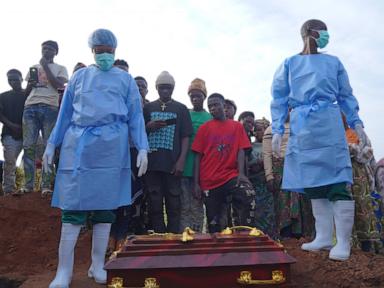
Decades of localized armed conflict and infrastructural deficits restrict rapid deployment into mining and remote rural zones. Security incidents targeting medical assets—such as attacks on health teams and transport vehicles in Ituri and surrounding territories—interrupt the chain of care. When community skepticism runs high, clinical isolation centers are avoided. Over seventy percent of fatalities occur outside formal health facilities, driven by the preference for home-based care or misattribution of symptoms to non-viral pathologies like poisoning.
Furthermore, workforce sustainability is compromised. Exhaustion among frontline nurses and support personnel, compounded by delayed compensation and hazardous working conditions, triggers localized strikes. Human capital degradation directly degrades case fatality rates. While the national average case fatality hovers near forty-seven percent, densely insecure sub-regions like North Kivu record fatality rates exceeding seventy percent due to delayed clinical presentation and inadequate supportive care.
The Interdiction Blueprint
To arrest the acceleration curve, containment strategies must transition from reactive treatment to preemptive operational decentralization.
Logistical pipelines must shift away from centralized metropolitan hubs directly to rural community nodes. This requires embedding trusted local leadership into contact-tracing units to counteract misinformation regarding safe burials and medical isolation. Clinical trials for candidate vaccines and therapeutics currently underway in Ituri must be aggressively scaled through streamlined regulatory pathways to establish immunological firewalls around active transmission clusters. Security apparatuses must guarantee corridor safety for medical supply chains without militarizing the public health response, ensuring healthcare workers can operate without facing localized retaliatory violence.