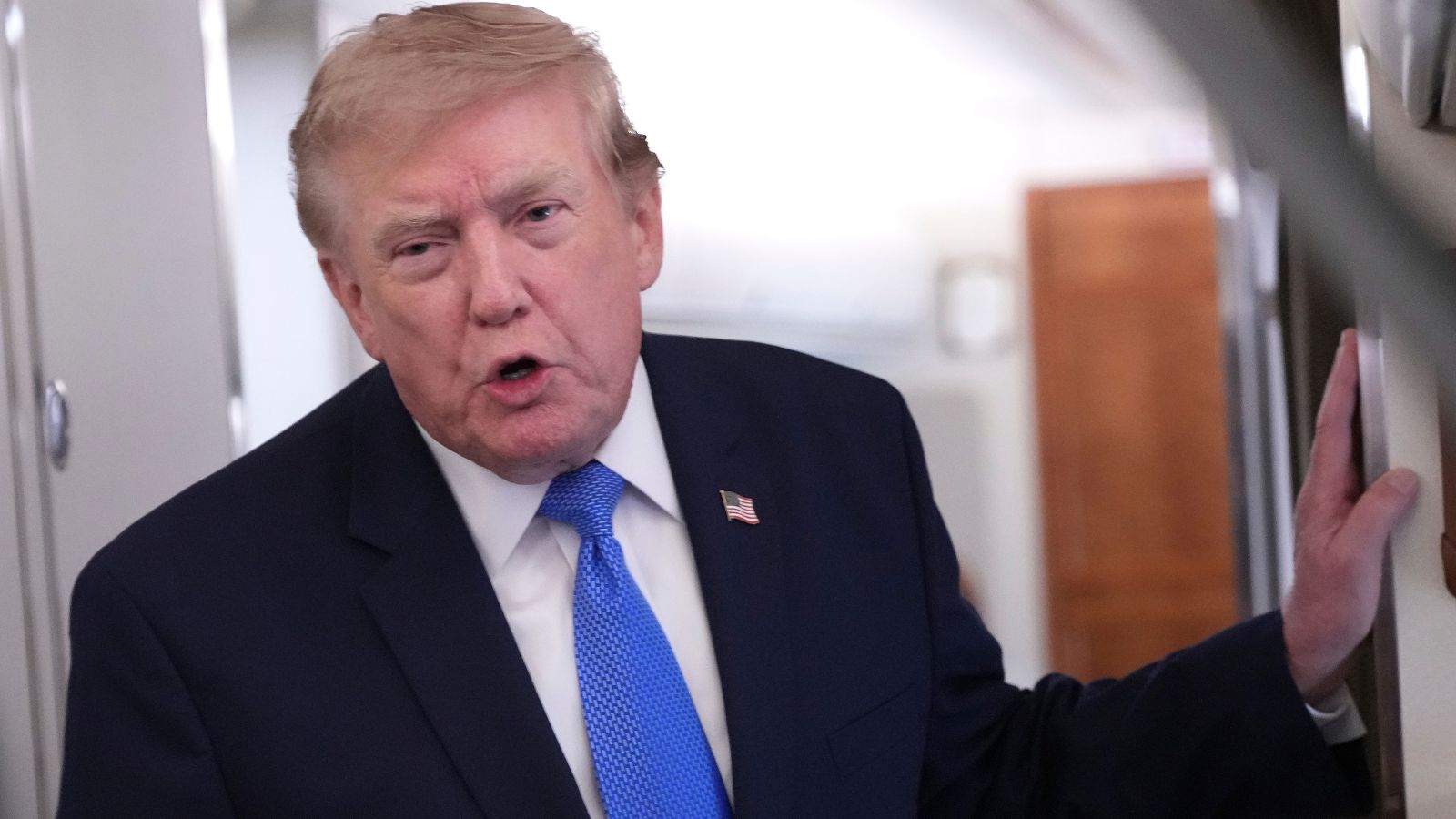
International conflict resolution often deteriorates into a high-stakes information war long before formal terms are exchanged. The recent diplomatic impasse between Washington and Tehran exposes a fundamental structural divergence in how both states operationalize negotiations. United States President Donald Trump asserted that bilateral talks were imminent, using this premise to justify deferring large-scale military intervention. Simultaneously, Iranian Foreign Ministry representatives flatly rejected the existence of direct diplomatic channels, pointing instead to proxy-mediated logistical discussions with Oman regarding maritime transit through the Strait of Hormuz.
Deconstructing this communication breakdown requires analyzing the underlying incentives, information asymmetries, and coercive mechanics governing the current six-month-old theater of operations.
The Dual-Track Signaling Model
States operating under asymmetric military capabilities frequently employ two distinct signaling tracks: domestic/deterrence signaling and diplomatic/backchannel signaling. In this framework, public declarations serve entirely different audiences than private negotiations.
When the White House announces that a deal is imminent or that discussions are scheduled, the primary objective is domestic and regional coalition management. By framing military restraint as a response to nascent diplomatic traction rather than strategic exhaustion, leadership maintains deterrence credibility while placating regional allies such as Saudi Arabia, Qatar, and the United Arab Emirates who face severe economic spillover from Persian Gulf instability.
Conversely, Tehran's public denials function as a domestic insulation mechanism. Iranian leadership faces acute political costs associated with appearing capitulatory under direct military and economic duress. Acknowledging direct bilateral negotiations with Washington without securing prior concessions on core economic sanctions or sovereign maritime rights violates established domestic red lines. Consequently, Tehran channels functional communications through third-party intermediaries, specifically Oman, to isolate technical navigation parameters from the broader geopolitical conflict.
The Maritime Chokepoint Cost Function
The operational epicenter of the current diplomatic friction is not an abstract ideological dispute, but a physical asset: the Strait of Hormuz. Roughly one-fifth of globally traded petroleum and liquefied natural gas historically transits this narrow maritime corridor.
Control of this chokepoint operates on a zero-sum cost function:
- The Washington Objective: Complete freedom of navigation unencumbered by domestic tolls, inspections, or mandatory routing protocols imposed by a hostile regional power.
- The Tehran Objective: Sovereign regulation of maritime traffic, leveraging geographic proximity to enforce designated coastal transit corridors and capture administrative rents.
When Washington enforces a maritime blockade described as a wall of steel, it attempts to drive the marginal cost of Iranian defiance upward by choking off imports and maritime exports. In response, Iran utilizes asymmetric coastal positioning and localized navigation controls to impose proportional economic friction on global energy markets, driving up crude prices and generating political pressure within consumer nations.
The Omani-mediated talks represent a localized optimization problem: establishing a temporary navigation lane that satisfies commercial throughput requirements without forcing either belligerent to formally concede sovereignty or operational control over the wider waterway.
Information Asymmetry and the Escalation Trap
A persistent structural hazard in the ongoing crisis is the reliance on public media declarations and social media platforms to conduct strategic bargaining. Traditional diplomacy relies on verified, closed-loop communications where terms can be floated, modified, and retracted without public loss of face.
When ultimatums are broadcast publicly, they trigger a rigid security dilemma. Consider the mechanics of the current cycle:
- Escalation Threshold: Intelligence assessments and military posture indicators suggest an impending major kinetic strike.
- Diplomatic Intercession: Regional intermediaries or backchannel contacts appeal for a pause, citing tentative willingness to discuss terms.
- Public Announcement: The White House publicizes the opening of talks to justify a stand-down order, treating the agreement to converse as a substantive concession.
- Public Rebuttal: Tehran, perceiving the announcement as an attempt to box them into a submissive posture, issues a flat denial to preserve domestic deterrence credibility.
- Retaliatory Rhetoric: The intervening administration labels the denial as duplicitous, re-imposing maximum pressure narratives and threatening renewed military action.
This sequence creates a volatile feedback loop. Each iteration degrades trust, narrows the window for rational compromise, and increases the probability of accidental escalation due to miscalculated operational responses in the Persian Gulf.
Strategic Execution Framework
To break this structural deadlock, diplomatic architecture must shift from public posturing to sequestered operational mechanics. The path forward requires decoupling tactical logistical agreements from ultimate strategic objectives.
Negotiating parties must separate the immediate reopening of the Strait of Hormuz from long-term nuclear and security frameworks. By establishing functional, localized agreements via Omani mediation regarding maritime transit lanes, both sides can de-escalate immediate economic pressures without demanding premature ideological concessions. Until structural communication channels replace public declarations, the theater will remain trapped in alternating cycles of imminent military intervention and abrupt diplomatic stalls.