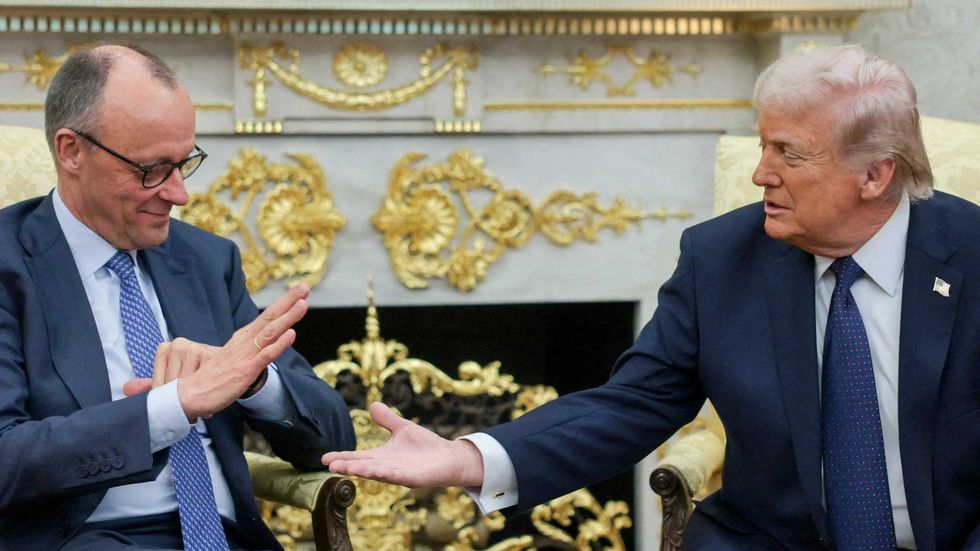
The foreign policy establishment is panicking again. If you read the mainstream headlines, the narrative is perfectly uniform: America's closest allies see "no point" in negotiating with Donald Trump. The pundits claim that Washington’s traditional partners have thrown up their hands, convinced that bilateral talks with an unpredictable transactional president are a fool's errand.
They are misreading the room entirely. Discover more on a similar subject: this related article.
What the media diagnoses as a total breakdown in diplomacy is actually a deliberate, calculated negotiation strategy. International relations are not a schoolyard where people pack up their toys and go home because someone is acting tough. European and Asian allies are not walking away from the table. They are repositioning themselves underneath it.
The "no point" narrative is a smokescreen designed to lower expectations, appease domestic audiences back home, and hide the fact that behind closed doors, the real deal-making has already begun. Further journalism by Al Jazeera delves into comparable perspectives on the subject.
The Myth of the Principled Holdout
The lazy consensus relies on a fundamental misunderstanding of statecraft. It assumes foreign leaders operate on emotion, pride, and shared democratic values.
They do not. They operate on leverage.
When a head of state tells a journalist that negotiating with a Trump administration is pointless, they are executing a classic anchoring tactic. If you convince your counterparty—and the public—that you have zero interest in buying what they are selling, the price comes down.
I have watched corporate boards use this exact playbook during hostile takeovers. You publicly declare the offer dead on arrival. You call it unworkable. You hint that you would rather burn the company to the ground than accept the terms. Then, you quietly send your lawyers to negotiate the valuation in a windowless room at 2:00 AM.
The European Union's current positioning on trade tariffs is a prime example. Publicly, Brussels threatens immediate, asymmetric retaliation against American goods. Privately, trade emissaries are already drafting lists of American liquefied natural gas (LNG) and agricultural products they can agree to buy to satisfy Washington's demands for bilateral trade balance.
Calling negotiations "pointless" is not a retirement from the field; it is the opening salvo.
The Real Reason Allies Feign Indifference
Foreign leaders answer to their own electorates. For a European prime minister or a Pacific Rim president, appearing eager to cut a deal with a highly polarizing American president is political suicide at home.
Imagine a scenario where the German Chancellor immediately flies to Washington to offer concessions on defense spending or automotive tariffs. The domestic backlash from their own coalition government would be swift and fatal.
By adopting a public posture of cold defiance, these leaders protect their political flank. They can tell their voters, "We stood up to Washington." Meanwhile, their diplomatic corps is working overtime to find the specific concessions that will keep the American security umbrella intact without looking like a total capitulation.
Let's look at the actual mechanics of international diplomacy, specifically regarding North Atlantic Treaty Organization (NATO) defense targets.
The Defense Spending Disconnect
| Nation | Public Rhetoric | Actual Budgetary Action |
|---|---|---|
| Germany | Defended slow rollouts; criticized American pressure. | Reached the 2% GDP defense target by restructuring budgets and creating a €100 billion special military fund. |
| France | Championed "European strategic autonomy" independent of US whims. | Significantly increased its military programming budget, quietly aligning with burden-sharing demands. |
| Poland | Maintained steady bilateral relations regardless of Washington leadership. | Surpassed the baseline, pushing defense spending toward 4% of GDP to secure direct American military presence. |
The data tells a completely different story than the op-ed pages. While the public narrative screamed about a fractured alliance, the structural reality shifted precisely in the direction the Trump administration demanded. The allies did not stop negotiating; they simply changed the currency of the negotiation from diplomatic pleasantries to hard cash and military hardware.
Dismantling the Consensus
The conventional wisdom asks: How can you negotiate with an administration that changes its mind via social media?
This question is fundamentally flawed because it treats unpredictability as a bug rather than a feature. In classic game theory, specifically Thomas Schelling’s "madman theory," a leader who appears irrational or willing to walk away from a suboptimal agreement gains an immediate structural advantage.
When America's allies say they see no point in negotiating, what they really mean is that the old template of diplomacy—where state department bureaucrats spend four years tweaking the punctuation on a non-binding joint communique—is dead.
The new template is transactional, rapid, and brutal. It requires allies to bring tangible value to the table rather than appeals to historic treaties signed in 1949.
- Old Question: How do we restore the traditional consultative framework of the G7?
- New Question: What specific economic or security concessions can we offer right now to prevent a 20% baseline tariff?
The nations that understand this shift are thriving. Take Japan’s approach during the first Trump term. While European leaders lectured Washington on climate change and multilateralism, Tokyo’s leadership engaged in direct, pragmatic transaction diplomacy. They bought American fighter jets, invested heavily in manufacturing facilities in US swing states, and secured critical exemptions. They did not waste time lamenting the death of the Trans-Pacific Partnership; they adapted to the new terrain.
The Cost of the "Wait It Out" Strategy
There is a distinct danger to the contrarian approach I am outlining, and it is one that the loudest holdouts are currently facing. Some allied nations genuinely believe their own press releases. They are attempting a strategy of strategic delay, hoping that domestic political shifts in the United States will eventually bail them out and return Washington to its traditional, predictable global posture.
This is a massive gamble with terrible odds.
The shift toward protectionism, skepticism of foreign military entanglements, and economic nationalism is no longer isolated to one political figure. It has infected both major American political parties. The Biden administration, for instance, kept the vast majority of the China tariffs in place and introduced massive subsidies for domestic manufacturing via the Inflation Reduction Act—policies that severely damaged European industrial competitiveness.
Allies who refuse to negotiate because they dislike the current American leadership are missing the broader structural reality: the old Washington consensus is not coming back, no matter who wins the next election cycle.
By pretending there is no point in negotiating, these holdouts are burning valuable time. They are failing to secure bilateral carve-outs, failing to protect their supply chains, and leaving themselves completely exposed to sudden policy shifts.
Stop Reading the Press Releases
If you want to know what is actually happening to America's alliances, look at the procurement logs, not the press conferences.
Look at the sudden rush of European defense officials visiting Washington to secure contracts for F-35 fighter jets. Look at the sovereign wealth funds in the Middle East redirecting billions into American infrastructure and artificial intelligence projects. Look at the quiet bilateral talks happening between Washington and Seoul regarding chip manufacturing investments.
The global order is not collapsing because allies are walking away. It is restructuring because the price of admission has gone up. The loudest complaints about the impossibility of negotiation are coming from the very countries currently drafting their most significant concessions.
Stop listening to what these governments say to their state-funded broadcasters. Watch what they do when the tariff deadlines approach.