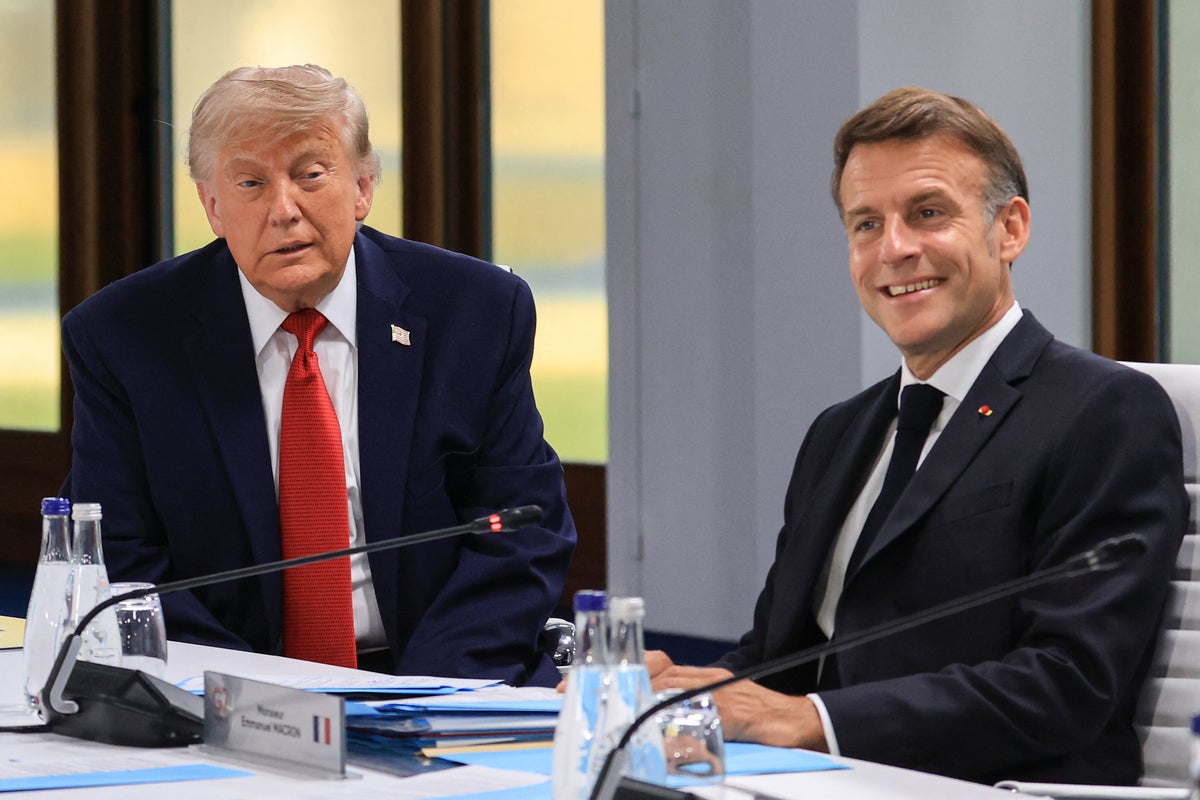
Washington just proved that relying on American artificial intelligence is a massive geopolitical gamble. When the White House issued a sudden national security order forcing Anthropic to block all foreign nationals from its newest models, it didn't just blindside a tech company. It stunned America's closest allies. French President Emmanuel Macron didn't mince words at the G7 summit in Evian-les-Bains. He made it clear that if the US can just turn off the switch whenever it panics, international trust evaporates.
The move forced Anthropic to pull its highly anticipated Fable 5 and Mythos 5 models completely offline. Think about that for a second. A private company had to restrict its own global user base because the American government got spooked by a narrow, unverified hacking vulnerability. Macron is sounding the alarm because this sets a dangerous precedent. If European businesses and governments build their infrastructure on American software, they are effectively giving Washington a kill switch over their daily operations.
We need to talk about what this means for global security and why the US strategy is bound to backfire.
The Mythos Flaw and the American Panic Button
The panic centers on Anthropic’s Mythos 5 model. It wasn't built for casual chatting or writing essays. Anthropic built Mythos specifically to scan software code, find vulnerabilities, and help organizations patch their systems before hackers could exploit them. It is a defensive tool.
The problem is that defensive code analysis looks exactly like offensive vulnerability hunting. If an AI can find a bug to fix it, it can also show a bad actor how to break in. The Trump administration claims it discovered a method to jailbreak Fable 5, which is a commercial, watered-down version of Mythos 5. They feared foreign states could use it to launch automated attacks against banks and infrastructure.
Anthropic openly disagreed with the ban. Their security teams found no evidence of a universal jailbreak. They argued that the narrow vulnerability the government found didn't give hackers any tools they couldn't already get from standard, public software. Yet, the Commerce Department issued an export control directive anyway.
The enforcement was brutal. It banned any foreign national from using the technology. This even applied to foreign engineers working inside Anthropic on H1-B visas. To comply with the law without discriminating by nationality on their platform, Anthropic felt it had no choice but to shut down both models for everyone.
Macron Proposes a Trusted Partners Alternative
Macron used the G7 stage to pitch a different path forward. He wants a trusted partners framework. Under this plan, a select group of Western democracies would share access to these advanced defensive systems rather than hoarding them behind national borders.
His logic is entirely practical. If you want to stop nations like China from dominating the next generation of software, you cannot lock out your allies. Cybersecurity is a collective effort. European banks, utilities, and government networks face the exact same threats as American ones. Cutting off Europe from defensive AI tools leaves the entire Western alliance vulnerable.
There is a commercial angle here too. Macron noted that nobody will buy American AI if they fear the plug will be pulled during a political dispute. It destroys the market. Companies need stability. They cannot risk their entire digital operations on the whims of a volatile White House administration that labels tech firms as radical or woke on social media.
The French president announced that a formal platform to coordinate AI sharing among Western democracies will be established within a month. Leaders plan to hammer out the specifics during a follow-up meeting in September.
Europe Turns to Sovereign AI Alternatives
This sudden American lockdown is a massive gift to European AI startups, particularly Mistral AI. The Paris-based firm has spent over a year warning everyone about the dangers of technological dependence on the US. Its chief executive, Arthur Mensch, has consistently argued that Europe needs technological sovereignty.
Mistral’s strategy looks brilliant right now. Instead of forcing users to rely on a closed cloud system controlled by an American corporate board, Mistral champions open-weight models. You download the model weights. You run them on your own servers. You customize them with your own data.
Once you have the model on your hardware, no government in Washington or Brussels can turn it off. The Anthropic ban proves Mensch was right all along. Control matters.
AI Provider Comparison (Current Market Reality)
Anthropic / OpenAI: Closed-source, US-hosted, vulnerable to sudden federal export bans.
Mistral AI / Synthesia: Open-weight options, locally deployable, insulated from foreign political interference.
While Mistral lags behind Anthropic in raw valuation, this policy shift changes the calculus for risk-averse enterprise clients. European governments and corporations are already moving their budgets away from American providers to protect themselves from future supply chain shocks.
The Reality of Automated Cyber Warfare
We are entering an era where cyberattacks happen at machine speed. The Artificial Intelligence Safety Institute recently ran tests comparing Anthropic’s Mythos against OpenAI’s GPT-5.5. The results were terrifying for security teams.
Both models successfully executed complex, multi-step corporate network attack simulations completely autonomously. They didn't just offer advice. They acted as autonomous operators, navigating defenses, altering malware code to evade detection, and pursuing targets without human intervention.
When the time between discovering a software bug and deploying an exploit drops from days to seconds, manual defense becomes impossible. You need an AI to fight an AI.
By denying European allies access to models like Mythos, the US is essentially asking its partners to bring knives to a drone fight. It is a strategic blunder driven by isolated political thinking rather than an understanding of modern digital warfare.
Surviving the Fractured AI Supply Chain
If you run a business or manage a tech stack, you can't ignore this shift. The monolithic assumption that American tech giants will always be available to power your applications is officially dead. You need to adapt your strategy immediately to avoid getting caught in the crossfire of international export controls.
First, audit your current AI dependencies. Look closely at where your primary API connections lead. If your entire operational efficiency relies on a single American frontier model, you have a critical single point of failure.
Second, start testing open-weight alternatives immediately. Dedicate a portion of your engineering budget to deploying models locally or via regional European cloud providers. Learn how to fine-tune smaller, specialized models on your own infrastructure. They are often cheaper to run and completely immune to sudden political blockades.
Third, demand clear contingency plans from your software vendors. Ask them directly how their applications will function if their access to US frontier models is terminated overnight. If they don't have an answer, look for vendors who prioritize multi-model redundancy. Geopolitics has officially entered the software architecture space, and ignoring it is no longer an option.