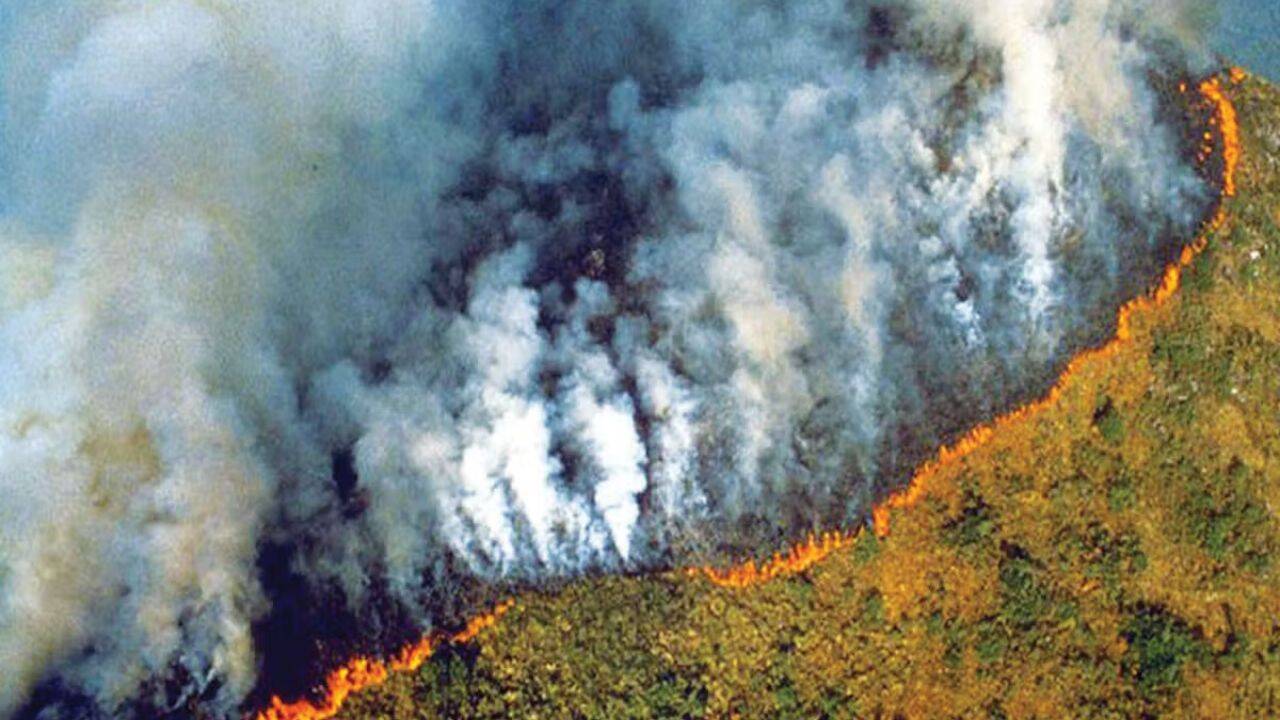
Environmental commentators are currently patting themselves on the back. The headlines read like a triumph: a year after severe drought and widespread fires ravaged the Amazon in 2024, satellite data shows the burned area dropped to its lowest level since monitoring began in 1985.
Politicians are taking victory laps. NGO directors are issuing congratulatory press releases. The consensus narrative has already taken root: enforcement worked, rain returned, and the rainforest is healing.
It is a complete misreading of ecological data.
Celebrating a low burn year immediately following a mega-drought reveals a fundamental misunderstanding of fire dynamics, satellite measurement limits, and forest ecology. The record low isn't proof that conservation policies succeeded. It is a predictable, mechanical consequence of biomass depletion and short-term atmospheric shifts.
By treating a statistical lull as an ecological recovery, policy makers are setting the stage for an even larger catastrophe.
The Fuel Depletion Paradox
Fire requires three components: oxygen, ignition, and fuel.
During the extreme drought of 2024, massive swathes of the Amazon basin suffered severe understory burns. Millions of hectares of leaf litter, fallen branches, brush, and saplings—the fine fuels that allow surface fires to spread—were incinerated.
When a forest burns heavily in year one, it cannot burn with the same intensity or across the same acreage in year two. The fuel is gone.
This isn't ecosystem restoration. It is biomass exhaustion.
Satellite remote sensing measures burnt surface area by detecting thermal anomalies and spectral changes in ground cover. When there is no fine fuel left on the forest floor to ignite, surface fires cannot propagate across wide areas, even if human ignition attempts continue at the exact same rate.
Calling a lack of burnable material a "record recovery" is like burning your house to the ground and then bragging that your property had zero fire damage the following week.
Drought / Fire Surge (2024) ──> Fine Fuel Exhausted ──> Temporary Fire Lull (2025)
                                                                 │
                                                                 ▼
      Standing Dead Wood + Canopy Gaps ──> Drying Understory ──> Fuel Accumulation ──> Next Fire Surge
While the fine surface fuel was consumed, millions of trees were killed or mortally damaged. They remain standing as dry, dead wood. As these trees drop branches and decay over the next two to three years, they build a massive reservoir of dry fuel on the forest floor.
The low burn area of today is simply the incubation period for the high-intensity fires of tomorrow.
The Satellite Blind Spot
The metrics being celebrated suffer from a critical flaw: reliance on coarse satellite optical resolution that confuses canopy presence with forest health.
Satellites like MODIS and Sentinel track charred earth and major canopy loss. They are exceptional at detecting clear-cut deforested areas and active crown fires. They are notoriously terrible at registering understory degradation.
When an Amazonian fire passes through a dense forest, it often moves slowly along the ground, consuming vegetation under a dense leafy canopy. To an optical satellite orbiting hundreds of miles above, the canopy appears green and untouched in the months that follow. Below that canopy, the ecological damage is catastrophic:
- Microclimate Breakdown: Understory fires destroy the humid microclimate that insulates the inner forest floor from wind and direct sunlight.
- Canopy Thinning: Mortality among large trees often takes 12 to 24 months to register as roots die slowly and leaves drop over time.
- Species Loss: Shade-tolerant seedling species are wiped out, replaced by fast-growing, flammable grass and weed species.
Relying on surface burn acreage as the sole proxy for rainforest health is lazy analysis. A forest can show zero burned hectares on a satellite map while actively dying from the inside.
The La Niña Illusion
The drop in burned area coincided with an atmospheric transition from a strong El Niño pattern to neutral and La Niña conditions across the Pacific. This shift brought localized moisture and higher humidity across portions of the Amazon basin.
Moisture suppresses fire ignition. It does not repair structural ecosystem damage.
Politicians routinely credit their own enforcement policies during wet years and blame climate change during dry years. The reality is far less politically convenient. Policy enforcement in vast, low-presence frontier zones fluctuates far less than annual precipitation anomalies.
When rain suppresses fires, illegal logging and selective timber extraction do not stop. They adapt. Loggers continue carving roads through the core of primary forests, fracturing intact forest blocks, increasing edge effects, and creating hundreds of kilometers of new dried-out boundaries.
+-------------------------------------------------------------------+
|                        THE DEGRADATION CYCLE                      |
|                                                                   |
|   Logging Roads  ──>   Forest Fragmentation  ──> Microclimate Loss  |
|          ▲                                              │         |
|          │                                              ▼         |
|   Severe Burn    <──   High Fuel Load (Dry)  <──  Solar Drying    |
+-------------------------------------------------------------------+
A wet year merely masks this structural destruction. It dampens the matches being thrown into the dry timber; it does not remove the timber or arrest the loggers.
The Danger of Premature Victory Laps
Why does this misinterpretation matter? Because false metrics dictate real budget allocations and policy decisions.
When international bodies and domestic governments see headline figures declaring a "record low" in burned area, political incentives instantly shift:
- Budget Reallocation: Conservation funding is redirected away from fire monitoring and emergency response teams toward other political priorities.
- Regulatory Softening: Pressure on agricultural expansion on frontier land eases because the immediate public relations crisis has passed.
- Enforcement Drift: Specialized environmental protection agencies reduce patrol frequency in critical buffer zones.
I have seen environmental agencies and corporate sustainability teams fall into this trap repeatedly. They confuse a temporary respite provided by weather cycles with permanent operational success. They scale back enforcement right when the forest is at its most vulnerable—when dead biomass is building up on the ground, waiting for the next dry season.
Real Metrics for Amazonian Health
If burned area is a misleading metric for tracking long-term Amazonian resilience, what should we actually monitor?
We must discard simple surface-burn acreage and look at metrics that measure structural integrity:
Vapor Pressure Deficit (VPD)
VPD measures the dryness of the air within the forest canopy. High VPD means the air is pulling moisture directly out of leaves and soil, rendering the forest brittle and flammable regardless of recent rainfall.
Edge-to-Interior Ratio
Intact, continuous forest canopy retains moisture and resists burning naturally. Fragmented forests with high edge-to-interior ratios dry out rapidly from wind and solar exposure. Tracking the creation of new logging roads gives a far more accurate forecast of future fire risk than tracking current burn maps.
Biomass Re-accumulation Rate
Measuring actual carbon stock density through high-resolution LiDAR flight data reveals whether a forest is regenerating its dense, moisture-trapping structure or simply filling out with quick-burning brush.
| Metric | Traditional View (Misleading) | Structural View (Accurate) |
|---|---|---|
| Primary Indicator | Annual Burned Area (Hectares) | Vapor Pressure Deficit & Canopy Height |
| Interpretation of Low Burn | Ecosystem Recovery / Successful Policy | Fine Fuel Exhaustion / Seasonal Suppression |
| Risk Assessment | Low Risk | High Risk (Accumulating Dead Fuel Load) |
| Action Taken | Reduce Emergency Response | Intensify Understory Monitoring |
Stop Celebrating Statistical Noise
The claim that the Amazon is recovering because burnt area dropped to a record low following the 2024 drought is an exercise in self-delusion. It ignores basic fire ecology, relies on incomplete satellite measurements, and mistakes seasonal weather shifts for permanent environmental protection.
The Amazon basin isn't healing. It is absorbing severe structural damage, shedding fine fuels, piling up dead timber under a damaged canopy, and waiting for the next inevitable drought to light the fuse.
Stop celebrating rainfall and fuel exhaustion as policy triumphs. The real test isn't how little the forest burns in the wet year immediately after a catastrophe. It is how much of the forest remains standing when the next heatwave hits an ecosystem choked with dead wood.


