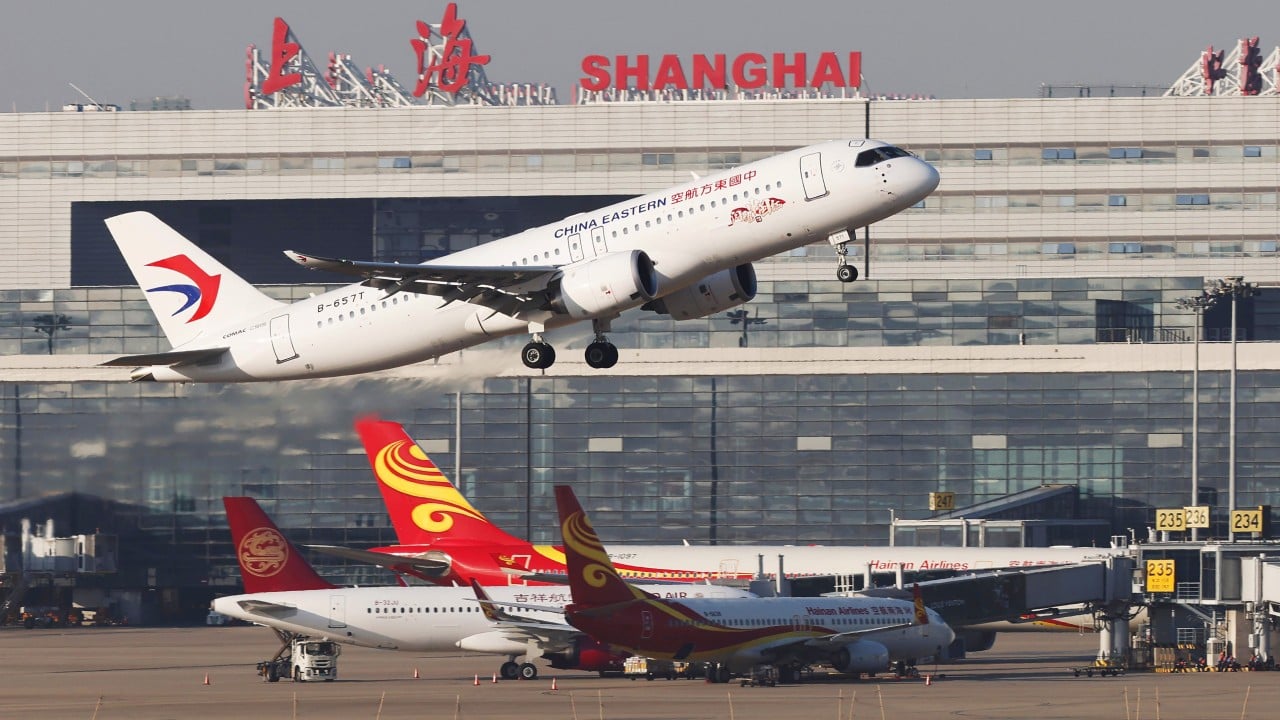
Alibaba’s decision to open its Qwen large language model to external partners—starting with a high-profile integration with China Eastern Airlines—is not a simple software update. It is a land grab. By embedding its proprietary AI directly into the operational DNA of state-backed giants, Alibaba is moving to ensure its survival in a regulatory environment that has spent years trying to clip its wings. This partnership allows China Eastern passengers to access flight queries, check-ins, and baggage tracking through a Qwen-powered interface, but the real story lies in the data pipeline being built underneath the wings of the national carrier.
For years, the tech giant operated as a sprawling consumer ecosystem. Now, under the pressure of intense domestic competition and a slowing cloud market, it is pivoting toward an industrial-first strategy. The goal is clear: make Qwen the indispensable operating system for the Chinese economy. If a company can control the intelligence layer of the country’s largest airline, it becomes nearly impossible to dislodge from that sector’s infrastructure.
The Infrastructure of Integration
The tie-up with China Eastern Airlines serves as a proof of concept for what Alibaba calls its "model-as-a-service" strategy. While the public sees a chatbot that helps them find a window seat, the technical reality is a complex synchronization of real-time flight data, weather patterns, and logistical scheduling.
Alibaba is not just providing a window into its AI; it is providing a bridge. This bridge connects the massive computational power of Alibaba Cloud with the siloed, often antiquated data systems of legacy industries. In the past, integrating these systems took months of custom coding. With the open API approach for Qwen, Alibaba has reduced that friction, allowing partners to "plug in" their specific datasets to fine-tune the model’s outputs.
Why China Eastern Matters
Choosing a state-owned enterprise (SOE) as the flagship partner is a calculated political move. In the current Chinese business climate, alignment with national interests is the only way to secure long-term growth. China Eastern is one of the "Big Three" airlines in the country. By successfully automating its customer service and operational logistics, Alibaba proves to the central government that its AI is a "productive force" rather than just a tool for consumer distraction.
The airline industry is a high-stakes environment where errors have physical consequences. If Qwen can handle the volatility of flight delays and the intricacies of international travel regulations without hallucinating, it earns a stamp of reliability that no marketing campaign could buy.
The Open Source Gambit
There is a glaring contradiction in Alibaba’s strategy that most analysts miss. While the company is aggressive about private partnerships, it is also releasing versions of Qwen as open-source code. This seems counterintuitive. Why give away the "secret sauce" for free?
The answer is found in the battle for developer mindshare. Meta did this with Llama, and Alibaba is following the same playbook in Asia. By making Qwen open-source, Alibaba ensures that every university student, startup coder, and independent developer in China is learning to build on their architecture.
- Developer Lock-in: Once a developer builds an app using Qwen’s logic, they are unlikely to switch to a competitor like Baidu’s Ernie Bot.
- Edge Computing: Open-source versions allow companies to run the model on their own hardware, which is critical for sensitive industries like defense or finance that refuse to send data to a public cloud.
- Feedback Loops: Thousands of users fixing bugs and suggesting improvements for free is a massive R&D shortcut.
Alibaba is essentially subsidizing the creation of an ecosystem where they own the most powerful version of the tool, while everyone else uses the "lite" version to build the market for them.
Technical Superiority or Marketing Muscle
The "Qwen-72B" model and its successors have consistently ranked high on global benchmarks, sometimes outperforming GPT-4 in specific multilingual and coding tasks. However, benchmarks are often a poor reflection of real-world utility. In an industrial setting, a model doesn’t need to write poetry; it needs to parse a 500-page maintenance manual and find the exact torque specification for a Boeing 737 engine bolt in three seconds.
Alibaba’s advantage isn't just the "intelligence" of the model. It is the integration with their existing cloud stack. When a company uses Qwen, they aren't just buying a brain; they are buying the nervous system (Alibaba Cloud) and the muscle (DingTalk integration).
The DingTalk Factor
DingTalk, Alibaba’s enterprise messaging platform, is the Trojan horse within the Trojan horse. It already has over 600 million users. By embedding Qwen into DingTalk, Alibaba creates a scenario where an employee at China Eastern can ask a question in a chat window and get an AI-generated answer pulled from the company’s private database. This removes the need for a separate "AI app." The AI is simply where the work is already happening.
The Hidden Risks of the Partner Program
Opening the doors to outside partners is not without significant danger. When Alibaba allows a third party like China Eastern to build on Qwen, it loses a degree of control over how that AI behaves. If the airline's version of the AI gives a passenger incorrect information about a visa requirement or a refund policy, who is at fault?
There is also the "Data Poisoning" risk. If a partner feeds low-quality or biased data into their fine-tuned version of Qwen, it could degrade the model's performance for that specific use case, reflecting poorly on the base technology. Alibaba has had to build significant guardrails—proprietary filters that sit between the model and the user—to prevent the AI from generating politically sensitive or factually incorrect content. These guardrails are heavy. They slow down processing time and can make the AI feel "stiff" compared to its Western counterparts.
Market Realities and the Baidu Rivalry
Baidu was first to the gate with Ernie Bot, but Alibaba is playing a longer, more industrial game. Baidu focuses heavily on the search experience and the consumer interface. Alibaba is looking at the plumbing.
The revenue model here is moving away from "per-user" subscriptions and toward "compute-based" billing. Every time a China Eastern passenger asks Qwen a question, it triggers a series of calculations on Alibaba’s servers. Alibaba is effectively selling electricity for the mind. As more partners sign on, the sheer volume of "tokens" processed becomes a massive, recurring revenue stream that is much stickier than a retail shopping commission.
The Hardware Constraint
One factor Alibaba cannot fully control is the supply of high-end GPUs. With US export restrictions on Nvidia’s most powerful chips, Alibaba has to be incredibly efficient with how it allocates its hardware. This is likely why they are pushing the "partner" model so hard. By letting partners run smaller, specialized versions of Qwen on less-powerful hardware, Alibaba preserves its top-tier computing power for the most lucrative contracts.
The Shift From Consumer to Sovereign AI
The partnership with China Eastern is a template for what we can call "Sovereign AI." This is the idea that critical national infrastructure must run on domestic intelligence. In this context, Alibaba is positioning itself as a national champion.
This isn't just about business. It is about the fundamental restructuring of how a country functions. If the logistics of the national airline, the power grid, and the banking system are all optimized by the same underlying AI architecture, the efficiency gains could be massive. But the centralization of that power into one company’s hands—even a company as heavily monitored as Alibaba—creates a single point of failure.
If Qwen has a systemic bug, the airline doesn't just lose a chatbot; it loses its operational edge.
The Architecture of the Deal
The China Eastern agreement likely involves a "revenue-share" or "cost-savings" model rather than a flat licensing fee. This is a common tactic for investigative analysts to watch: Alibaba provides the tech at a discount in exchange for the right to use the anonymized operational data to further train their industrial models.
This creates a "flywheel" effect.
- Alibaba gets access to specialized airline data.
- Qwen becomes the smartest "Aviation AI" in the world.
- Every other airline in Asia is forced to use Qwen because no other model has that specific expertise.
- Alibaba gains a monopoly on the intelligence of an entire sector.
The Real Cost of Openness
When a tech giant says they are "opening" their platform, it usually means they are inviting you to build a house on land they own. Alibaba’s "outside partners" program is a brilliant move to colonize the enterprise sector before competitors can wake up.
Companies joining this program must realize they are offloading their core intellectual labor to a third party. While it saves money today, it creates a dependency that will be impossible to break a decade from now. The airline isn't just buying a tool; it is outsourcing its institutional memory to Alibaba’s servers.
Watch the next few months closely. If we see similar deals with the State Grid or China Post, we will know the transformation is complete. Alibaba will no longer be an e-commerce company. It will be the invisible hand guiding the mechanical movements of the Chinese state.
Total integration is the final goal, and China Eastern is simply the first gate.