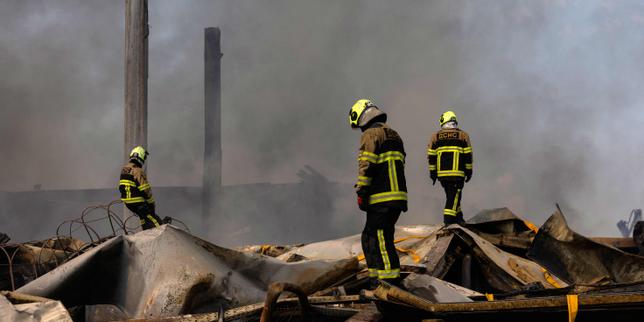
The sirens wail across Kyiv not as a warning anymore, but as background noise to a slow-motion catastrophe. Russian ballistic missiles strike residential blocks, hospitals, and energy infrastructure with ruthless predictability. President Volodymyr Zelensky stands before bank of microphones, pleading once again for the Western allies to stop filtering air defense systems through bureaucratic paralysis and deliver them immediately. Down in Kramatorsk, regional authorities issue mandatory evacuation orders for families, knowing the frontlines are chewing through towns faster than diplomats can draft communique statements.
Air defense is no longer a tactical asset in this war. It is the absolute ceiling on whether the Ukrainian state survives another winter. If you found value in this article, you should check out: this related article.
For over three years of grinding, industrial-scale conflict, the Western strategy toward Ukrainian airspace has been defined by incrementalism. Leaders in Washington, Berlin, and London have operated on a slow drip-feed model. They provide just enough Patriot, NASAMS, and IRIS-T batteries to keep the Ukrainian military from collapsing entirely, yet consistently withhold the volume required to establish a secure dome over major population centers and critical nodes.
This hesitation stems from an institutional phobia of escalation. Defense ministries calculate risk through the lens of Russian retaliation, fearing that absolute protection for Ukrainian cities might provoke a wider confrontation. But the math of this war has inverted. Every delayed battery, every withheld interceptor missile, and every political debate over export licenses results in vacant classrooms, destroyed power grids, and an accelerating exodus of refugees who will never return home. For another angle on this story, refer to the latest coverage from NBC News.
The Industrial Bottleneck
The fundamental constraint is not merely political cowardice. It is an industrial crisis. Decades of post-Cold War defense downsizing left Western nations with lean, just-in-time manufacturing models designed for counter-insurgency conflicts in the Middle East, not total war in Eastern Europe.
Lockheed Martin and Raytheon build Patriot systems at a pace that cannot keep up with high-intensity consumption. An interceptor missile takes months to manufacture, involving specialized microchips, rocket motors, and guidance systems that rely on fragile global supply chains. When a Russian saturation strike launches a dozen Kinzhal and Iskander missiles alongside swarms of Iranian-designed Shahed drones, Ukraine expends millions of dollars in interceptors within minutes.
The economic asymmetry heavily favors the aggressor. A cheap drone costs a fraction of the sophisticated surface-to-air missile fired to destroy it. Russia understands this imbalance. Moscow has shifted its economy onto a war footing, ramping up missile production despite harsh international sanctions. Meanwhile, Western defense contractors negotiate multi-year procurement contracts that move at the speed of corporate boardrooms rather than artillery duels.
The Frontline Reality in Kramatorsk
Look past the strategic briefings in Brussels and Washington to see what this shortage means on the ground. In Kramatorsk, the administrative center of the Ukrainian-controlled portion of Donetsk Oblast, the atmosphere is heavy with the finality of impending displacement. Families pack what they can carry into the trunks of battered sedans. Children watch from the backseats while parents argue quietly over whether to head west toward Lviv or risk staying near relatives who refuse to leave their ancestral homes.
The evacuation orders are issued because short-range air defense and electronic warfare systems are concentrated heavily around Kyiv and critical power plants. Frontline cities like Kramatorsk are left largely exposed to glide bombs and tactical artillery. Russian fighter jets can release heavy UMPK glide bombs from dozens of kilometers away, well outside the reach of many medium-range systems, devastating urban areas with impunity.
When local officials order evacuations, they are acknowledging a grim truth. Without persistent, mobile air defense umbrellas operating right behind the contact line, civilian centers within range of enemy aviation become untenable. The human cost of the Western supply delay is measured in these exact moments of forced migration.
The Geopolitical Cost of Hesitation
The delay in delivering air defense systems is fracturing the political coalition supporting Ukraine. In European capitals, public fatigue is growing. Inflation, energy costs, and domestic political instability create friction for leaders attempting to maintain public consensus for sustained military aid.
Every time a major Ukrainian hospital is hit because a promised battery arrived months late, the Kremlin's psychological warfare operation wins a quiet victory. The narrative pushed by Russian state media gains traction among skeptical voters abroad. They argue that the war is unwinnable, that aid is an endless sinkhole, and that escalation risks nuclear war.
Yet, abandoning Ukraine or forcing a partitioned peace under current conditions would destroy the post-Cold War security architecture. If sovereign borders can be erased through brute force and unchecked aerial bombardment, international law becomes a suggestion rather than a rule. The security of NATO's eastern flank—from Warsaw to Bucharest—depends entirely on whether the alliance can muster the logistical will to secure Ukrainian skies today.
Breaking the Stalemate
Solving this crisis requires an immediate shift from crisis management to mobilization. Western governments must authorize direct transfers of active-duty systems from their own domestic readiness stockpiles, rather than waiting for new units to roll off assembly lines.
Furthermore, defense production must be decentralized and protected. Joint ventures between Western defense giants and Ukrainian engineering firms are already experimenting with repair hubs and manufacturing components closer to the front. These initiatives need massive capital injections and regulatory fast-tracking.
Air defense is the heartbeat of Ukraine's resistance. Without it, the grid fails, the economy collapses, and the frontlines dissolve under unhindered air attacks. The machinery to protect the skies exists in warehouses across Europe and North America. What remains missing is the urgency to deploy it before the damage becomes irreversible.