The wind does not blow in West Texas during July; it shoves. It is a dry, scouring force that strips the moisture from your skin before you even realize you are sweating, rattling the corrugated tin on the machinery sheds and turning the dirt roads into ribbons of blinding chalk.
On Tuesday afternoon, Arthur Miller felt that wind shift. He was standing by the stock tank on his acreage outside of Abilene, watching the surface of the water ripple into jagged gray shards. The smell reached him before the smoke did. It was not the familiar, comforting scent of cedar being burned in a backyard pit. It was the sharp, metallic stench of scorched wire, roasted mesquite, and something ancient and terrifying—the smell of a living ecosystem screaming under heat.
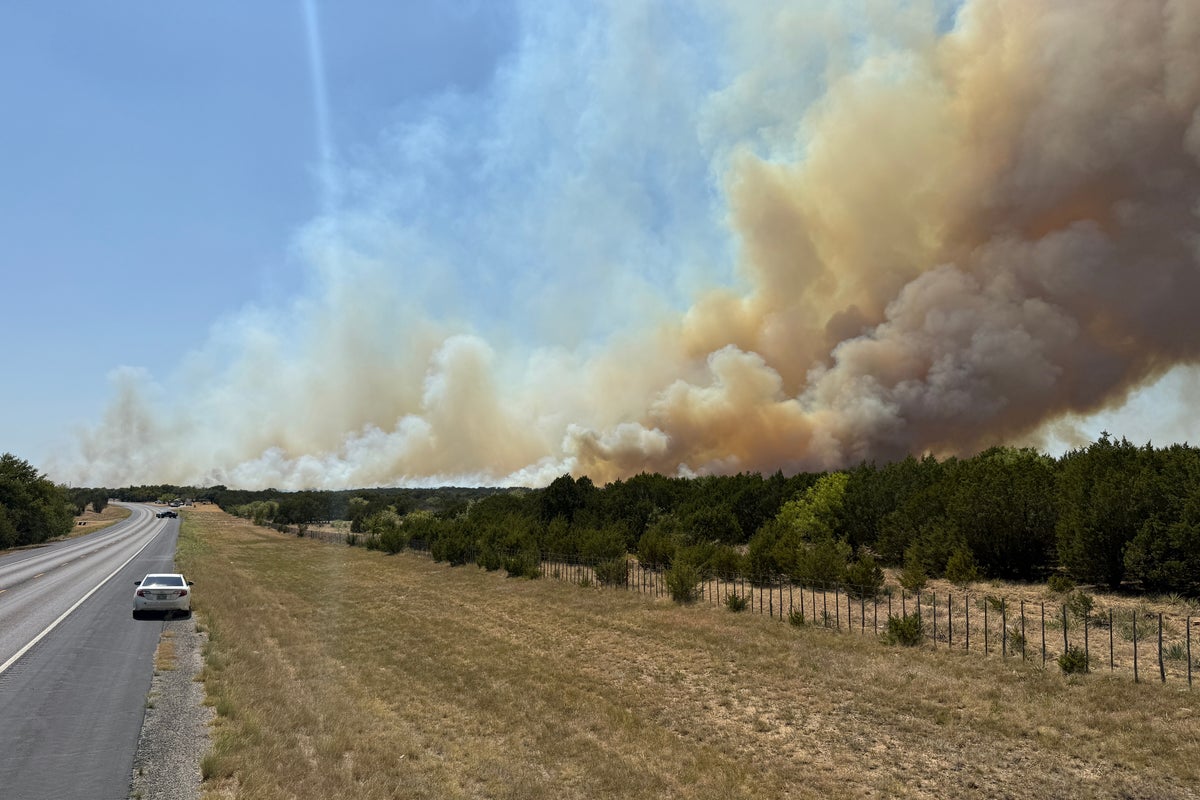
By the time Arthur looked toward the horizon, the sun had vanished. In its place stood a towering, boiling pillar of charcoal and copper, swallowing the blue sky whole.
The Arithmetic of Velocity
We talk about wildfires in dry statistics. We quote acreage, containment percentages, wind speeds in miles per hour. We treat them like weather reports, distant phenomena happening to coordinates on a map rather than homes with family portraits on the mantel.
Consider what happens when humidity drops to single digits and the grass turns to tinder. The mathematics of catastrophe shift from addition to multiplication.
Within minutes of that initial spark, driven by gusts topping forty miles per hour, the wildfire did not simply spread. It doubled.
(Note: While Arthur Miller is a composite persona built to mirror the lived experience of rural evacuees, the doubling rate and environmental metrics reflect verified reports from emergency management dispatch logs during recent severe West Texas outbreaks.)
To understand a wildfire doubling in size in what feels like a collective blink, you have to abandon the human concept of time. Fire does not wait for authorities to issue alerts. It does not check if the livestock gate is latched. It travels through dry bluestem and chest-high brush with the speed of a galloping horse, throwing burning embers half a mile ahead of the main front like fiery scouts planting flags in enemy territory.
Arthur did not have time to look for his passport. He did not have time to choose which of his grandfather's rifles to save. He had three minutes.
The Choice at the Threshold
There is a strange, heavy silence that settles over a home just before you abandon it. The refrigerator hums. The ceiling fan spins lazily, circulating air that is suddenly too hot to breathe.
When the local sheriff's patrol car came screaming down the caliche road, lights flashing silent strobes through the dense, orange haze, the deputy did not ask Arthur if he wanted to leave. The deputy rolled down the window, his face caked in gray soot, and shouted a single word that hung in the choking air: "Now."
This is the psychological core of rural evacuation. In the city, leaving a neighborhood means locking a door and merging onto a grid of concrete escape routes. Out here, leaving means walking away from everything you built with your own hands, knowing that if the wind holds, you will return to a pile of gray ash and melted aluminum.
Arthur grabbed his dog, a scarred blueheeler named Buck who was shaking so hard his collar jingled like loose change, and threw him into the cab of the truck. He looked back at the house. The paint on the west-facing porch was already beginning to bubble and blister from the radiant heat of a wall of flame advancing across the pasture.
He put the truck in gear. He did not look in the rearview mirror.
The Anatomy of the Smoke
Drive away from a fire like this, and you enter a surreal landscape. The sky is no longer sky; it is an opaque, churning ceiling of apocalyptic amber. Birds fly erratically, frantic and disoriented, having abandoned their nests before the flames even reached the canopy.
Emergency responders call this an interface event—the terrifying boundary where untamed wilderness collides with human habitation. But that clinical term strips away the visceral reality. It is the moment the earth decides it wants its wildness back.
Across the county line, volunteer fire departments were converging from three different directions, their heavy water tenders bouncing down rutted dirt paths, headlights cutting useless yellow tunnels through the midday night. These are men and women who know every fence line, every dry creek bed, and every neighbor by name. They were not fighting a faceless natural disaster; they were holding the line for their friends.
By nightfall, the glow could be seen thirty miles away. It turned the clouds overhead into an angry, bruised purple, pulsing with the internal furnace of thousands of acres of cedar and brush turning to light and gas.
The Morning After the End
Dawn in West Texas is usually a quiet, golden resurrection. The light spills across the plains, touching the dew on the grass and waking the hawks on the fence posts.
The morning after the fire was different.
The sun rose red and dim, filtered through a lingering pall of smoke that tasted like copper and old paper. Arthur sat on the tailgate of his truck at the county fairgrounds, where dozens of displaced families had spent the night on folding cots, wrapped in thin red-cross blankets.
A National Guard humvee idled nearby. The local radio station crackled with damage assessments, road closures, and lists of livestock found wandering dazed along the highway.
Arthur looked down at his boots. They were still caked in the dust of a property that might no longer exist. His phone buzzed in his pocket—a text from a neighbor who had managed to slip past the roadblock on an ATV.
The house was gone. The barn was gone. The pasture was a vast, smoking expanse of absolute black.
Yet, as the morning wind began to stir again—gentle now, carrying the faint, cool promise of a distant front—Arthur reached down and scratched the top of the old blueheeler’s head. Buck leaned into his hand, warm and steady and alive.
The land will cool. The grass will find a way to push its green shoots through the charred crust of the earth, stubborn and unyielding as the people who call this unforgiving country home. But for now, in the quiet ash of the morning, the world belongs entirely to the survivors.