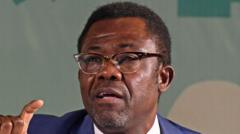
The internal politics of African football usually stay behind closed doors until someone slams them shut on their way out. That’s exactly what happened this week. A high-ranking African football chief has resigned following a massive row over the Morocco-Senegal final, and honestly, it’s about time someone looked at the cracks forming in the continental governing body. This isn't just a simple disagreement over a match location or a refereeing call. It’s a symptom of a much deeper divide in how the sport is run across the continent.
When the news broke that the official stepped down, the immediate reaction from fans was a mix of "finally" and "what took so long?" The dispute centered on the controversial decision-making process surrounding the final between Morocco and Senegal, two of the biggest heavyweights in the game right now. If you've been following the CAF (Confederation of African Football) trajectory lately, you know that the optics have been getting worse.
Why the Morocco-Senegal Dispute Was the Breaking Point
The friction didn't start at the opening whistle. It started in the boardroom. For months, there’s been a growing sentiment that certain nations hold far too much sway over where major tournaments are held and how the logistics are handled. Senegal, coming off a run of incredible form and continental dominance, felt the deck was stacked. Morocco, with its world-class infrastructure and aggressive bidding, has become the de facto home for African football events.
That sounds like a win for the continent on paper. Better stadiums mean better broadcasts and more money. But when a neutral final starts feeling like a home game for one side because of administrative bias, the integrity of the competition takes a hit. The resigning official reportedly felt that the executive committee was ignoring the basic principles of neutrality to appease certain political interests.
The Infrastructure vs Fairness Debate
We need to talk about the "Morocco Problem" without being biased. Morocco has invested more in football infrastructure than almost any other nation in the world over the last decade. They have the pitches, the VAR tech, and the hotels. Naturally, CAF wants to host events there because it’s easy. It’s safe.
But football isn't just about who has the nicest grass. It’s about the meritocracy of the sport. When the decision was made to keep the final in a location that clearly favored one side’s travel and fan base, the Senegal camp didn't just get annoyed—they felt sabotaged. The official who quit was caught in the middle of this. He tried to push for a more balanced approach and was effectively told to sit down and be quiet.
He chose to walk instead.
What This Resignation Tells Us About CAF Leadership
CAF has a long history of "strongman" leadership that doesn't play well with modern transparency. We saw it for decades under the old guard, and despite promises of a new era, the same patterns keep emerging. The departure of a senior chief over a specific match dispute suggests that the internal checks and balances are failing.
If a top-tier executive feels their only move is to quit to maintain their reputation, it means the culture inside the organization is likely toxic. This isn't a case of "differing opinions." It’s a case of someone seeing the rules being bent until they break.
How This Affects the Players on the Pitch
You might think this is all just suits in offices, but it bleeds onto the field. Players talk. Coaches talk. When a squad like Senegal feels like the administrative body of their own continent is working against them, it changes how they approach the game. It creates a "us against the world" mentality that can be powerful, but it’s exhausting.
For the Moroccan side, it puts an unfair asterisk next to their achievements. They don't need the help. They have the talent to win anywhere. By making decisions that look like favoritism, CAF is actually doing a disservice to the teams that benefit from them. It cheapens the trophy.
The Financial Reality Nobody Wants to Admit
Let's be blunt. Money talks. Morocco brings in sponsors. Their bid for the World Cup and their hosting of various CAF trophies is backed by massive financial guarantees. Senegal, while a powerhouse on the pitch, doesn't always offer the same commercial certainty in terms of hosting logistics.
The official who resigned likely saw the shift from "what’s best for football" to "what’s best for the bank account." It’s a transition every major sports body makes, but CAF is doing it with zero grace. They aren't even trying to hide it anymore.
Breaking the Cycle of Corruption Allegations
For years, African football has fought the stigma of corruption. Every time a story like this hits the press, it resets the clock. We’re back to square one. International investors look at a resignation over a Morocco-Senegal row and see instability. They see a lack of professional standards.
To fix this, the resignation shouldn't just be a headline. It needs to be a catalyst. There has to be a clear, written protocol for how finals are awarded that can't be changed on a whim by a small committee. If the rules are transparent, there’s no room for a "row" to happen in the first place.
Moving Toward a More Transparent Future
The next few months are going to be uncomfortable for the remaining CAF leadership. They have to replace a key figure while answering questions about why he left. You can't just sweep this under the rug when the person leaving is loud about their reasons.
If you're a fan of the game, you should be demanding more than just a replacement. You should be looking for a change in the voting process. No more closed-door meetings where locations are "decided" before the tender process even ends.
Watch the upcoming committee meetings closely. Look for who gets the next hosting rights for the minor tournaments. If it keeps going to the same three or four countries, you know the resignation didn't change a thing.
The best way to support your team isn't just buying the jersey. It’s staying informed about the people who control the fate of the tournament. Start by following independent African football journalists who aren't on the CAF payroll. They’re the only ones telling the truth about these "rows" before they turn into resignations. Keep the pressure on the social media handles of the governing bodies. They hate bad PR more than they love the game.