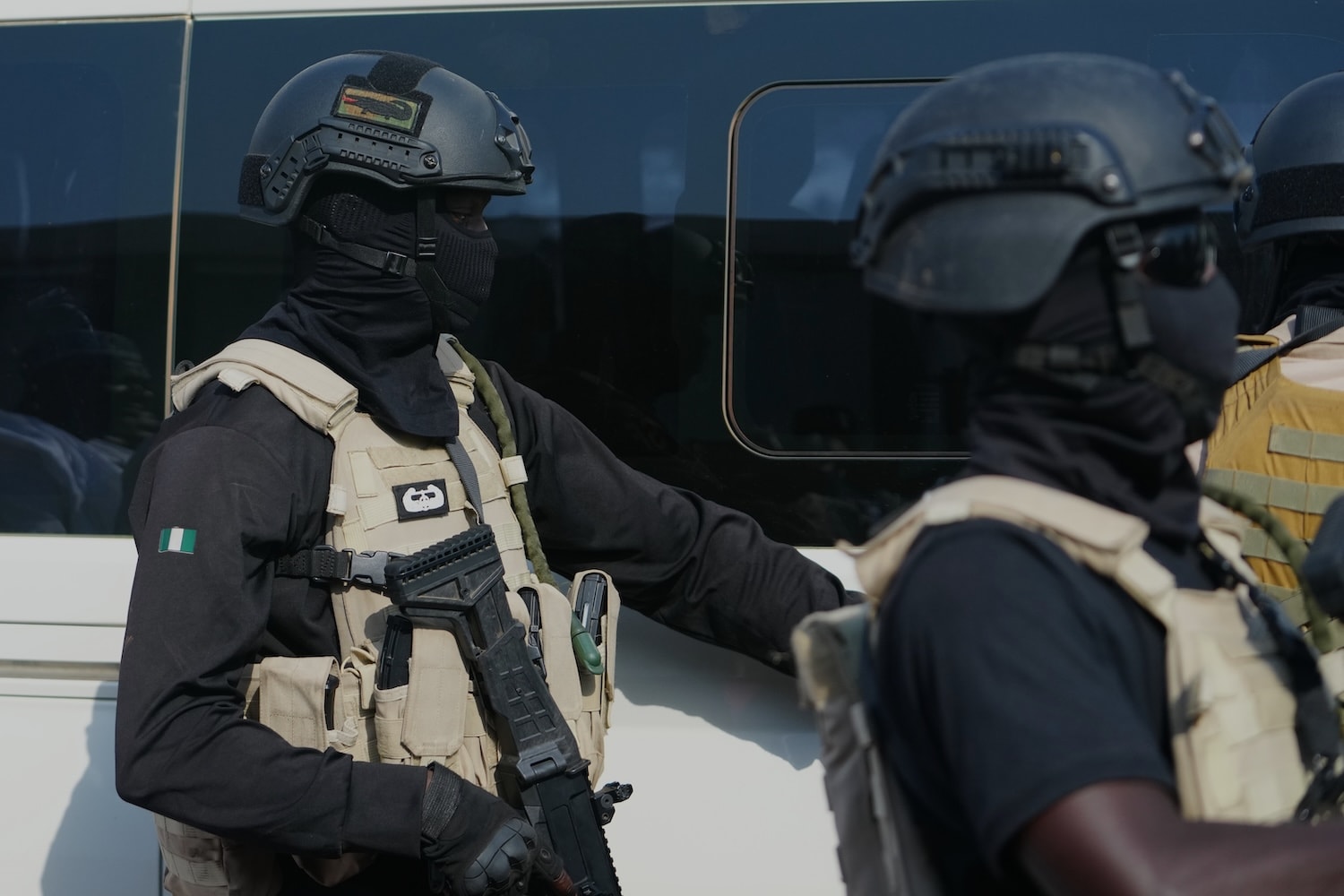
The Islamic State West Africa Province (ISWAP) has claimed responsibility for a brutal assault in Adamawa State that left at least 29 people dead, marking a significant escalation in the group's attempts to expand its footprint beyond its traditional Lake Chad stronghold. While official reports often frame these incidents as isolated tragedies or the work of "bandits," the clinical precision of this attack suggests a much deeper systemic failure in Nigeria’s counter-insurgency strategy. The victims, primarily local farmers and residents, were caught in a geopolitical crossfire that the Nigerian state has consistently failed to contain.
This latest incursion into Adamawa is not merely a tragedy; it is a strategic maneuver. By hitting targets outside the immediate vicinity of Borno State, the insurgents are testing the elasticity of the Nigerian military’s response times. They are hunting for soft spots where local intelligence is weak and the presence of federal boots is even weaker. Learn more on a connected topic: this related article.
The Strategy Behind the Slaughter
The move into Adamawa signals a shift in ISWAP tactics. For years, the group focused on consolidating its hold over the trade routes and fishing rights around Lake Chad. However, under pressure from regional multinational task forces, the group is now pushing southward. This isn't just about territory. It’s about resources. Adamawa serves as a gateway to the middle belt of Nigeria, a region rich in agriculture and fractured by long-standing communal tensions.
Insurgents do not just show up in a village of 29 people without a logistical trail. They need fuel. They need food. They need informants. The fact that an armed convoy could move through the brush and execute a mass killing of this scale speaks to a total collapse of the early-warning systems that the government has touted for years. Local vigilante groups, often the first and only line of defense, found themselves outgunned by attackers carrying sophisticated weaponry that outclasses the standard-issue gear of many local police units. Further journalism by NPR delves into similar perspectives on this issue.
The Intelligence Void
We have to look at the "why" of the intelligence failure. In the aftermath of such attacks, the standard government response involves a flurry of press releases promising to "bring the perpetrators to justice." Yet, the justice rarely arrives. The reality is that the relationship between the local population and the security forces is frayed.
In many parts of Adamawa, residents feel caught between two fires. If they report insurgent sightings to the military, they risk being executed by the terrorists as spies. If they stay silent, they are often harassed or detained by security forces during "clearing operations." This trust deficit is the environment in which ISWAP thrives. They don't need to be liked; they just need to be more feared than the state.
The weapons used in these attacks also tell a story. Investigators on the ground have noted a steady flow of arms leaking from the fallout of the Libyan civil war and, more recently, from diverted stockpiles intended for other regional conflicts. The Nigerian border is essentially a sieve. Despite the billions spent on "border hardening" and surveillance technology, the actual checkpoints are often understaffed or bypassed entirely through well-known smuggling routes.
Economics of Insurgency
Follow the money and you find the motive. ISWAP differs from the original Boko Haram in its approach to governance. While the latter was often chaotic and nihilistic, ISWAP attempts to act as a shadow government. They tax the movement of cattle. They demand "protection money" from farmers.
The attack in Adamawa likely serves a dual purpose: it punishes those who refuse to pay and demonstrates to others that the Nigerian government cannot protect them. This is an economic war as much as it is a religious or ideological one. When 29 people are killed in a farming community, the immediate result is the abandonment of the land. Displaced farmers flee to urban centers, creating a vacuum that the insurgents fill with their own rudimentary systems of control.
A Failed Policy of Containment
For a decade, the narrative has been that the insurgency is "technically defeated." This phrase has become a bitter joke among those living in the northeast. The policy of containment—trying to keep the violence boxed into specific zones—is clearly failing. By focusing almost entirely on kinetic military action (bombs and bullets), the state has ignored the social and judicial reforms needed to actually win.
Military force can clear a village, but it cannot hold it indefinitely. Without a functioning local police force, an independent judiciary to settle land disputes, and a clear path for economic development, the "cleared" areas simply revert to insurgent control the moment the soldiers rotate out.
The Adamawa massacre should be seen as a warning. The borders of the conflict are moving. If the response remains focused on reactive strikes rather than proactive community intelligence and border integrity, the geography of the war will continue to broaden. The families in Adamawa are not just mourning their dead; they are looking at a future where they are increasingly on their own.
Total security is a myth, but the current level of vulnerability is a choice. Every time an attack like this occurs and the perpetrators vanish back into the forest, the state's authority erodes a little further. The insurgents know this. They aren't just counting bodies; they are counting the days until the state's presence in the north becomes entirely symbolic.


