.jpg?width=1200&auto=webp&trim=0%2C0%2C0%2C0)
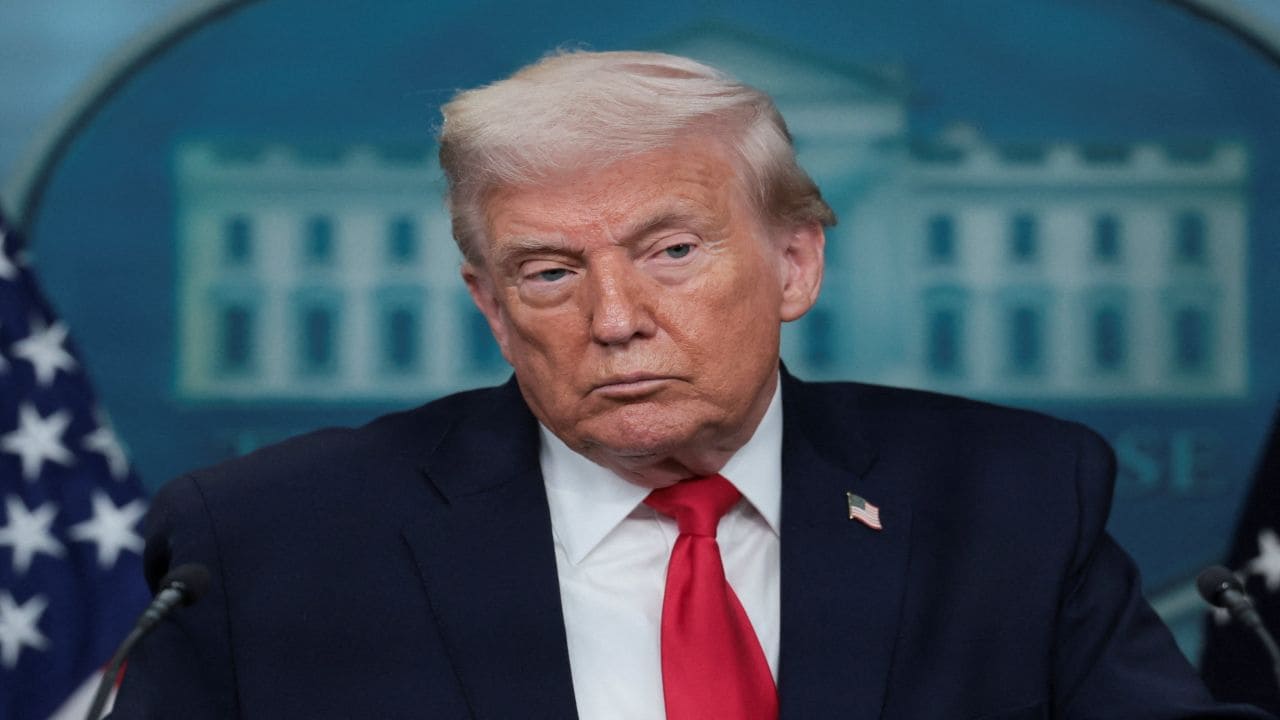
Donald Trump is not a man who lets a grudge go cold. The latest target of his executive ire is a year-old Instagram post by former FBI Director James Comey, featuring seashells on a North Carolina beach arranged to form the numbers 86 47. To the casual observer, it looks like a retiree’s clumsy foray into political hashtags. To the Department of Justice and the 47th President, it is an indicted act of "interstate communication of a threat."
Trump’s interpretation of the post is specific and lethal. He told reporters in the Oval Office this week that "86" is a mob term for "kill him." He argues that Comey, a man he routinely calls a "dirty cop," was signaling for his assassination. Comey, who surrendered to law enforcement on Wednesday before being released without conditions, maintains the post was a political statement he didn't realize would be viewed as a call to violence.
The Anatomy of 86
The term "86" carries a long, dusty history in American slang. It didn't start in the backrooms of the Gambino family. It likely began in the chaotic kitchens of mid-century diners. When a restaurant ran out of a dish, it was "86’d." If a rowdy customer was kicked out, they were "86’d."
Trump’s insistence that it is strictly a "mob term" for murder is a reach, though not one entirely disconnected from the lexicon of organized crime movies. In the world of the Five Families, "86ing" someone could indeed mean making them disappear permanently. However, in the context of the 2026 political landscape, the number has become a shorthand for "remove."
When activists used "86 45" during Trump’s first term, they were calling for his removal from office, not his death. But the 47th President isn't interested in linguistic nuances. For a man who survived an assassination attempt and faces a polarized nation, the line between "eject" and "eliminate" has vanished.
The Legal Tightrope of Coded Speech
The indictment of James Comey by a grand jury in North Carolina is a watershed moment for the First Amendment. Proving a "true threat" usually requires evidence of intent and a clear, immediate danger.
Federal prosecutors are betting on a "dog whistle" theory. They argue that because Comey is a former high-ranking law enforcement official, he understands the weight of coded language. The government’s case rests on the idea that 8647 wasn't a suggestion to vote Trump out, but a command to "86" the 47th President.
The difficulty for the DOJ lies in the ambiguity. Comey’s defense team will undoubtedly point to the thousands of "86 45" t-shirts sold during the Biden administration. If those weren't threats, why is this? The difference, according to the current administration, is the source. A former FBI Director is held to a different standard of "professional knowledge" regarding how radicals interpret coded messages.
Selective Prosecution or National Security
James Comey’s second indictment has sent shockwaves through the legal community. Critics argue this is a vindictive use of the justice system to settle a decade-old score. They point out that several Republican figures have used "86" in reference to their own opponents without facing Secret Service interviews, let alone federal charges.
Yet, the administration remains firm. Acting Attorney General Todd Blanche characterized the post as a "grave violation" during a period of heightened political violence. The timing is also curious. Comey had recently become more vocal on his Substack, criticizing the independence of the current DOJ.
- May 2025: Comey posts the seashell photo.
- Late 2025: Secret Service interviews Comey; he deletes the post.
- April 2026: A grand jury returns an indictment.
This timeline suggests the DOJ spent months building a case out of a deleted social media post. It suggests a level of scrutiny usually reserved for domestic terror cells, not former bureau chiefs.
The Precedent of the Seashells
If the government wins this case, the boundaries of political speech will undergo a radical contraction. Any numeric shorthand or historical slang could be reclassified as a "threat" depending on who says it and who is in power.
The defense is banking on the "independent federal judiciary" that Comey mentioned in his defiant video statement. But in a country where the 47th President sees "mob terms" in beach photos, the courtroom is no longer just a place for law. It is a stage for a long-running personal war that shows no sign of a ceasefire.
The reality is that "86" has always meant whatever the person using it wanted it to mean—from a steak that’s off the menu to a person who is no longer welcome. By turning a beach walk into a federal crime, the government is making a definitive statement about who gets to define American English.
Trump says Comey used mob term for 'kill him' in '86 47' seashell photo
This video provides the direct footage of President Trump explaining his interpretation of the seashell post as a mob-style threat against his life.