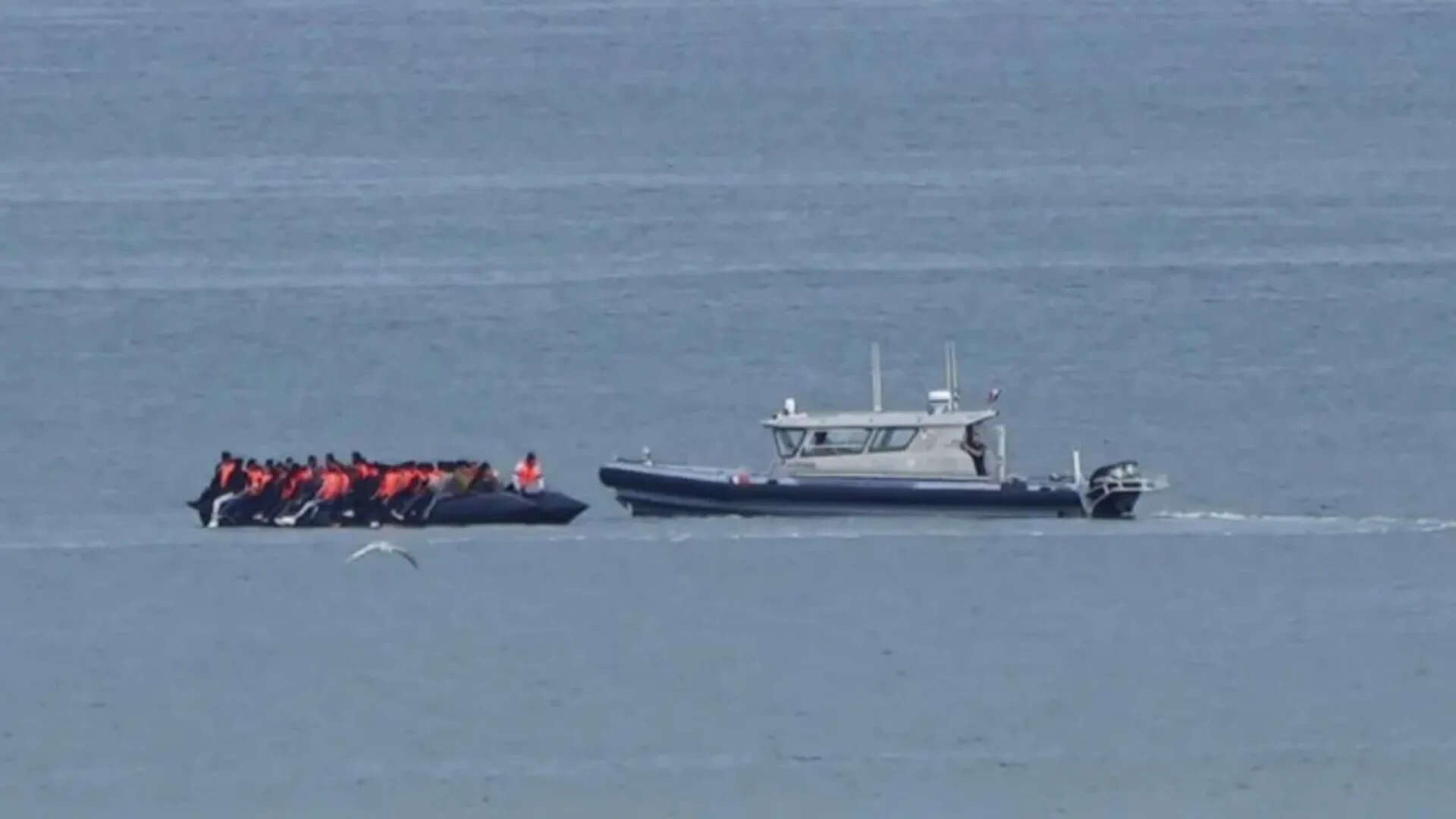
The British government just signed away £650 million to France in a desperate bid to "stop the boats." If you feel like you've heard this before, it's because you have. We've seen the Sandhurst Treaty in 2018, the £476 million deal in 2023, and a flurry of stopgap payments in between. Now, with more than 41,000 people reaching UK shores in 2025 alone, the price tag has gone up, but the core strategy remains the same: throw money at the French coastline and hope for the best.
This isn't just another funding boost. It's a three-year pact signed by Home Secretary Shabana Mahmood and French Interior Minister Laurent Nunez that attempts to fix the biggest complaint Westminster has had for years—accountability. For the first time, a massive chunk of that cash, about £160 million, is "performance-based." Basically, if the French don't hit their targets, they don't get the full payout.
But will it actually work? History suggests we shouldn't hold our breath.
Where the 650 million pounds is actually going
Most people assume this money just pays for more cops on beaches. It does, but the breakdown is more technical than that. The deal aims to increase the number of officers on the ground from roughly 900 to nearly 1,400 over the next three years. That’s a lot of boots, but the French coast is a massive, jagged stretch of land that’s notoriously difficult to patrol 24/7.
High tech surveillance and riot squads
The agreement isn't just about personnel. It’s a tech-heavy overhaul. We’re talking about:
- Drone swarms and helicopters: Constant aerial surveillance to spot launches before they happen.
- Riot-trained units: A new 50-member squad specifically designed to handle "hostile" crowds at launch sites.
- Enhanced thermal imaging: Fixed and mobile cameras to track movement in the dead of night.
- Maritime "taxi boat" task force: A dedicated unit to intercept the supply of inflatable boats before they ever reach the water.
This focus on "taxi boats" is a direct response to a shift in smuggling tactics. Instead of bringing boats to the shore via vans, gangs have been launching empty boats from remote locations and "taxing" them along the coast to pick up migrants waiting in the shallows. By targeting the boats themselves, the UK hopes to kill the supply chain.
The catch with performance based funding
The most controversial part of this deal is the "pay-for-results" model. The UK is tired of paying for patrols that only intercept about a third of the boats. In early 2026, interception rates fell to a dismal 33%.
Shabana Mahmood has been clear: she wants "more bang for our buck." By linking £160 million to success rates, the UK is treating the French border force like a service provider.
But there’s a massive problem with this logic. French officials, including Xavier Ducept, the general secretary for the sea, have already warned that tying money to interception rates is "extremely dangerous." If a French officer's paycheck depends on stopping a boat, will they take risks that could cause a capsize? The French priority is—and legally must be—saving lives at sea. If an interception looks like it might turn into a mass drowning, they'll back off. That’s where the friction lies.
Why the smugglers are still winning
You can spend a billion pounds on drones and still lose. Why? Because the smugglers are faster and more adaptable than a government bureaucracy. When the UK and France secured the major ports like Calais and Dunkirk, the gangs moved to the beaches. When the beaches got more patrols, they started using larger boats and launching from further away.
The gangs have also increased the density of people per boat. In 2025, the average number of people squeezed onto a single inflatable rose significantly. This makes every crossing more profitable for the smugglers and more dangerous for the migrants. Even if the French stop half the boats, the smugglers simply wait for a calm day and try again. It’s a volume game, and right now, the volume is on their side.
The pull factor myth
There’s a lot of talk about "pull factors"—the idea that people come to the UK because of the asylum system or the "illegal economy." In late 2025, the government tried to crack down on these perceptions with new returns policies. However, Home Office research from 2022 admitted there's "insufficient evidence" that these restrictive policies actually stop people from coming. Most people crossing the Channel aren't checking the latest UK legislative updates on their phones; they’re trying to reach family or find work in a country where they speak the language.
What this means for the UK taxpayer
You’re paying for this. Over the next three years, £650 million of public money will flow across the Channel. To put that in perspective, that’s significantly more than the cost of the previous three-year deal (£476m).
Critics argue that this money is being poured into a "leaky bucket." Nigel Farage and other voices on the right claim that unless the UK can actually return people to France—which remains legally and politically difficult—the crossings will continue regardless of how many drones we buy.
On the other side, refugee advocacy groups like the Joint Council for the Welfare of Immigrants point out that these deals often lead to a surge in deaths. When you push people away from "easier" crossing points, they take more dangerous routes. Just this month, four people died trying to board a boat off the French coast.
The "One in, One out" experiment
One small glimmer of a different approach is the pilot scheme launched in August 2025. It’s a "one-in, one-out" arrangement where the UK can return some small boat arrivals to France if it agrees to take an equivalent number of legal asylum seekers from France.
So far, the numbers are tiny. By February 2026, only about 300 people had been returned under this scheme. Compared to the 41,000 who arrived last year, it’s a drop in the ocean. If this doesn't scale, the £650 million deal will just be another expensive footnote in the history of the English Channel.
Your next steps to stay informed
Don't just take the government's press releases at face value. If you want to track whether this £650 million is actually being spent effectively, keep an eye on these three metrics over the next six months:
- The Interception Rate: The Home Office will likely release quarterly figures. If the rate doesn't climb above 50%, the "performance-based" funding is going to become a major diplomatic flashpoint between London and Paris.
- The "Taxi Boat" Interceptions: Watch for reports on maritime seizures. If the French can't stop the boats before they pick up passengers, the new maritime law is a bust.
- Returns Data: Check the "one-in, one-out" pilot numbers. If that stays in the hundreds while arrivals stay in the thousands, the deal isn't "smashing the gangs"—it’s just managing the status quo.
The reality is that as long as there’s a demand for these crossings and no safe, legal alternative, the smugglers will find a way around whatever tech we buy. This £650 million deal buys time and political cover, but it hasn't solved the underlying crisis. It's a high-stakes gamble with your money, and the house—in this case, the smuggling gangs—usually wins.