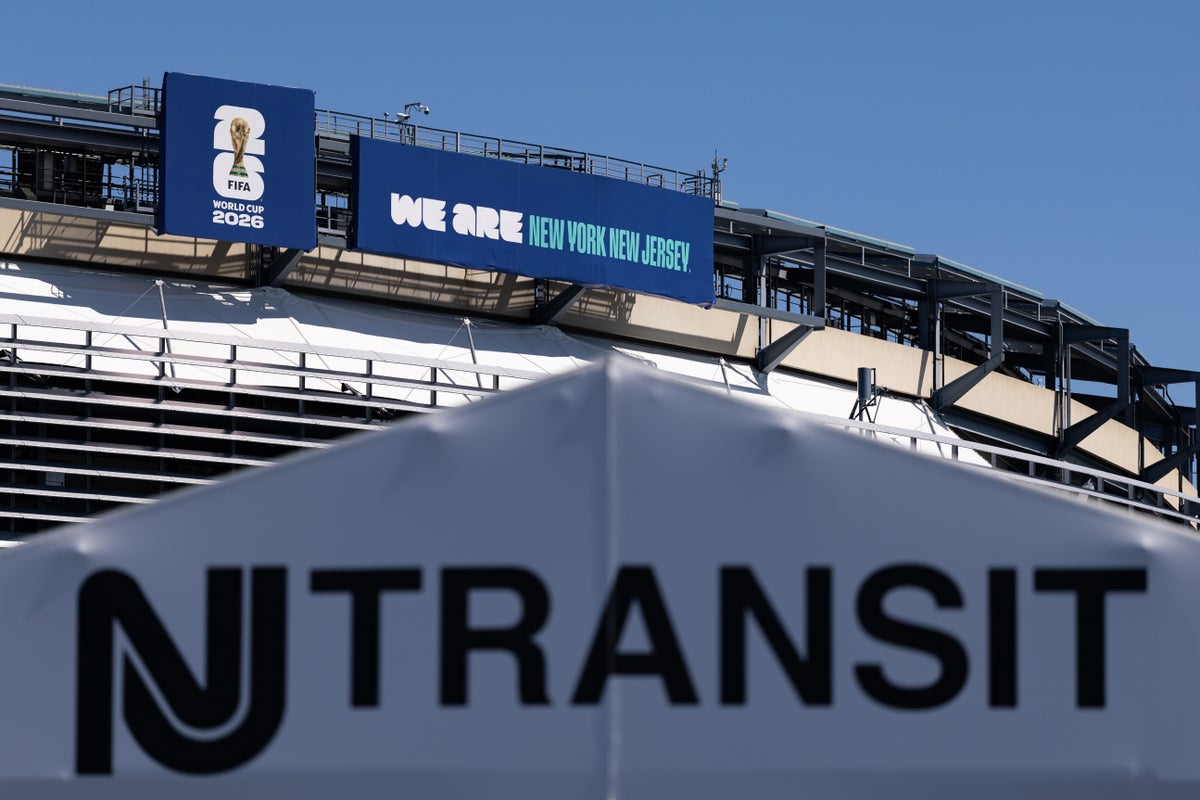
The train platform at Secaucus Junction usually smells of ozone and damp concrete. It is a place of transit, a liminal space where thousands of New Jerseyans exist in the quiet desperation of a Monday morning. But for a few weeks in 2026, this patch of infrastructure is slated to become the center of the sporting universe. The FIFA World Cup is coming to the Meadowlands.
For a fan like Mateo, a hypothetical father of two living in Jersey City, the announcement felt like a gift. He grew up playing soccer on asphalt lots. He saved for three years to buy tickets so his daughters could see the beautiful game on their home turf. Then, he saw the price of the train ticket.
Initially, NJ Transit floated a "special event" fare. It wasn't just a slight increase. It was a sticker-shock provocation that threatened to turn a public utility into a velvet-rope VIP service. The proposed $100 round-trip "World Cup Pass" for certain zones turned a short hop into a luxury expense. Suddenly, the "People’s Game" felt like it was being guarded by a private toll booth.
People didn't just complain. They roared.
The Math of Exclusion
When we talk about transit pricing, we are really talking about who is allowed to exist in certain spaces. Public transportation is the circulatory system of a city. When the cost of a single artery spikes, the body begins to fail.
The original pricing strategy was built on a foundation of cold, hard logistics. Hosting the World Cup requires a staggering amount of security, additional train sets, and specialized staffing. NJ Transit looked at the ledger and saw a deficit. They tried to close that gap by leaning on the very people the event was supposed to inspire.
It was a classic bureaucratic miscalculation. They saw commuters as a revenue stream rather than a community.
Consider the optics: a global tournament that preaches inclusivity and "unity" being hosted in a stadium that many locals literally could not afford to reach. If you are a family of four, the transit cost alone would have rivaled the price of the match tickets. It was a barrier built of plastic transit cards and digital QR codes.
The backlash was swift and organic. It wasn't just about the money; it was about the betrayal of the public trust. Social media lit up. Local representatives started receiving frantic calls. The message was clear: you cannot invite the world to our backyard and then lock the gate.
The Retreat and the Reality
The pressure worked. In a rare moment of institutional humility, NJ Transit blinked. They didn't just shave a few dollars off the top; they gutted the proposed hike.
The new pricing structure brings the cost back down to earth. For the millions of fans expected to descend on MetLife Stadium, the fare will now mirror a standard "peak" travel day rather than a predatory surge price. This isn't just a win for the wallet. It is a victory for the idea that the World Cup belongs to the fans, not just the sponsors.
But the friction remains. The scramble to adjust these prices reveals a deeper anxiety about our infrastructure. Why was the first instinct to overcharge?
New Jersey’s transit system is a sprawling, aging beast. It survives on a diet of federal grants and rider fares. When a massive event like the World Cup arrives, the system is pushed to its absolute limit. The "North Jersey Coast Line" and the "Northeast Corridor" are already operating at near-capacity during rush hour. Adding a hundred thousand international tourists into that mix is a recipe for chaos.
To make this work, the agency has to pull off a miracle of timing. They need to move people from the fan fests in Manhattan, through the bottleneck of Penn Station, and across the marshes of the Meadowlands without the whole thing grinding to a halt.
The Invisible Stakes of a Five-Mile Trip
Travel is often measured in miles, but for the World Cup, it will be measured in minutes and patience.
The distance from the Port Authority Bus Terminal to the stadium is less than ten miles. On a clear Sunday, it’s a fifteen-minute drive. During a World Cup match, that same distance can become a two-hour odyssey. This is why the train is the only viable option. It is the literal lifeline for the event.
By lowering the price, NJ Transit has effectively committed to a massive logistical burden with less guaranteed revenue. They are gambling on volume. They are betting that if the barrier to entry is low, the sheer number of riders will compensate for the lower per-ticket price.
It's a gamble we should all want them to win.
If the trains fail—if they are too crowded, too slow, or too unreliable—the "Jersey World Cup" will be remembered as a disaster of logistics rather than a celebration of sport. We have seen this before. In previous international tournaments, the "last mile" of travel has often been the undoing of the fan experience. People remember the goal in the 90th minute, but they also remember being trapped in a sweltering rail car for three hours afterward.
The Human Cost of a Ticket
Back to Mateo.
With the price drop, his trip to the stadium is no longer a financial hurdle that requires dipping into his daughters’ college fund. He can walk to the PATH train, transfer at Hoboken or Secaucus, and feel like he belongs there.
There is a specific kind of magic that happens on a match-day train. It starts with the colors. You see the yellow of Brazil, the sky blue of Argentina, and the red, white, and blue of the USMNT all crammed into a single carriage. You hear four different languages being spoken at once. You feel the vibration of the tracks beneath your feet as the train snakes through the tall grass of the Hackensack Meadowlands.
That experience shouldn't be reserved for the wealthy.
The World Cup is a rare moment where the world feels small, where the borders that usually divide us feel like nothing more than lines on a pitch. Transit is the physical manifestation of that connection. A train car is perhaps the most democratic space we have left. Rich or poor, everyone is heading to the same destination at the same speed.
By forcing NJ Transit to lower their prices, the public reminded the powers-that-be that the stadium is in the middle of a neighborhood, not an island.
The victory here isn't just about the $20 or $40 saved per person. It's about the precedent. It’s about the refusal to let public infrastructure be used as a tool for exclusion during our most visible moment on the world stage.
The trains will be packed. The air conditioning will likely struggle under the weight of ten thousand shouting fans. There will be delays, and there will be confusion. But at least the doors will be open to everyone.
As the first whistle blows in the Meadowlands, the real success won't be measured by the score on the board. It will be measured by the thousands of people who stepped off a train, walked through the gates, and realized that for once, the system actually worked for them.
The tracks are laid. The prices are set. Now, we just have to hope the signals stay green.